Somehow it's saddening to hear if a favourite character is gameplay-unviable, but somehow gladdening if they are super viable.
For example, Daisy is super viable in Mario Kart Wii because her inside stats are favourable, namely her +Speed. On the other hand, someone argued that Daisy is the absolute worst character in VS, citing her slow attacking speed and skill speed, and difficult-to-use skill. The kicker is that a certain word associated with defecation is used to describe her (and I have kind of a strong reaction with things described that way).
I remembered asking on another forum if people's perception of a Pokemon diminished if they found out how unviable they are (such as Farfetch'd), and surprisingly the examples are more positive. As an example, there's Heatran. If you don't know how Heatran looks like, this is Heatran:
Heatran is hardly what you call a nice-looking Pokemon, but it is one of the best competitive Pokemon. There are several things going for Heatran: great type combination backed by a good ability that negates Fire moves, stats that allowed it to be a powerful attacker, a nice tank or an annoyer and how well its qualities synergise with a great deal of Pokemon.
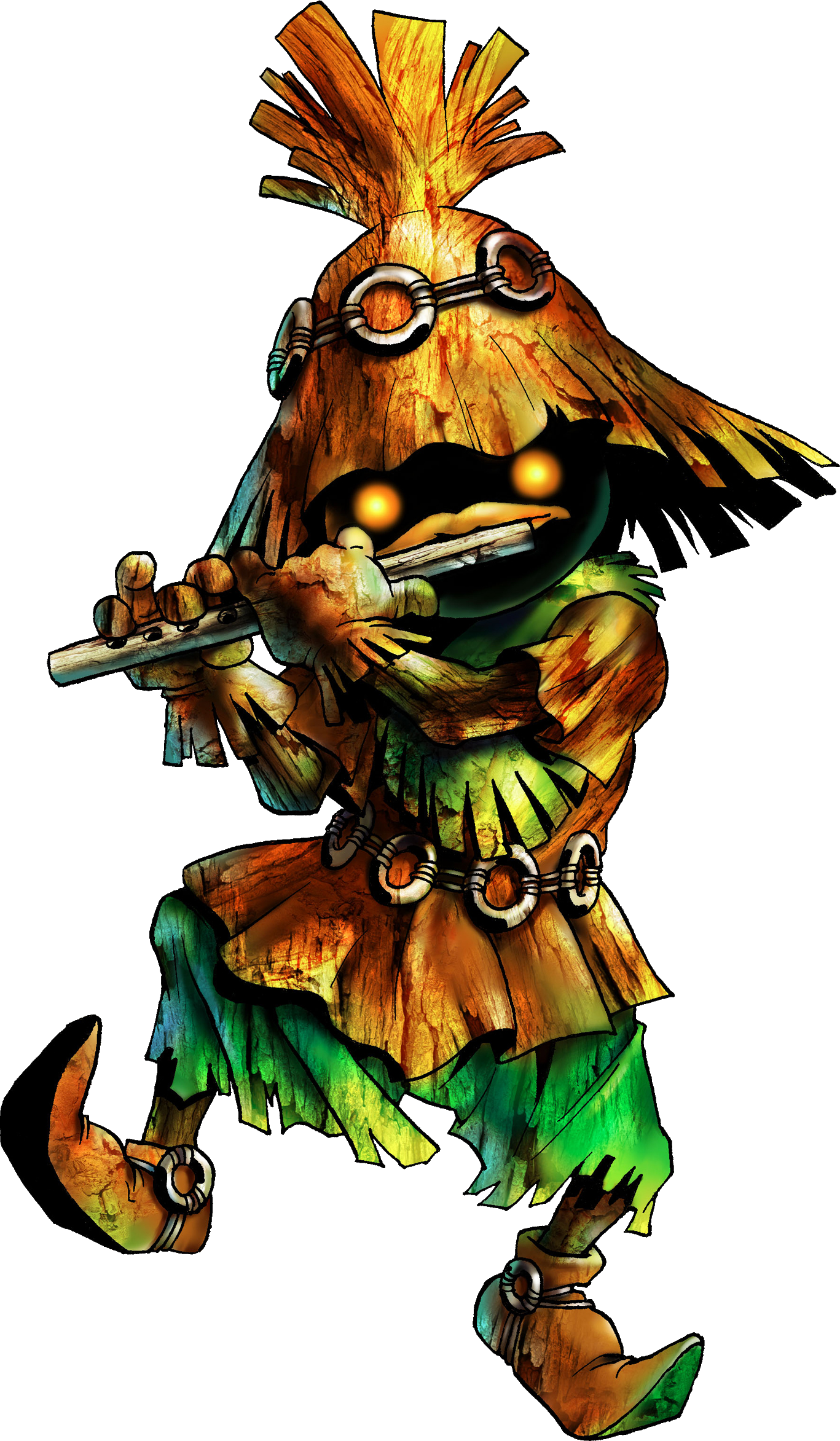
Some characters seem to only be recognisable when they wear certain things, such as how Batman is most recognisable with his bat suit on, or basically most superheroes for that matter. This comment is inspired by Skull Kid, who I noticed something about it. Take a look at how he's originally portrayed:
However, this is the most recognisable version of the Skull Kid, and in fact is what the Smash Bros. games normally used to represent him:
In case you can't see the images, basically it's only when the Skull Kid wears the Majora's Mask is he more well-known compared to his lack of it.
On the other hand, some characters are not dependent on the clothes they wear to be recognisable. For example, even though Mario's perfected his overalls look, he's still known as Mario even though he donned his doctor's outfit, a tennis uniform or even his cat suit. Characters who don't wear clothes seems to benefit more from this, such as Sonic or Pikachu, so even though they wear a hat or put on a coat, they are still distinctive.
There is a topic on the Marioverse boards that I've glanced, one that's about the first Mario game played. Mine would be the first Super Mario Bros. game (1985) despite not playing this on that very year, but that's not what I am here to talk about. When I recalled my first Mario game played, another thought came to me: the games that got people into Mario tend to be from the past that I can think of, like mainly from NES or SNES, such as Super Mario Bros., Super Mario World, Super Mario Kart and so on.
This got me into a bit of a despair because I can't think of a concrete example of a newer Mario game that got people into Mario in a mass scale. Now, I need to point out that there are certainly examples of newer Mario games that did got people into it, with New Super Mario Bros DS and Wii being the biggest ones, but I do not really think it's as big as I thought, given how the boards are still kind of small fry compared to the likes of Sonic and Pokemon. It's just that... there are some Mario games that do not have this sort of influence, at least not something like the newer Mario Party games or newer Paper Mario games, even though I do not mind those games myself. Like there are games that I can see the positive sides of, like the newer Paper Mario games, but when I'm probably asked about it, I would struggle to think of the type of people who would cite those games as something people would see the positive sides on, especially if they already developed a negative reputation.
If you don't fully understand what I am meaning to convey, I understand: as it does feel a bit scattered. The gist of it is that: for any Mario game that I liked or able to find the plus sides on but are popularly disliked, I am kind of sad about those. Mainly because: I sometimes questioned if optimism is even welcomed.
Adding birth dates to characters is something I thought was strange because it usually felt like adding unnecessary details to a character. Related to this is adding the blood types to characters, which as far as I know, is mainly a Japanese thing. The first time I found out about birthdays is on the Puyo Puyo Fever 2 website, where every character featured had a birthday.
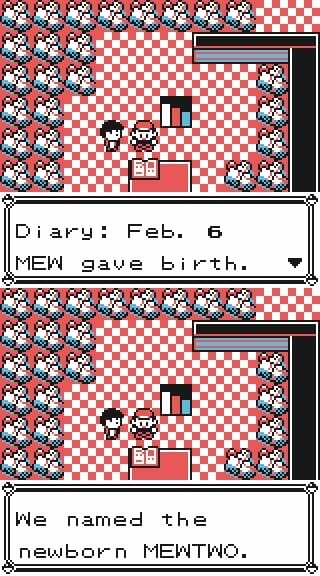
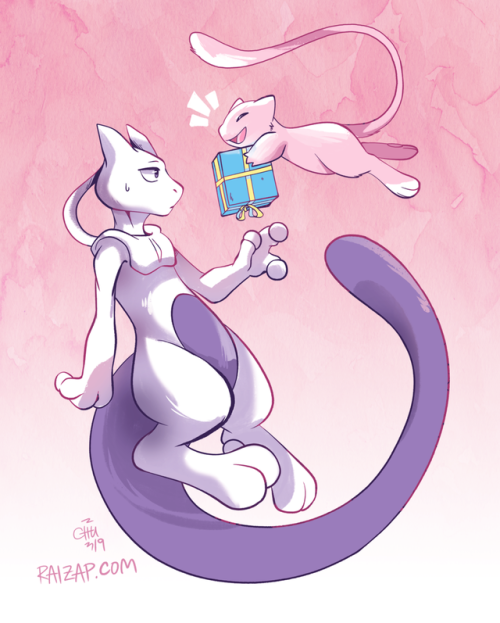
What seems silly to me is undoubtedly celebrated by a lot of people though. As an example, Mewtwo's birth date is mentioned to be 6th of February.
It's a minor detail, but one that fans are willing to celebrate. Undoubtedly, any series that specifically list character birthdays would get a similar treatment.
It really goes to show that not everything that is seemingly superfluous is not appreciated, because there's always someone who would appreciate certain tidbits about their favourite characters.
I think I will bring this question up again, given that it's already buried by a number of profile posts as to be out of view:
I have made a thread called "Gauging Popular Opinions" around five weeks ago, and I am interested to know what did you all think about it so far? I am a bit concerned that the relatively small activity means that not many people are interested, but at the same time, it's not that bad since it's not single-digit results.
There is a pretty common sentiment, although probably only by a vocal minority that Japanese voice acting is superior, even by non-Japanese fans. However, something I have noticed is that Mario is very much an English voice-acted series, even in Japan. I like to imagine that even in Japan, Mario's English voice acting is the superior one because it's the only one they've stuck with, unlike say, Sonic. That would be amusing to think about because it's a rare inverse case.
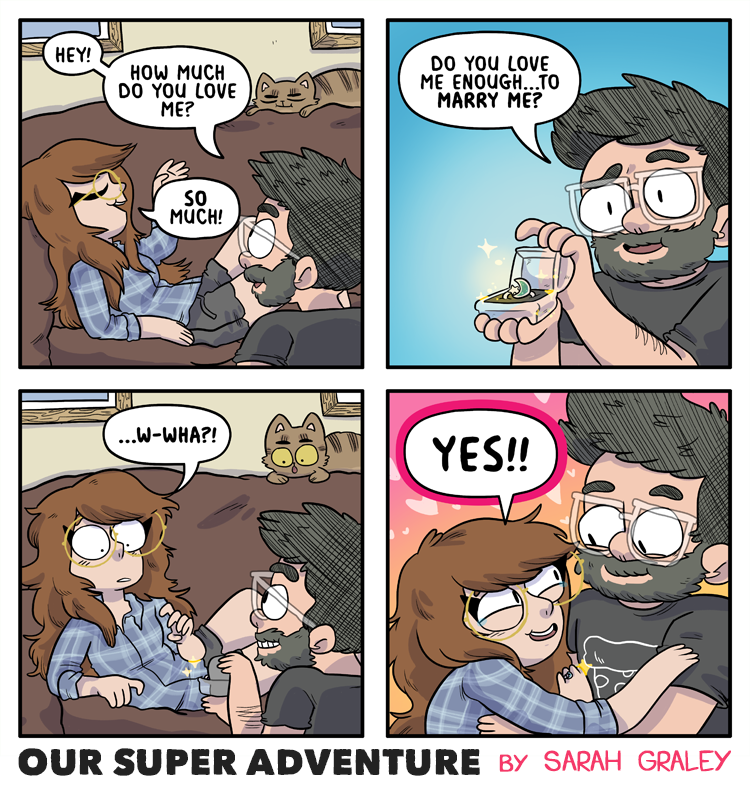
According to Wikipedia, cohabitation is pretty common in the Western countries, so much so that when the media reflects on this trend, it surprised me that the characters aren't married. For the uninitiated, cohabitation is the practice of a couple living together without going through official marriage. I think the cultural differences are in play here since such a practice is pretty common in the West, but practically rare (if there is ever any) in the East.
Take this comic from Our Super Adventure, a webcomic by an English (as in the UK) woman, which is more or less autobiographical. No kidding: I always thought those two characters were married all along, given that "Our Super Adventure" could also imply that it's about a married couple.
Obviously, there are American examples too. Take this On a Claire Day comic strip dated 21st January 2009, where Paul had made the momentous decision to move in with Claire to alleviate her apartment's maintenance. The context is that Claire was fired from her second job as a retail worker (she still kept her librarian job until the end of the comic), which caused her to worry about her financial future. Like real life, one of the justifications for cohabitation is to bear the burden of the cost of living, which I imagine is huge in Western countries. If one were to read this comic after this event, one might also mistake them for marriage, as I did. It's only when I read the archive that some things are not what they are assumed to be. Actually, this comic strip is an example of one that does not abide by the status quo, which is refreshing. If the time comes, I will write an article about it.
Unfortunately for me, I can't find examples of cohabitation in other types of media like a TV show, a cartoon or a video game, so if you managed to spot on, feel free to mention it.
Something I have realised is that when somebody likes the same thing that I do, I take a bigger interest in that person compared to someone who like something I am either neutral on or dislike. For example, if somebody likes Mario the character, then I felt like I have a bigger affinity to that person as opposed to somebody who prefers Luigi. Another example would be if somebody likes a comic strip that is outside the two comic strips that people claim are the last great comic strips, such as Garfield, Pickles and Zits. As an example, I like BourgyMan because he's one of the cartoonists who likes Garfield and Mario, and there's also the creator behind Bee and Puppycat.
That isn't to say that I don't like it when somebody liked what I didn't like, which is a prevalent attitude. After all, it would be bad form to convince somebody to stop liking something that they find valuable. That is mainly because I often felt that what I like aren't very popularly liked, so I know how it feels when somebody told me that I am not supposed to like a certain thing (example: Garfield).
I had a discussion on Mario's strengths and weaknesses and I just thought about you forming a detailed opinion on that. I don't see much of drastic power inconsistencies in a single game series as much as Mario has.
The balance between control and freedom for the largest intellectual properties is interesting, because in a lot of known cases, a bias towards control tend to happen. Disney, for one, is quite notorious for this as they are the ones who appears to be sensitive about any unlicensed uses of Mickey Mouse, including as murals on daycare centres. They are, after all, the ones who fought to extend copyright periods to longer than the expected human lifespan. Another company that's notorious for control over their property is Nintendo, who is not exactly fond of the presence and popularity of certain Mario fangames. This include the Mario fangame where several people control their own Marios (Mario Royale) and a Mario spin on No Man's Sky. Overall, it's more frequent to hear of cases where a company exerted their need to control how their properties are handled by others, as cases of dissatisfaction are more frequent and louder.
The way companies exerted this control is also an opportunity for smaller companies to boost their image by showing that they are more lax with how other companies represented their properties. In the Disney example I mentioned, Universal Studios Florida and Hanna-Barbara Productions allowed the daycare to use their characters. Sonic is another example, as they've once famously made a comment that they won't resort to the takedown that Nintendo famously used.
While those companies do present better freedom for fans to use their properties, that doesn't mean that there is a laissez-faire with how their properties are treated, as they are just as ruthless on certain cases. This included a time when SEGA ordered a takedown on a fan-made Streets of Rage remake.
On the other side of the scale, Garfield is probably one of the big IPs with a freedom bias. While it's certainly true that they still have certain legal rights (and amusingly, their Terms of Use page has an informal intro), there are practically no objections to how fans portrayed the cat. In fact, a lot of people made fun of Garfield, such as the various horrific images of portray Garfield as an abomination that sought to hunt for Jon. Jim Davis is even famously very supportive to such efforts, and he's famously supported Garfield Minus Garfield. I suspect that if it were other comic creators, they would be unhappy about remove the titular character and making a mockery out of their work, but since Jim Davis set a precedence, they would balk at that idea of a takedown.
I felt that there are some disappointments about the Mario series here, which I suppose is a given since the nature of a community is in some ways, insular. Even then, I am of the opinion that the Mario series is overall well-treated compared to many video game series, which is pretty amazing.
Perhaps if one were to appreciate what Mario has, one has to look at properties that are treated less well. Sonic is a very prominent example, so let's look at some things that Sonic had faltered.
- For one, Sonic had a very fractured view of the franchise, because at his early years he's already established at least 3 different continuities that include the 2 DiC cartoons, and the more serious cartoon is the one that fans preferred at that time (helped that the comics from Archie are based on this version), so much so that it's endured until now. That's not to mention the rebranding of Sonic since Adventure, his Boom continuity and son on. Whereas with Mario, his differing continuities are more consistent even with various tones, as they have the same main characters and they have the same general personality that doesn't clash much between continuities.
- Sonic's original development members are not exactly attached to the franchise, which might have affected the passion the games have. That's not to say that there aren't any passionate developers, but it's clearly not enough. Although Iizuka made Sonic Heroes possible, his dedication to making the game happen was clearly not enough to make it a top-notch title. The Mario series, especially Super Mario, has developers who are into making the games as great as they can be, and it shows.
- Sonic had a game that marked his overall plunge, namely his 2006 game "Sonic the Hedgehog". That game basically tainted the franchise even if there are some good games since then. Sure, Mario has some games that fans consider to be the equivalent of sin incarnates, but I never found them to be a game-breaker for the series, and in fact they're still very competently made.
Now for a few other things that are not comparison-based:
- Mario has a nice character design that is not based on trends, and is unusual for this. He's incredibly cartoonish, yet he's also the face of gaming, more so than game icons with a more idealistic and realistic figures. Some people consider Mario to be bland, but his design and his character are hardly "bland" in the grand scheme of things.
- Mario's spin-offs are generally successful, which is not something any series could claim. He has a successful puzzle series (Dr. Mario), a genre-defining racing series (Mario Kart), an unrivalled party series (Mario Party) and side characters that have generally successful series (Yoshi, Donkey Kong, Wario).
That's a few things I felt that fans might have taken the Mario series for granted. Are there anything else that I have missed?
Anybody can be adapted to their environment, and so is the case when it comes to learning what characters say in video games, movies, books and so on. I do have quite a few myself.
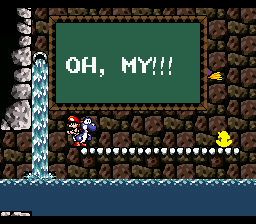
For one, I have a tendency to say "Oh, my!". You might know that it's famously said by Kamek if you defeated Naval Piranha while it's dormant in Yoshi's Island, allowing the player to skip the boss battle. The same can be done in Woolly's World but since Piranha Plants are wrapped in wool (instead of popping off), the boss battle cannot be skipped.
I might even sometimes say "Mamma Mia!" because that's what Mario said quite regularly in Super Mario 64, and certain games. I guess the delivery of that line by Mario was memorable, so I kind of picked up that line.
One of Inspector Gadget's lines is "Wowzers!", and while I did say this before, what inspired me to say this line was from "Inspector Gadget's Field Trip", a show where Inspector Gadget in animated form explores cities from around the world. What struck out to me was his reaction when Australia's teachers have to travel long distances to provide education for children. Currently I can't find the part of the video, but hopefully if you do watch it, you will know what I mean. It's also helped that Mii-guel from Mario's Press Conference said this line ("Wowzers, love me some Mii!") when he enjoyed the moment he blocked off Mario's basketball dunk.
It might not even have to be watched to catch a phrase. As an example, there was a show called Goodness Gracious Me, which is basically an England-made Indian comedy show. But sometimes I would say "Goodness Gracious" where most people would prefer to use profanity. As you can tell, I am against the use of profanity even if it's standard vocabulary for many people.
Perhaps there can be an adaptive way to say a line. I used to say "Humma humma hum-tum", which was adapted from Wario saying "Wow, humma-humma ding-a-dong, you sure are!" in Wario's Press Conference. The context is different though: Wario said this because he was wowed by a female reporter (probably by her looks; the only record of this conference is through audio so I can't tell), but how I used it is as a general reaction of things.
I have resolved to write my comment on the Count to 100 with a Twist thread when it's completed. After all, I was an active participant and I wouldn't be surprised if my contribution to the goal was almost half of the posts posted (not exactly, but something like 47 - 48%). The reason I participated when I can is due to the fact that it would be unattractive, nay daunting to post in a thread where the goal is so far away, so I went to contribute as much as I can for that particular cycle because I want to be able to get a 5th winner. It went extremely slowly but thanks to @Shmoopie things picked up the pace and we even cleared larger numbers in a short time.
Admittedly, I am a little disappointed that I didn't get it mainly because for this cycle, I counted very frequently. The fact that a fresh participant only counted at the end can be an unfortunate part of the nature of that game: anybody can post, and as long as they show up in the end, they are declared the winner. I suppose part of me kind of expected the possibility that somebody who practically stumbled in the thread at the right time or waited for the right moment to get the last count. The winner that will be recorded will be that poster, and thus the contributions of everybody else who made it possible will be forgotten or unknown.
As I have mentioned within the thread, probably at around the count of 18, I will not be participating in a new cycle even if anybody wants to start it. The reason being that it's a slog to go through it. The main drive I have had while the 5th cycle was going on is that I want to be able to see a winner even if my contributions did not lead to that. Now that that's done, we shall see if everybody else will want to start again. After all, most of the old guard who made that thread active are now gone, and I am essentially gone too. Will anybody wants to perform the counting cycle again, or would a new cycle seem insurmountable as to not bother trying? That's up to the others, but for my part, I am over this as far as I am concerned.
So that's my thoughts about it. Finally, I would like to congratulate @Sheldon Cooper for getting the last count.
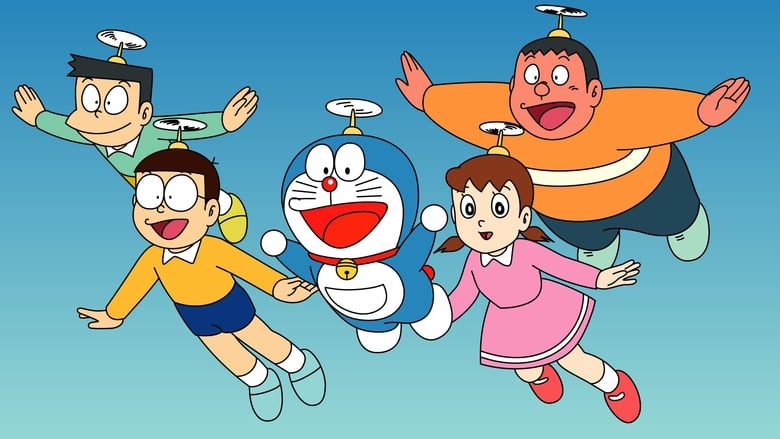
A character depicted in a very different style might be liked by different people, but at the same time not everybody takes a new style well. One of the more recent examples would be Sonic Boom, where Sonic and friends have some interesting changes, especially Knuckles. But some properties managed to gracefully adapt to a new style, such as Mario since his various takes seem to exist in harmony with each other, like his Paper Mario incarnation, the Mario & Luigi look and Super Mario-kun. I do have a stylistic change that I am not satisfied with, even though it's not being used for a long time already. That's to say that I am not immune to having a style I disliked. And what is it? It's Doraemon's 1979 anime art style.
For reference, this is how Doraemon look like in the manga, the 1979 anime and 2005 anime:
As I am more accustomed and dare I say more at home with Doraemon's manga artstyle (despite my first foray to the world of Doraemon through the 1979 anime), the 1979 anime's artstyle came off as off-putting, something akin to what a bootleg product would look like. Of course, it's not really a bootleg since it's an official incarnation of Doraemon. To elaborate, you know how a bootleg version of a character has similar characteristics to the original but it has some features that made them different, kind of like some bootleg products where Mario wears green overalls but still have an "M"? That's the sort of feeling I got about 1979's style: The two examples I can cite are how Gian's eyes are differently portrayed from the original (yet his mother and sister are accurately portrayed based on the manga), and how they change Shizuka's hair from black to brown. The overall roundness that I'm used to in the original manga is portrayed kind of differently in the 1979 anime, where the style is akin to squares with round corners.
When the 2005 anime's artstyle came around, I am more receptive to the artstyle changes for being more faithful to the manga. I think it's for the best that it happened because Fujiko's manga characters are faithfully portrayed in Japan, such as in museums.
When I was in college, I was managing some newspaper comics since I usually cut certain strips out and paste them into a book for collecting. One collegemate noticed me doing my interest, and one thing he mentioned that he likes Kee's World (a Malaysian comic strip) because the characters are cute. Here are a few such comic strips to pique your curiosity:
This left an impression on me as I was not fond of Kee's World due to how basic and mundane it is, compared to (if I recall correctly) the more "sophisticated and more entertaining" American comic strips. It does raise my opinion on this comic strip, and now I no longer think of it as a waste of space. It boils down to how something I didn't like is liked by somebody, and also why I am happy whenever somebody mentioned something they love even though I am not the target audience, within reason (such as when the spirit of a work is not at odds at what I find acceptable).
I can't quite describe the feeling properly whenever I see a series with a varied choice of character designs. There's a sense of contradiction since the characters do not tend to share something in common with each other, and yet they nonetheless exist in the same universe. But at the same time, it's not totally unrealistic since seeing them together is like a curtain call: no matter the differences, they are all in it together. There is also a sense of fun because it's just cool to see differing characters hanging out with each other, and I am sure this is the feeling Smash fans must have had when they see the Ultimate mural.
The series that inspired that sort of feeling is Puyo Puyo, since in their first game the characters that are chosen are generally quirky. You have a fish with hands and legs (who still have regular appearances), an elf with a gigantic foot, a bespectacled eggplant, an elephant that causes the field to shake and a skeleton who drinks tea. The series does have other quirky characters, but for the first game, it has that strangeness that is not present in either Kirby's Avalanche or Dr. Robotnik's Mean Bean Machine, more so the former since the latter uses obscure robots that are only shown in one episode. Not saying that Kirby is not quirky itself, but since it's already established by using characters from its then-best game Kirby's Adventure, the surprise factor is just not present.
For a more unpopular example, I present the Denki Blocks! characters. It's also a puzzle game, but when I've seen a playthrough, it occurred to me how much I have missed: the other characters are unrelated and it's funny to me for that reason. You have a mole, a trio of dark-skinned fairies and a jester monkey duo (called Rough and Tumble) among others.
And to end it all, I have to present a more popular and familiar one: the Mario series. It goes without saying that for a series as long-running and productive as Mario, eventually there will be a ton of characters that will look like an eccentric family, and I am counting that outer Mario cast like those in Donkey Kong, Yoshi and Wario under this umbrella.
(Credit to @Dimentio for this image; check out her Fan Creations thread!)
Really, these aren't the only examples of a cast with various shapes and sizes, as there are quite a few that are not listed, such as Pokemon and its monster-collecting ilk like Yokai Watch. Ultimately what I like about diverse character designs is that they work in harmony even if they have their differences.
It's interesting how Mario characters are usually paired, but how Sonic characters are instead put in groups of three.
The birth of this idea for Mario would probably be at Mario Tennis (N64), where one particular character was made to fulfill a pairing, and that is none other than Waluigi. Daisy basically returned after her sporadic appearances for the same reason, and similarly, Birdo even got a more regular limelight (that unfortunately petered out eventually). It isn't until Mario Kart: Double Dash that this idea is cemented, as every character has another character with the same attribute (their special item).
As for Sonic, I believe the power trio of Sonic, Tails and Knuckles are established very early on in Sonic 3, but it's not been an ongoing idea until Sonic Adventure 2, where not only Sonic got his two regular pals as his team, but Shadow also has two pals that he teamed up. It's not until Sonic Heroes that it's cemented, as every character is assigned the attribute of Speed, Fly and Power due to how Sonic's pals are formed. In fact, the Chaotix was brought back due to being designed with the team aspect in mind, and not to mention Shadow's robot pal Omega is part of his team until now. Up till now, only Sonic and Shadow has consistent teammates, but Amy's pals basically rotated (with Amy being the only consistent member). In some ways it might feel a bit restricted, but I suppose that's the way things are now for the dynamic of Sonic characters.
There are some games where the music I associated with them are neither the theme song of the game (eg: Bob-omb Battlefield in Super Mario 64), first level in the game (eg: Super Mario Bros.), nor is it the most emblematic song of the game (eg: You Are Not Alone in Final Fantasy IX). It's usually because it's the first song I've heard for that game, which is mainly through previews or watching/hearing from it not from the beginning. Here are a few that I recall:
Cartoon characters come in all shapes and sizes, but it is more amazing if the artist acknowledges the character design if they are unusual, and design things that they can plausibly interact with. One way to tell if the cartoonist cares about the design is the way they ride a bike, due to how you operate it (by pedalling).
Let's start with a more familiar (good) example in the Mario boards: Wario. Wario's legs are extremely short, so he cannot ride a standard bike unless it's modified to suit his stature. In fact, his signature motorcycle is designed for his proportions in mind!
Doraemon has a similarly short stature, but one thing that's basically offhandedly shown is that he can extend his arms to a certain extent (which could be why he can put the Bamboo Copter on his head), which is not unusual since he's a robot after all. However, his legs are short and don't seem to extend. In one of the stories he had to use the bicycle as an emergency, and this is how he can feasibly ride the bicycle:
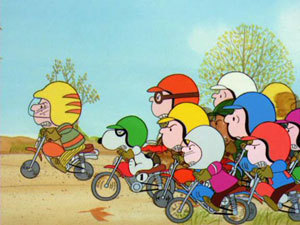
Even if the characters are short, if the bikes are designed after them, then it goes to show that the artist cared that they are short, such as how the characters in Peanuts ride motorcycles (as strange as that sound) in "You're A Good Sport, Charlie Brown".
Perhaps I should list a bad example too. After all, it takes a bad example to be able to acknowledge a good example, which is what transpired the topic. Calvin & Hobbes may have been a meaningful and well-loved comic, but it does have some flaws. I get the impression that the artist forgot that the child characters are as short as babies, and so a lot of things will not be easily and feasibly used by them if held under scrutiny (stairs is another big thing) because they are designed for adults who have regular proportions.
(Note: The bicycle may move on its own but only when no other characters shows up, and this comic is an example)
So basically, if a character with unusual proportions is designed, make sure the things that they regularly use are fit for them, or failing that, have them adapt to it, similar to how people without certain limbs adapt to driving a car.
There's something that we took for granted when it comes to child characters in animation/cartoons, yet at the same time it's not realistic. Namely, it's the fact that child characters are able to accomplish things that are far advanced for their age.
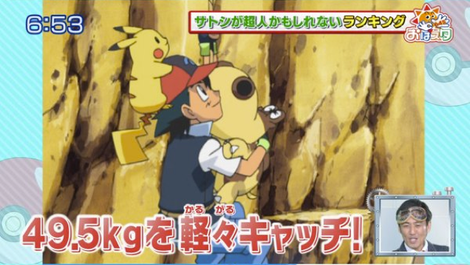
Take Ash Ketchum for example: he's supposed to be a 10-year-old, but he is somehow able to do a lot of athletic feats that I couldn't even imagine that I could do, even back then. As an example, Ash can scale rocky walls without any issue, and he can somehow climb a tree and jump pretty high! That's not to mention how heavy some Pokemon are, yet Ash can lift them no problemo. (In case you cannot tell: Hippopotas is 49.5kg/109.1 pounds)
(It wouldn't surprise me if Ash can lift Hippowdon or Tyranitar, which are heavier than the Pokemon he's actually carried)
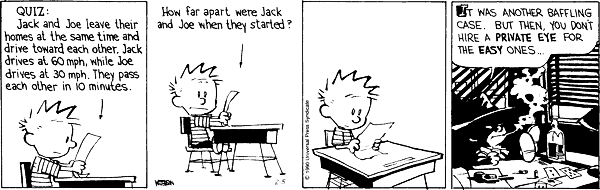
This is not restricted to physical feats. Calvin of Calvin and Hobbes is incredibly advanced intellectually for his age (6 years old), and his vocabulary and thinking are both complex to boot. The things he learned at school are things I will never imagine myself learning even at 6 years old myself, like the fact that they learned geography. Oddly enough, their mathematics are more on par with what 6 year olds learn, although the math problem he once faced (as Tracer Bullet) is on par with his other subjects.
(If you are a 6 year old human (not cartoon character) and you can solve this problem, you are a genius)
If you, like me, aren't familiar with the outside world at a younger age, these things can be seen as something normal. For example, in the Calvin example above, I used to think that Americans have a far more advanced education system than us Malaysians. I like to imagine that when aliens look at what we watch or read, they would have came to certain conclusions themselves, like how children can already become incredibly advanced athletes.
Me being myself, I'm gonna be myself and give an example from Fire Emblem, as usual. I tend to like a lot of characters, but a number of these are either mediocre to use or just bad, which however doesn't steer me away from them. If I like their personality and if their usage doesn't impact my enjoyment, I will keep using them. Now, sure, my favorite character IS a viable one gameplay-wise but that's hardly the reason why I love her this much.
Sometimes, unviable characters even have some charm. I find it satisfying to successfully use a bad character and accomplish things that they shouldn't be able to perform conventionally. Likewise, it's also pretty fun to meme with a bad character.
It's all just about having a good time.

Reactions: zel and winstein