
I just beat __

header.jpg

Tembo the Badass Elephant (PC)

Also available on: PS4, XBO

This game was teased back when SEGA and Game Freak were going to collaborate on a new game, with SEGA as the publisher and Game Freak as the developer. This isn't the first game that these two cooperated on, as Pulseman was a previous game between those two. The most notable part of this game is that unlike most games after Pokemon, Tembo was never made for a Nintendo system. Given that this game was made in Unity, it was an odd decision, but I imagine the performance might be a bit difficult to balance since my PC had to use the lowest settings for the best performance, and it's a pretty recent PC (2017).

This game is directed by James Turner, and the art style of this game shows. In case you aren't aware, James Turner previously directed Harmoknight, which has a very similar artstyle to this game. Pokemon Trozei (the DS game) is another game that has his art style over it. He also designed a number of Pokemon that includes the Vanilluxe line, Guzzlord and the Golurk line, though if you ask me, the Vanilluxe line is most distinctively his style despite being redrawn by Sugimori if going by the artwork he did. So basically, game's artstyle is distinctly James Turner that it's undeniable he had his hands on this game.

The basic premise of this game is that a large-scale invasion by PHANTOM, an evil organisation, had caused them to take over a peanut-shaped island. To combat the forces of PHANTOM, the military summoned Tembo the elephant from his jungle to help demolish PHANTOM and rescue civilians, all told in stylish comic panels. In fact, the cutscenes uses sequential animated comic panels where the appearing panel will move. This game is a bit comedic because of the absurd premise. After all, this is about an elephant soldier, and the peanut symbol is found throughout the comrades, which indicates that peanut is the way of life for this island. Did I mention that Tembo flies to the island with the help of birds carrying him on strings? The game didn't quite comment about the absurdity of the whole thing, as the cutscenes and the scenarios are somewhat serious (did you know that Steam requires an age check to view the page?). I also like some of the transition screens, such as this one after you defeated the third boss with all civilians rescued (I felt that the first two are better but I didn't have the forethought of saving a screenshot):

hkENTvd.png


Tembo is normally slow, but you can charge forward to make him a battering ram and to move fast. Moreover, Tembo's offensive moves (besides charging) include using his trunk to volley, ground pound, and do a dive in the air. Finally, Tembo also has the ability to spray water to douse heat or stun certain enemies. With these actions, Tembo has everything he needs to defeat PHANTOM. Speaking of controls, Tembo feels oddly unintuitive in certain areas. For one, Tembo moves quite slowly so while it's probably precise, it's still moving slower than I would have liked. Turning is also rather slow, as though Tembo has a lot of inertia doing this, which most affects anything that is aerial, in my experience. Tembo's charging is also very prone to error, because if the charge key is pressed in the air accidentally, Tembo will dive uncontrollably with no way of cancelling it, which could possibly put him in a bad spot, or worse: falling to his doom. The worst part is: the Switch Pro Controller is not compatible with this game! That's why I played this game with the keyboard throughout.

The game has 3 zones to conquer, with each having 3 regular levels, a PHANTOM base level and a boss, which makes it 5 levels per area. The regular levels and the base level each have 10 civilians to rescue, and once rescued, they will ride on Tembo without worrying about any danger like dropping off. Rescuing every civilian in a level grants a medal for the effort. There is a second medal that can be obtained for defeating every PHANTOM enemy. The bosses are more or less similar to the Donkey Kong style where there are several phases (except the first one) and they have to be defeated without dying. After the 15 levels are conquered, 3 more levels are unlocked, which includes a regular level, an enemy gauntlet level and a final boss. The final levels are pretty tough that cost me a lot of lives, so I can say that this is not as easy as it should look.

In terms of difficulty, I think this game is kind of difficult but at the same time also rather merciful. The difficult part is due to how Tembo is somewhat rigid and a big target so a wrong move makes him prone to enemies. At the same time, it's merciful because there are few sections where the player is forced to be fast. The level design is a little bit linear in that backtracking is not an option, though there are branching paths that either have civilians or something good. Despite this, I did miss out on a perfect run in some levels on the first time, so it is trickier than I let on. While the levels are a bit mellow in terms of how it plays out, there is a lot of spectacle here and there, especially when cannons are involved since a few of them allow for travelling between layers of 2D sections (kind of like Donkey Kong Country Returns).

With only like 18 levels, this game is not that long, and it's also decently challenging, but I do not know if this game is wholly recommended since it's not like Mario where the character felt good to control due to how much control Mario has, since Tembo is not that flexible. Still though, it's not a bad game that I wonder why it's not on a Nintendo system, since these type of games are more easily at home with the various colourful characters among Nintendo games.

Thank you for reading.
 
header.jpg

The Bridge (PC)

Also available on: XB360 (LA), Android, XBO, PS3, PS4, PSV, Ouya, Wii U, Switch

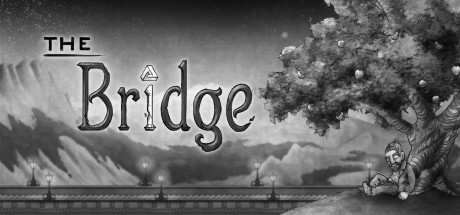
The game's most recognisable trait is that the level designs defy any rule on spacing, so it's basically similar in look to M.C. Escher's famous paintings where gravity function differently for everyone. Indeed, the paintings serve as this game's inspiration, due to its monochrome look and the fact that gravity can be rotated to affect the objects of the level. Like any good real-time puzzle game like Catrap, there is a rewind function which is a very handy feature because of how timing and precision is involved when solving puzzles. While there is some sort of story in this game, it's more or less subtle.

The game is split to four rooms with six levels each, though they don't seem to match a theme that many games tend to do. What they do have is introducing new elements every now and then. The amount may sound like there are few puzzles, but there are actually more. You see, after you complete the first batch, an event will occur and mirrored levels can be accessed. Yes, that means another four rooms with six levels, and while they sound like they should be the same as the regular ones due to the "mirrored" moniker, that could not be further from the truth. The levels are certainly mirrored, but they have different objects that actually makes them more difficult than the regular levels. Oh, and even during the mirrored levels, new elements could be introduced.

The most fascinating part of this game is the mirrored levels, because not only are the levels different versions of the the regular levels, the implication is also that the place is cursed. This is indicated by how the paintings between the standard and mirrored dimensions are different, with the mirrored versions being creepier. Even if not as fascinating, there are many things that are fascinating too. For one, there are balls called "Menaces" that have a creepy two-way face that meets at the mouth, and touching them is deadly.

Speaking of deadly, I find the death messages very funny. As an example, touching the balls will render the message "And my last memory... was that of pain", and falling out of bounds is "And there I plummeted, eternally...". The thing is, objects cannot fall away because the puzzles are designed in such a way that require them. The best death message is when two copies of the player character touch each other, with the message "My own mind has molded the seed of my downfall...". They might not sound funny when you just read them, but when playing the game it was funny to see the experience of the death of the player character.

As a puzzle game, the puzzles can get tricky, especially the mirrored levels. I am not ashamed to say that I resorted to a walkthrough for several of the mirror levels, because there are some tough ones. There are even collectibles that are in the shape of wisps, and most of them have obscure locations. In my normal playthrough, I only collected one. For example, one of them requires putting in the Konami code to make it appear, and another requires rewinding at the beginning of the level so that the player is in a position to reach it. It's truly for the curious, and collecting them unlocks pieces of a portrait, so it's nothing major.

This puzzle game is great and fascinating, but it's probably also very frustrating. Still, the fact that there is a guide mean that not all is lost (since the game requires a level to be completed to unlock the next one). I felt that it made great usage of the Escher influences, which makes for a memorable game. This game won many game awards back then for a reason. Before I go, I must say that this game looks very good in colour if there were colour. Just look at one of the ending moments:

GUDTp1L.png


Thank you for reading.
 
3363268-runner3+thumb.png

Runner3 (Switch)

Also available on: PC, PS4

Runner3 follows up on Bit.Trip Presents... Runner2: Future Legend of Rhythm Alien. Runner3, on the other hand, ignores the timeline and just have a humorous storyline featuring CommanderVideo and his escapades, essentially dropping the Bit.Trip name that encompasses a chronological journey of CommanderVideo.

Much like the first Bit.Trip Runner and Runner2, Runner3 is an auto-runner. The basic formula for the Runner games is that the player character, normally CommanderVideo, must run forward while dealing with any obstacles on the way. Some requires jumping over, some require sliding underneath and there are even those that you must attack to get past. On the way, there are gold bars that the player can collect, and they might also act as a forewarning against incoming obstacles. There is a bonus when the player collects them all, so it's a good idea to do so. There are also four special collectibles that will make the music livelier, going from Hyper to Mega to Super to Ultra to Extra. They were red plus symbols in past games, but in this game, they come in the form or boomboxes. Finally, the games have the player character run through some weird and wonderful places. You thought hills having eyes are weird in Mario, but in this game, they are weirder because they have full faces.

So what's new in Runner3? For the first time, the player doesn't just run, thanks to vehicles appearing at certain times. For example, driving in a plane allows CommanderVideo to move up or down, and the minecart is fast and has a slower descent. The normal levels are also meant to be completed more than once, as there is a regular route and the gem route (Impossible levels only have gem routes). This is faciliated by the fact that every level has forked roads that can be changed manually (the chosen route automatic sets the right path). The game also introduced a couple of moves that will make returning to past games inconvenient: one is a double-jump, and the other is a slam that can basically cancel jumps. These two moves are indispensable in the journey because not only do the levels have obstacles designed around them, they also afford the character more movement options than ever.

The Retro levels are also unlike the previous games, because it plays more like a platformer than a retro version of an auto-runner. They are more or less platforming challenges that instead have different goals: you get to the end as fast as you can, while collecting 5 coins because that's the only way the player's best time is counted. Because CommanderVideo is not always running, there is no need to worry about colliding into things. However, the game doesn't want the player lingering too long, as bats will spawn to keep the player moving.

When starting the game, there is a disclaimer that this game is the most difficult Runner game yet, and they aren't wrong on that. For one, every level is generally longer, as each are I would say about 2 to 3 minutes to complete on average (without dying), compared to the more compact levels in the first two games (save for a few levels here and there). This is faciliated by the fact that there are 100 gold bars, which is a lot compared to the past games where the gold bar count doesn't even reach that amount for most levels. To make things tough, there is one checkpoint in the early default version, and due to how long the levels are, a mistake can undo a lot of progress. The Impossible levels take on a whole new level by not only having generally long levels, but it's also littered with tricky obstacles that require precise platforming. On the other hand, the boss levels are far easier than the rest of the game as they are generally short, except for the final boss.

Fortunately, the game received an update that made it the default to have more checkpoints, making the challenges more manageable. In fact, the update of the game basically have a difficulty changer, allowing players to change the Enemy Density, Checkpoint count and Stair Assist. The former is basically to change the amount of obstacles on stage, while the latter adds platforms at stair areas so that the player can more easily navigate around steps. Making the game easier also reduces the potential score the player receives, while making things harder for the player increases the score. Essentially this allows less experienced players to go through the game since the game never penalises players for going easy. I took advantage of the Enemy Density to go through the Impossible levels, because most of them are so tough at its normal setting. Despite this, the final Impossible level is very difficult because there are level layouts that won't make it easy even if you reduce its setting.

While the first Runner game has already got a lot of weirdness, the second game really ramps up the weirdness and even employ Charles Martinet as the narrator, which I felt goes very well with the silliness of the game. Come the third game, where the weirdness is pretty much carried over from the second game, as the story is told in the style of a theatre using puppets. Every level contains one puppet to collect, and by doing so the player can watch a theatre that pertains to a story that contains outlandish situations, verses, fourth-wall breaking jokes. I found them very amusing that it's worth it to collect them to see what ridiculous story they want to tell.

There are more wacky characters introduced. The previous game has various characters that you can unlock after beating certain levels, but this game added an additional requirement by needing to encounter NPCs to start a quest of collecting 3 items of their request, then returning to them for the character. Between Runner2 and Runner3, only one unlockable character returns as a playable (Unkle Dill), while two are non-playable (Reverse Merman and Whetfart Cheeseburger), and another two are completely absent (one of them is referenced as a costume though). Take a look at the playable cast:
DuJUyTRXQAAGPNB.jpg:large


There are some strange characters here, but what might have caught your eye are characters from other games. Yep, this is another game where Shovel Knight is starring, so add this game to the growing list of games that Shovel Knight is playable. Eddie Riggs makes an unexpected appearance from Brütal Legend, which even surprised me. Then there's Dave which is from a different game made by the same company, which explains why Dave has costume choices while the other guest characters don't. And finally, there's the Narrator, who is very clearly a caricature version of Charles Martinet, and in my personal opinion, the best playable character after the Commander himself. The rest of the characters are original so they aren't as interesting to talk about though.

I thoroughly enjoyed this game that I finished this game, clocking at around 25 hours and collecting all that needs to be collected, except for something found in the cryptic radio tower that I am not going to crack my head on. The music is fantastic, the platforming is very enjoyable and the humour is very good.

(Fun fact: The developers of this game are making a Bubsy game that is looking to be an auto-runner in the vein of this game)

Thank you for reading.
 
Pokemon Let's go, Eevee! (Nintendo Switch)

Lets_Go_Eevee_EN_boxart.png


Defeated the Elite Four and the Champion a little while ago, will probably do some of the post-game things since I still have another fourteen days before I can superbly smash some bros. I already caught the three legendary birds and even manage to nab Mewtwo despite him being twenty levels higher than my party, so I might finish filling up my Pokedex next. (Well... minus the Let's go, Pikachu! exclusives, Mew since I didn't get the Pokeball Plus bundle and Meltan since I don't have a phone.)
 
Freedom Planet (Nintendo Switch version)

I recently completed the main story as Lilac, but it was a Casual difficulty run. Sadly, I did lose at least one life during my first playthrough.

Also, I did hear that Brevon was a huge life killer, but that apparently doesn't happen unless you go above the Casual difficulty level.
 
MnSG said:
Freedom Planet (Nintendo Switch version)

I recently completed the main story as Lilac, but it was a Casual difficulty run. Sadly, I did lose at least one life during my first playthrough.

Also, I did hear that Brevon was a huge life killer, but that apparently doesn't happen unless you go above the Casual difficulty level.

I finished this game on the Wii U (thank you, Humble Nindie bundle!) on the Easy difficulty, and I can confirm that Brevon is a very tough final boss. Basically his attacks do a lot of damage and he can attack while dashing, so he certainly lives up to his reputation. Easy difficulty at least has regeneration health so it's not so bad since you can keep dodging to get up to shape for the next assault, but I shudder to think about how hard it would be at Normal difficulty. Don't remember everything about the boss that made him tough, but yes, he's very tough that cost me many lives, though fortunately not enough to get a game over, since the rest of the game is not as tough.

Thank you for reading.
 
I used to have the Steam version back on my old Steam account, been following the game ever since it's humble beginnings at SAGE and it's one of the very few KickStarters I backed. Thinking about maybe grabbing the Switch version soon...

I remember Brevon being pretty tough as well.
 
winstein said:
I finished this game on the Wii U (thank you, Humble Nindie bundle!) on the Easy difficulty, and I can confirm that Brevon is a very tough final boss. Basically his attacks do a lot of damage and he can attack while dashing, so he certainly lives up to his reputation. Easy difficulty at least has regeneration health so it's not so bad since you can keep dodging to get up to shape for the next assault, but I shudder to think about how hard it would be at Normal difficulty. Don't remember everything about the boss that made him tough, but yes, he's very tough that cost me many lives, though fortunately not enough to get a game over, since the rest of the game is not as tough.

Thank you for reading.

Yeah it is fortunate that Freedom Planet has a difficulty setting, and it doesn't force you to raise the difficulty level if you want to complete the whole story. The only time that I've lost a life during my first Casual difficulty playthrough as Lilac was on stage 4, where I got blown off the ship while fighting the stage boss.