
Navigation
Install the app
How to install the app on iOS
Follow along with the video below to see how to install our site as a web app on your home screen.
Note: This feature may not be available in some browsers.
More options
Style variation
You are using an out of date browser. It may not display this or other websites correctly.
You should upgrade or use an alternative browser.
You should upgrade or use an alternative browser.
Badposter rates every country flag
- Thread starter badposter
- Start date


Pomni
ΣΤΔ ΘΔ
- Pronouns
- it/she/zey
Andymii said:USA is just around the corner :P
:clap:
- Thread starter
- #303
Flag of the United States of America

Ratio: 10:19 (normal)
Adopted: 14 June 1777 (current version adopted on 4 July 1960)
Part 1
Rule 1: A child could draw this flag from memory, even if they may not draw the exact number of stars or stripes.
Rule 2: The first Native Americans came to what is now the United States through the Bering land bridge. The first place now in the United States to be discovered by Europeans was Puerto Rico, discovered by Christopher Columbus in 1493. John Cabot may have been the first European to visit what is now an US state, as he may discovered Maine in 1497. However, the first European to indisputedly set foot in what is now a state of the US was Juan Ponce de León, who discovered Florida in 1513. In the following (roughly) 300 years, colonies in what is now the US would be established by Spain, France, England/Great Britain, the Netherlands, Sweden, and Russia (the US Virgin Islands were also Danish until 1917).
From 1732 (the establishment of Georgia), the British had thirteen colonies along what is now the eastern coast of the United States. British territory grew after the Seven Year's War, after which Great Britain controlled all of what is now the United States east of the Mississippi River. The war had indebted Great Britain, leading to the establishment of taxes in the colonies, which had no represation in the British parliament. This led to the beginning of the American Revolution, and the Boston Tea Party, in which taxed tea held by the East India Company was thrown into Boston Harbor by the colonists, leading to the British Parliament passing four acts known as "the Intolerable Acts", which were unpopular in the colonies, which led to British rule becoming more unpopular and the American Revolution turining into a war in 1775. Though the goals of the rebels were the end of taxation without representation, they eventually became full independence for the United States. On a date you all know in 1776 the United States declared independence.
The first flag of the United States was mostly like the current, but the canton was different: it had the flag of Great Britian instead of stars on a blue field. This first flag was based either on the Flag of the British East India Company or the British Red Ensign.
On 14 June 1777 the Second Continental Congress passed the Flag Act, which stated that "the flag of the thirteen United States be thirteen stripes, alternate red and white; that the union be thirteen stars, white in a blue field, representing a new constellation". The new flag of the United States was designed by Francis Hopkinson from New Jersey (whose exact design is unknown, as no sketchs survive), and was first flown in battle during the Siege of Fort Stanwix:
With French, Spanish, and Dutch support the United States managed to win the war, which ended in 1783 with the signing of the Treaty of Paris, which was generous to the United States, giving it all of its current territory east of the Mississippi, except Florida, returned to Spain after being British for twenty years.
The first two states to be added to the union which weren't one of the thirteen colonies were Vermont, in colonial times disputed between New York and New Hampshire, briefly independent until joining the US in 1791, and Kentucky, part of Virginia until 1792. This led to two stars and two stripes being added to the US' flag in 1795. By the beginning of 1818, the US had 20 states, but the flag hadn't changed since 1795. On 4 April 1818 the US Congress established that every time the US gained a new state, a new star would be added to the flag the on the 4th of July after the admission of the state. Two stripes were removed from the flag, and the numbers of stripes was permanently fixed as 13 for the original 13 colonies. The stars actually had no official arrangement until 1912 (after New Mexico and Arizona were added).
In the years following its independence, the US would grow in size, its latest addition of territory of territory that would become a state being the 1898 annexation of Hawaii. The United States last changed on 4 July 1960, after Hawaii gained statehood on August 21, 1959. The US' current flag was designed by Robert G. Heft (who was seventeen years old when he made the flag) in 1958.
Rule 3: Blue, white, and red. Good colors.
Rule 4: This flag has a lot of simple stars.
Rule 5: There are a lot of countries with flags similar to the US's, all of which are younger, and most of which were influenced by it. The United States is currently the most powerful (and probably most well-known) country in the world, so its flag is bound to be distinctive.
Part 2
Technically, this is the 28th flag of the United States' flag. However, most changes were the addition of one star, and weren't really major.
1776-1777
 I prefer this flag to most others with the Union Jack in the canton. However, this flag can easily be confused with the Eas India Company's, and I personally like the symbolism of the Union Jack not being in the flag of the United States.
I originally planned to write about the original 13-star flag, but that flag had no defined design.
Rule 3
It's mostly good and distinctive, but I think it has too many stars, which makes the flag the flag cluttered. But otherwise it's good.
Ratio: 10:19 (normal)
Adopted: 14 June 1777 (current version adopted on 4 July 1960)
Part 1
Rule 1: A child could draw this flag from memory, even if they may not draw the exact number of stars or stripes.
Rule 2: The first Native Americans came to what is now the United States through the Bering land bridge. The first place now in the United States to be discovered by Europeans was Puerto Rico, discovered by Christopher Columbus in 1493. John Cabot may have been the first European to visit what is now an US state, as he may discovered Maine in 1497. However, the first European to indisputedly set foot in what is now a state of the US was Juan Ponce de León, who discovered Florida in 1513. In the following (roughly) 300 years, colonies in what is now the US would be established by Spain, France, England/Great Britain, the Netherlands, Sweden, and Russia (the US Virgin Islands were also Danish until 1917).
From 1732 (the establishment of Georgia), the British had thirteen colonies along what is now the eastern coast of the United States. British territory grew after the Seven Year's War, after which Great Britain controlled all of what is now the United States east of the Mississippi River. The war had indebted Great Britain, leading to the establishment of taxes in the colonies, which had no represation in the British parliament. This led to the beginning of the American Revolution, and the Boston Tea Party, in which taxed tea held by the East India Company was thrown into Boston Harbor by the colonists, leading to the British Parliament passing four acts known as "the Intolerable Acts", which were unpopular in the colonies, which led to British rule becoming more unpopular and the American Revolution turining into a war in 1775. Though the goals of the rebels were the end of taxation without representation, they eventually became full independence for the United States. On a date you all know in 1776 the United States declared independence.
The first flag of the United States was mostly like the current, but the canton was different: it had the flag of Great Britian instead of stars on a blue field. This first flag was based either on the Flag of the British East India Company or the British Red Ensign.
On 14 June 1777 the Second Continental Congress passed the Flag Act, which stated that "the flag of the thirteen United States be thirteen stripes, alternate red and white; that the union be thirteen stars, white in a blue field, representing a new constellation". The new flag of the United States was designed by Francis Hopkinson from New Jersey (whose exact design is unknown, as no sketchs survive), and was first flown in battle during the Siege of Fort Stanwix:
The Flag Act didn't define the exact design of the flag, and stars were arranged in many different ways. The second flag of the United States is commonly thought to have the stars arranged in a circle (known as the Betsy Ross flag. Betsy Ross did not actually design the United States' flag: this is a myth that orignated in the second half of the 19th century). The first known instance of an American flag with stars arranged in a circle appeared in a 1792 painting, and today it is believed to have been used in anniversary celebrations.Wikipedia said:Soldiers cut up their shirts to make the white stripes; scarlet material to form the red was secured from red flannel petticoats of officers' wives, while material for the blue union was secured from Capt. Abraham Swartwout's blue cloth coat.
With French, Spanish, and Dutch support the United States managed to win the war, which ended in 1783 with the signing of the Treaty of Paris, which was generous to the United States, giving it all of its current territory east of the Mississippi, except Florida, returned to Spain after being British for twenty years.
The first two states to be added to the union which weren't one of the thirteen colonies were Vermont, in colonial times disputed between New York and New Hampshire, briefly independent until joining the US in 1791, and Kentucky, part of Virginia until 1792. This led to two stars and two stripes being added to the US' flag in 1795. By the beginning of 1818, the US had 20 states, but the flag hadn't changed since 1795. On 4 April 1818 the US Congress established that every time the US gained a new state, a new star would be added to the flag the on the 4th of July after the admission of the state. Two stripes were removed from the flag, and the numbers of stripes was permanently fixed as 13 for the original 13 colonies. The stars actually had no official arrangement until 1912 (after New Mexico and Arizona were added).
In the years following its independence, the US would grow in size, its latest addition of territory of territory that would become a state being the 1898 annexation of Hawaii. The United States last changed on 4 July 1960, after Hawaii gained statehood on August 21, 1959. The US' current flag was designed by Robert G. Heft (who was seventeen years old when he made the flag) in 1958.
Rule 3: Blue, white, and red. Good colors.
Rule 4: This flag has a lot of simple stars.
Rule 5: There are a lot of countries with flags similar to the US's, all of which are younger, and most of which were influenced by it. The United States is currently the most powerful (and probably most well-known) country in the world, so its flag is bound to be distinctive.
Part 2
Technically, this is the 28th flag of the United States' flag. However, most changes were the addition of one star, and weren't really major.
1776-1777
I originally planned to write about the original 13-star flag, but that flag had no defined design.
Rule 3
It's mostly good and distinctive, but I think it has too many stars, which makes the flag the flag cluttered. But otherwise it's good.
Pomni
ΣΤΔ ΘΔ
- Pronouns
- it/she/zey
But otherwise it's good.
Brb, telling that to Washington D.C.
- Thread starter
- #305
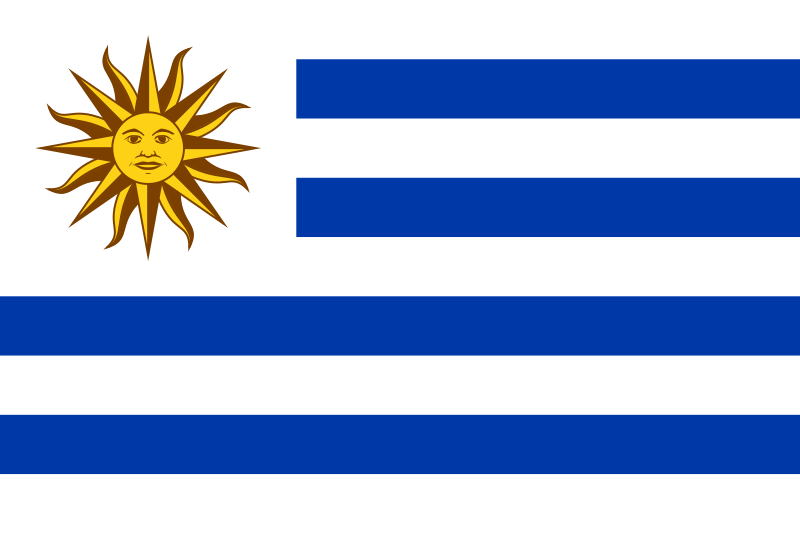
Flag of Uruguay
Ratio: 2:3 (normal)
Adopted: 16 December 1828 (current version adopted on 11 July 1830)
Part 1
Rule 1: A child couldn't draw the sun perfectly, and the may not draw the exact number of stripes, but otherwise the flag is simple.
Rule 2: Uruguay was first inhabited around 10,000 years ago. Around 4,000 years ago the Guaraní drove the Charrúa people south. Those people made up most of the people in what is now Uruguay when the Portuguese discovered the country in 1513. The Spanish first came in 1516, and afterwards Uruguay was disputed between the colonial powers, though in fact Uruguay was seen as unimportant due its lack of gold or silver, so there wasn't much colonization early on.
In 1603 the Spanish introduced cattle (which would eventually become Uruguay's main export) to Uruguay. The oldest settlement in Urugay was Villa Soriano, founded by Spanish Jesuits in 1624. The Portuguese established Colônia do Sacramento in 1680, and the Spanish establised Montevideo in 1726. The borders between Brazil and Uruguay were defined in the 1750 Treaty of Madrid.
In 1776 the Viceroyalty of Río de la Plata, which included Uruguay, Argentina, Bolivia, and Paraguay, was founded. Río de la Plata rose up in rebellion against The Council of Regency of Spain and the Indies in 1810. Buenos Aires attempted to defeat the Spanish in Uruguay in the First Banda Oriental Campaign (1811). The revolutionaries won the Battle of Las Piedras and began seiging Montevideo, but the Spanish then began to invade Uruguay with Portugal's help, and the revolutionaries retreated. Later in 1811, the Portuguese withdrew due to British pressure. The Spanish were finally defeated after the Second Banda Oriental campaign (1812-1814). Uruguay then joined the League of Free People, or the Federal League, a federation of provinces in what is now Uruguay, Brazil, and Argentina, founded in 1815. The League had a blue, white, and blue horizontal triband (based on Argentina's flag) with a diagonal red stripe running from the upper hoist side to the lower fly one, symbolizing the blood shed in the war for independence and federalism (today, this flag is known as the flag of Artigas for its designer, José Gervasio Artigas, who led Uruguay' fight against the Spanish). Portugal saw the new republic as a threat, and invaded Uruguay in 1816, leading to a four-year war that ended in Portuguese victory after the 1820 Battle of Tacuarembó. Brazil declared independence on 7 December 1822, and upon independence Brazil's territory included Uruguay, known as Cisplatina.
In 1825 a group known as the Thirty-Three Orientals (so called due to the fact that Uruguay is east of the Río de la Plata) , which supported Uruguay's independence, was founded in Argentina. The Orientals landed on Uruguay on 19 April of that year, and flew a blue, white, and red horizontal tricolor (with the colors based on the flag of the Federal League). The Oriental then established a provisional government on 14 June, and Uruguay declared full independence on 25 August, adopting the flag flown by the Orientals. This led to Brazil declaring war on 10 December. Thus began the Cisplatine, fought between Brazil and Argentina, the latter of which supported Uruguay's independence (and incorporation into Argentina). The war turned to be a stalemate, and by 1828 the war was unpopular in Brazil. The war ended after the 1828 Treaty of Montevideo was signed, and Uruguay gained independence. Uruguay has been independent since.
On 16 December 1828 Uruguay adopted a flag similar to the current, but with 19 stripe (10 white, 9 blue), with the blue stripes symbolizing Uruguay's nine departments at the time: Montevideo, Maldonado, Canelones, San José, Colonia, Soriano, Paysandú, Durazno and Cerro Largo. On 11 July 1830 the stripes were reduced to nine, the symbolism being kept (coincidentally, Urugauay currently has 19 departments). Uruguay's flag is based on both the United States' and Argentina's.
Rule 3: White, yellow, and blue. Good colors.
Rule 4: This flag has a complex sun.
Rule 5: This flag is based off two flags, and manages to be different from both. A good example of distinctive but related.
Part 2
1825-1828
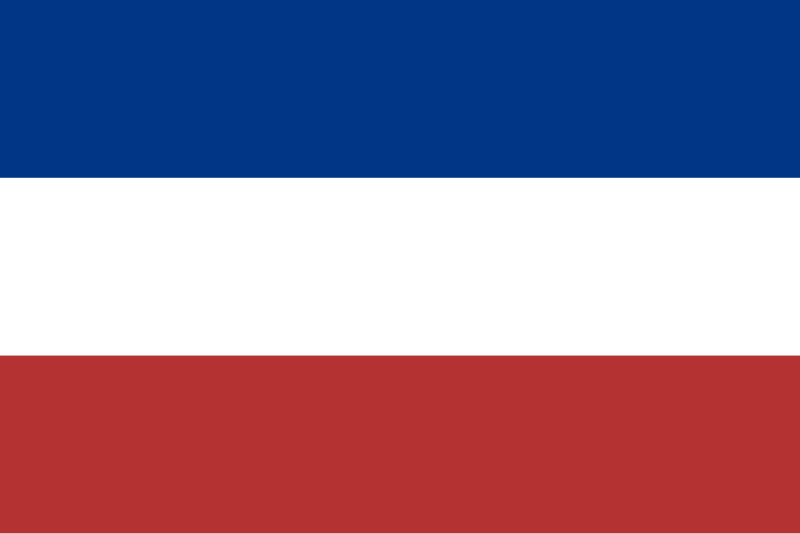 A generic and boring tricolor. Thankfully, it was changed.
1828-1830
 I prefer the current version. 19 stripes is a ot.
Part 3
I like this flag, though the sun is complex.
Ratio: 2:3 (normal)
Adopted: 16 December 1828 (current version adopted on 11 July 1830)
Part 1
Rule 1: A child couldn't draw the sun perfectly, and the may not draw the exact number of stripes, but otherwise the flag is simple.
Rule 2: Uruguay was first inhabited around 10,000 years ago. Around 4,000 years ago the Guaraní drove the Charrúa people south. Those people made up most of the people in what is now Uruguay when the Portuguese discovered the country in 1513. The Spanish first came in 1516, and afterwards Uruguay was disputed between the colonial powers, though in fact Uruguay was seen as unimportant due its lack of gold or silver, so there wasn't much colonization early on.
In 1603 the Spanish introduced cattle (which would eventually become Uruguay's main export) to Uruguay. The oldest settlement in Urugay was Villa Soriano, founded by Spanish Jesuits in 1624. The Portuguese established Colônia do Sacramento in 1680, and the Spanish establised Montevideo in 1726. The borders between Brazil and Uruguay were defined in the 1750 Treaty of Madrid.
In 1776 the Viceroyalty of Río de la Plata, which included Uruguay, Argentina, Bolivia, and Paraguay, was founded. Río de la Plata rose up in rebellion against The Council of Regency of Spain and the Indies in 1810. Buenos Aires attempted to defeat the Spanish in Uruguay in the First Banda Oriental Campaign (1811). The revolutionaries won the Battle of Las Piedras and began seiging Montevideo, but the Spanish then began to invade Uruguay with Portugal's help, and the revolutionaries retreated. Later in 1811, the Portuguese withdrew due to British pressure. The Spanish were finally defeated after the Second Banda Oriental campaign (1812-1814). Uruguay then joined the League of Free People, or the Federal League, a federation of provinces in what is now Uruguay, Brazil, and Argentina, founded in 1815. The League had a blue, white, and blue horizontal triband (based on Argentina's flag) with a diagonal red stripe running from the upper hoist side to the lower fly one, symbolizing the blood shed in the war for independence and federalism (today, this flag is known as the flag of Artigas for its designer, José Gervasio Artigas, who led Uruguay' fight against the Spanish). Portugal saw the new republic as a threat, and invaded Uruguay in 1816, leading to a four-year war that ended in Portuguese victory after the 1820 Battle of Tacuarembó. Brazil declared independence on 7 December 1822, and upon independence Brazil's territory included Uruguay, known as Cisplatina.
In 1825 a group known as the Thirty-Three Orientals (so called due to the fact that Uruguay is east of the Río de la Plata) , which supported Uruguay's independence, was founded in Argentina. The Orientals landed on Uruguay on 19 April of that year, and flew a blue, white, and red horizontal tricolor (with the colors based on the flag of the Federal League). The Oriental then established a provisional government on 14 June, and Uruguay declared full independence on 25 August, adopting the flag flown by the Orientals. This led to Brazil declaring war on 10 December. Thus began the Cisplatine, fought between Brazil and Argentina, the latter of which supported Uruguay's independence (and incorporation into Argentina). The war turned to be a stalemate, and by 1828 the war was unpopular in Brazil. The war ended after the 1828 Treaty of Montevideo was signed, and Uruguay gained independence. Uruguay has been independent since.
On 16 December 1828 Uruguay adopted a flag similar to the current, but with 19 stripe (10 white, 9 blue), with the blue stripes symbolizing Uruguay's nine departments at the time: Montevideo, Maldonado, Canelones, San José, Colonia, Soriano, Paysandú, Durazno and Cerro Largo. On 11 July 1830 the stripes were reduced to nine, the symbolism being kept (coincidentally, Urugauay currently has 19 departments). Uruguay's flag is based on both the United States' and Argentina's.
Rule 3: White, yellow, and blue. Good colors.
Rule 4: This flag has a complex sun.
Rule 5: This flag is based off two flags, and manages to be different from both. A good example of distinctive but related.
Part 2
1825-1828
1828-1830
Part 3
I like this flag, though the sun is complex.
- Thread starter
- #306
Flag of Uzbekistan

Ratio: 1:2 (normal)
Adopted: 18 November 1991
Part 1
Rule 1: A child could draw this flag from memory, though they may not draw the exact number of stars.
Rule 2: In the mid-19th century there where three states in what is now Uzbekistan: the Emirate of Bukhara, the Khanate of Kokand, and the Khanate of Khiva. By 1876, Kokand had been annexed by the Russian Empire and the other two ciuntries had become Russian protectorates.
Starting in 1916, there was resistance against Russian/Soviet rule in Central Asia, which was mostly defeated in the 1920s, but only fully defeated in 1934. In 1920 Khiva and Bukhara were formally annexed by the Russian SFSR and replaced with the Bukharan People's Soviet Republic and the Khoresm SSR, respectively. These joined parts of the Turkestan Autonomus Soviet Socialist Republic (part of the Russian SFSR) to form the Uzbek SSR in 1924.
In 1952 the Uzbek SSR adopted a mostly red flag, with a gold hammer and sickle and a red star in the upper hoist side, and an horiztonal blue stripe, with two white fimbriations separating the blue and red. The red symbolized the "revolutionary struggle of the working masses", the hammer symbolizing industrial workers, the sickle symbolizing peasants, the star symboizng the Communist Party, the blue symbolizing Amu Darya, and the white symbolizing cotton.
After the failed August Coup, Uzbekistan declared full independence on 1 September 1991. It adopted its current flag on 18 November 1991.
In Uzbekistan's flag, the blue symbolizes water and the sky, white symbolizes peace, green symbolizes nature and fertility, and the red fimbriations symbolizes the "life force" of people.The crescent symbolizes Uzbekistan's independence and Islam (practiced by 88% of Uzbekistan's population). The 12 stars symbolize the twelve months of the Islamic calendar.
Rule 3: Blue, white, red, and green. This flag has good colors.
Rule 4: This flag has a crescent and telve stars, both of which are simple.
Rule 5: This flag is similar to Sierra Leone's and Lesotho's, but I think the crescent and stars make it distinctive.
Part 2
Usbek SSR (1925-1926)
 The only interesting thing about his flag is the text written in Arabic script.
Uzbek SSR (1926-1931)
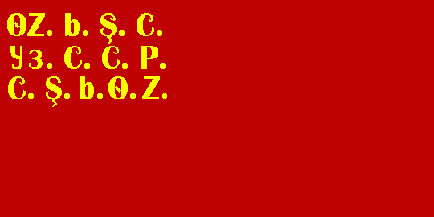 Three scripts. Pretty odd.
Uzbek SSR (1931-1935)
 Eartly SSR flags were bad.
Uzbek SSR (1935-1937)
 A bad flag.
Uzbek SSR (1937-1941)
 Uzbekistan is alphabetically the last former Soviet republic.
Uzbek SSR (1941-1952)
 Which means I won't deal with this type of flag ever again.
Uzbek SSR (1952-1991), Uzbekistan (1991)
 Blue stripes were common in flags of SSRs.
Rule 3
Good flag, but I think it has too many stars.
Ratio: 1:2 (normal)
Adopted: 18 November 1991
Part 1
Rule 1: A child could draw this flag from memory, though they may not draw the exact number of stars.
Rule 2: In the mid-19th century there where three states in what is now Uzbekistan: the Emirate of Bukhara, the Khanate of Kokand, and the Khanate of Khiva. By 1876, Kokand had been annexed by the Russian Empire and the other two ciuntries had become Russian protectorates.
Starting in 1916, there was resistance against Russian/Soviet rule in Central Asia, which was mostly defeated in the 1920s, but only fully defeated in 1934. In 1920 Khiva and Bukhara were formally annexed by the Russian SFSR and replaced with the Bukharan People's Soviet Republic and the Khoresm SSR, respectively. These joined parts of the Turkestan Autonomus Soviet Socialist Republic (part of the Russian SFSR) to form the Uzbek SSR in 1924.
In 1952 the Uzbek SSR adopted a mostly red flag, with a gold hammer and sickle and a red star in the upper hoist side, and an horiztonal blue stripe, with two white fimbriations separating the blue and red. The red symbolized the "revolutionary struggle of the working masses", the hammer symbolizing industrial workers, the sickle symbolizing peasants, the star symboizng the Communist Party, the blue symbolizing Amu Darya, and the white symbolizing cotton.
After the failed August Coup, Uzbekistan declared full independence on 1 September 1991. It adopted its current flag on 18 November 1991.
In Uzbekistan's flag, the blue symbolizes water and the sky, white symbolizes peace, green symbolizes nature and fertility, and the red fimbriations symbolizes the "life force" of people.The crescent symbolizes Uzbekistan's independence and Islam (practiced by 88% of Uzbekistan's population). The 12 stars symbolize the twelve months of the Islamic calendar.
Rule 3: Blue, white, red, and green. This flag has good colors.
Rule 4: This flag has a crescent and telve stars, both of which are simple.
Rule 5: This flag is similar to Sierra Leone's and Lesotho's, but I think the crescent and stars make it distinctive.
Part 2
Usbek SSR (1925-1926)
Uzbek SSR (1926-1931)
Uzbek SSR (1931-1935)
Uzbek SSR (1935-1937)
Uzbek SSR (1937-1941)
Uzbek SSR (1941-1952)
Uzbek SSR (1952-1991), Uzbekistan (1991)
Rule 3
Good flag, but I think it has too many stars.
- Thread starter
- #307
Flag of Vanuatu

Ratio: 19:36 (pretty unusual ratio)
Adopted: 18 February 1980
Part 1
Rule 1: A child couldn't draw the leaves, but they could draw the rest of the flag from memory.
Rule 2: The islands were first inhabited around 3,300 years ago. Europeans discovered Vanuatu in 1606, when Pedro Fernandes de Queirós, a Portuguese explorer sailing for the Spanish, arrived in Espiritu Santo. Fernandes had thought he discovered Terra Australis.
Europeans wouldn't come to Vanuatu again until 1768, when Louis Antoine de Bougainville. In 1774 the island were visited by Captain Cook, who named the island "New Hebrides", after the Hebrides in Scotland.
Missionaries began coming to the islands in the 19th century, and due to this Vanuatu is today 83% Christian. The islands' cotton, coffee, cocoa, bannanas, and coconuts atrracted settlers from the United Kingdom and France, which declared Vanuatu a neutral territory in 1878.
In 1887 the British-French Joint Naval Commission was estabished to protect settlers in Vanuatu, having no jurisdiction over Vanuatu's natives. However, in 1906 the New Hebrides Condominium, administered by both France and the United Kingdom. Oddly enough, it had four legal systems (one could chose between the French and British one. Natives had their own Native Court. There was also a Joint Court, with a president appointed by the King of Spain, which was abolished in 1939, eight years after the end of the Spanish monarchy).
In 1971 the New Hebrides National Party, which supported Vanuatu's independence, was founded. In 1974 the party's name was changed to Vanua'aku Pati. Vanuatu adopted its current flag on 18 February 1980, and became fully independent on 30 July of that year.
In Vanuatu's flag, the green symbolizes the richness of Vanuatu, the black symbolizes the blood of boars and men, and the black symbolizes the ni-Vanuatu. The Y-shape alludes to the shape of Vanuatu's archipelago, and the yellow symbolizes the light of the Gospel. The flag also has a boar's tusk, which symbolizes prosperity in Vanuatu, and the leaves of cycads, symbolizing peace. The leafs' 39 leaflets symbolize the members of Vanuatu's parliament.
Rule 3: Yellow, black, red, and green. Good colors.
Rule 4: Both the leaves and the tusk are simple.
Rule 5: This flag has a distinctive design.
Part 2
British New Hebrides (1906-1953)
 It's a British colonial flag, and it has text.
British New Hebrides (1953-1980)
 This flag has a crown different from the previous flag's. However, it has something in common with the previous: it's a bad flag.
Part 3
Great flag. It looks good and it's distinctive.
Ratio: 19:36 (pretty unusual ratio)
Adopted: 18 February 1980
Part 1
Rule 1: A child couldn't draw the leaves, but they could draw the rest of the flag from memory.
Rule 2: The islands were first inhabited around 3,300 years ago. Europeans discovered Vanuatu in 1606, when Pedro Fernandes de Queirós, a Portuguese explorer sailing for the Spanish, arrived in Espiritu Santo. Fernandes had thought he discovered Terra Australis.
Europeans wouldn't come to Vanuatu again until 1768, when Louis Antoine de Bougainville. In 1774 the island were visited by Captain Cook, who named the island "New Hebrides", after the Hebrides in Scotland.
Missionaries began coming to the islands in the 19th century, and due to this Vanuatu is today 83% Christian. The islands' cotton, coffee, cocoa, bannanas, and coconuts atrracted settlers from the United Kingdom and France, which declared Vanuatu a neutral territory in 1878.
In 1887 the British-French Joint Naval Commission was estabished to protect settlers in Vanuatu, having no jurisdiction over Vanuatu's natives. However, in 1906 the New Hebrides Condominium, administered by both France and the United Kingdom. Oddly enough, it had four legal systems (one could chose between the French and British one. Natives had their own Native Court. There was also a Joint Court, with a president appointed by the King of Spain, which was abolished in 1939, eight years after the end of the Spanish monarchy).
(Interestingly, the British made a flag for the New Hebrides, but the French didn't)The French and British governments were called residencies, each headed by a resident appointed by the metropolitan government. The residency structure greatly emphasized dualism, with both consisting of an equal number of French and British representatives, bureaucrats and administrators. Every member of one residency always had an exact mirror opposite number on the other side who they could consult. The symmetry between the two residencies was almost exact.
There were two prison systems to complement the two court systems. The police force was technically unified but consisted of two chiefs and two equal groups of officers wearing two different uniforms. Each group alternated duties and assignments.
In 1971 the New Hebrides National Party, which supported Vanuatu's independence, was founded. In 1974 the party's name was changed to Vanua'aku Pati. Vanuatu adopted its current flag on 18 February 1980, and became fully independent on 30 July of that year.
In Vanuatu's flag, the green symbolizes the richness of Vanuatu, the black symbolizes the blood of boars and men, and the black symbolizes the ni-Vanuatu. The Y-shape alludes to the shape of Vanuatu's archipelago, and the yellow symbolizes the light of the Gospel. The flag also has a boar's tusk, which symbolizes prosperity in Vanuatu, and the leaves of cycads, symbolizing peace. The leafs' 39 leaflets symbolize the members of Vanuatu's parliament.
Rule 3: Yellow, black, red, and green. Good colors.
Rule 4: Both the leaves and the tusk are simple.
Rule 5: This flag has a distinctive design.
Part 2
British New Hebrides (1906-1953)
British New Hebrides (1953-1980)
Part 3
Great flag. It looks good and it's distinctive.
- Thread starter
- #308
Flag of Vatican City

Ratio: 1:1 (making it one of the two square national flags, the other being Switzerland's).
Adopted: 7 June 1929
Part 1
Rule 1: A child couldn't draw the coat of arms from memory.
Rule 2: In Roman times, the Vatican referred to a marshy are west of the Tiber, with poor water quality. It was during the reign of Caligula that the Vatican's obelisk was brought from Rome to Egypt.
In 754 Pepin the Short (King of the Franks) gave the Pope land in Italy, known as the Papal States, ruled by the Pope. During the Middle Ages, the Pope's residence changed frequently. From 1309 to 1377 Popes lived in Avignon. When the Pope returned to Rome in 1377, they lived at the Vatican at first, but in 1583 they moved to the Quirinal Palace. The papal coat of arms originated around the late 14th century. Before the 19th century the Papal States used a red and yellow cockade, but had no flag.
In 1798 France invaded the Papal States, and the Roman Republic was declared. The States were restored the next years after an invasion from Naples. In 1803 the Papal States adopted a white merchant flag with the papal coat of arms on it.
France invaded again in 1808. The State were then split between France and the Kingdom of Italy, a French puppet state. Pope Pius VII then ordered the Noble Guardto replace the red of their cockades with white, to distinguish them from Napoleonic troops.
The Papal States were once again restored after the 1814-1815 Congress of Vienna. In 1825 a yellow vertical stripe was added to the Papal State's flag, with the white and yellow symbolizinf the keys on the coat of arms. The merchant flag may have been based on the 1808 cockade.
In 1831 the papal infantry began flying a square flag with two diagonal white and yellow stripes.
In 1848 Pellegrino Rossi, Minister of Justice of the Papal States, was assassinated. The next day liberals filled the streets of Rome. The Pope was forced to escape to Gaeta. On 9 February 1849 the Roman Republic was declared. Its flag was similar to Italy's current, but with "Dio e Popolo" (God and People) written in red in the center. The Republic lasted less than one year, as the Republic was invaded and disestablished by France later that year. The Pope returned to the Papal States in 1850, while French troops remained to protect the Papal States.
In 1861 most of the Papal States' territory was conquered by the newly-unified Kingdom of Italy. Lazio remained under Papal control. In 1862 the stripes of the infantry flag of the Papal States became vertical.
In 1870 the French troops in the Papal State were withdrawn to fight in the Franco-Prussian War, leading to Italy to capture Rome in 1870. The following year the king of Italy confiscated the Quirinal Palace. The Pope then decided to become "a Prisoner in the Vatican", not recognizig Italian rule of Rome and refusing to leave the Vatican's current borders. The following Popes continued being "prisoners" until 1929, when the Lateran Treaty between Italy and the Holy See, which established the Vatican City State, was established. This treaty was ratified by the Italian parliament on 7 June.
Vatican City's flag features papal tiara. It also features two keys, symbolizing the Keys to Heaven given to St. Peter (considered to be be the first Pope by Catholic tradition). The golden key symbolizes spiritual power, while the silver key symbolizes early power (the stripes have the same symbolism). The red cord connects the keys.
Rule 3: Not counting the colors in the coat of arms, white and yellow. Good colors.
Rule 4: This flag has a complex coat of arms. Bad.
Rule 5: This flag is distinctive due to its coat of arms. Without the coat of arms it's similar to a few flags of minor places.
Part 2
Vatican City has never changed its flag. The Papal States only had a merchant flag and an infantry flag, never a state flag.
Part 3
It's good except for its complex coat of arms.
- Thread starter
- #309
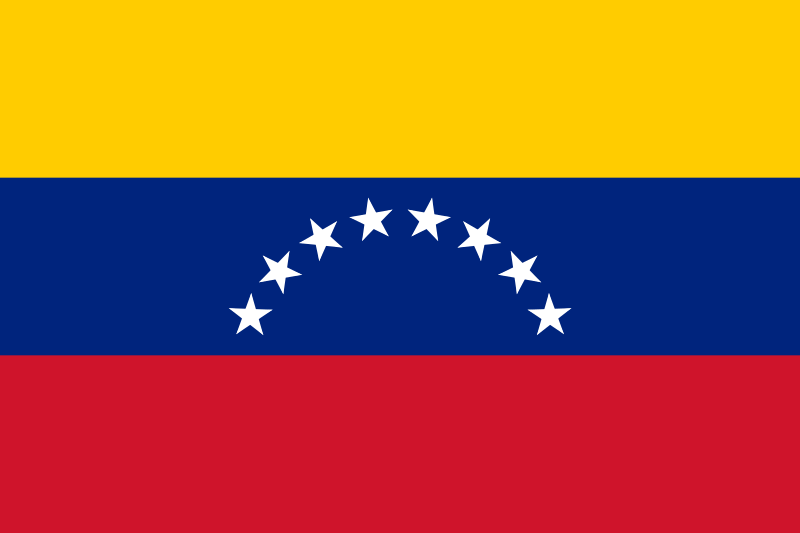
Flag of Venezuela
State flag

Civil flag
 Ratio: 2:3 (normal)
Adopted: 15 July 1930 (coat of arms added to the state flag on 17 February 1954. Eight star added on 12 March 2006).
Part 1
Rule 1: A child could draw the civil flag , but not the state flag, with its complex coat of arms.
Rule 2: What is now Venezuela was first inhabited by people around 15,000 years ago. Christopher Columbus became the first European to discover Venezuela in 1498. Venezuela was visited by Alonso de Ojeda in 1499. He saw houses built by the Wayuu people over water, supported on stilts. This reminded Ojeda of Venice, so he named the area "Little Venice", or Venezuela.
After Venezuela was discovered, colonization was mostly based on the islands of Cubagua and Margarita, which had pearls around them, which ran out in the 16th century.
The oldest city in Venezuela is Cumaná, founded in 1515. From 1528 to 1546. The German Welser family, in debt to the king of Spain, tried to colonize Venezuela, but they failed when their license was revoked.
Venezuela didn't have much gold (it was found only at Yaracuy), so it wasn't colonized heavily. The economy was first based around livestock, before shifting to cocoa production in the 18th century. Slaves brought in from Africa worked at plantations.
Venezuela became a province of the Viceroyalty of New Granada in 1717, before separating to form the Captaincy General of Venezuela in 1777. During the late 18th century there a few attempts to end Spanish rule in Venezuela, inspired by the American and French Revolution, like a 1795 slave insurrection led by José Leonardo Chirino (executed in 1796) and a conspiracy led by José María España and Manuel Gual, which failed in 1797 when Spain discovered it. Gual and España had designed a flag for Venezuela, which was white with a sun (symbolizing Venezuela), with a blue horizontal stripe with four white stars (symbolizing Venezuela's four provinces at the time, Cumaná, Guayana, Maracaibo, and Caracas) on the lower hoist side, and four vertical stripes which were yellow, red, white, and blue on the fly side. The stripes symbolized Venezuelas' races: native people, black people, white people, and mixed-race people. This flag is today used by the state of Vargas.
Venezuela's flag is based on a yellow, blue, and red horizontal tricolor designed by Francisco de Miranda (a supporter of the end of Spanish rule in Latin America), who in 1806 invaded Venezuela, intending to make it independent. Before landing in South America's mainland, Miranda flew the flag of Jacmel, Haiti on 12 March. The flag was fitst flown on Venezuelan soil on 3 August. Lack of popular support, along with the small size of Miranda's army, led to the invasion failing and Miranda withdrawing to Aruba. Miranda gave two stories about the origin of the flag. oNe says it priginated from a conversation he had with Johann Wolfgang von Goethe in 1785:
After France invaded Spain in 1808 it established a puppet kingdom, in which Joseph Bonaparte, Napoleon's brother, became king of Spain. The new king was unpopular in both Spain and its colonies, leading to the formation of juntas in both Spain, and Spanish America. The Supreme Junta to Preserve the Rights of Ferdinand VII was founded in Caracas on 19 April 1810, not recognizing the authority of Spain's juntas, while also not declaring independence. Some cities and towns in Venezuela recognized the junta, while others didn't, thus beginning the Venezuelan War of Independence. Eventually, a faction of the junta supporting full independence gained power, leading to Venezuela to declare independence on 5 July 1811. Venezuela's first republic, the United Provinces of Venezuela, had a yellow, blue, and red horizontal tricolor, with the yellow stripe twice having twice the size of the other two, and the flag had a coat of arms with a topless woman on the canton.
Many people (along with the provinces of Maracaibo and Guayana) didn't recognize Venezuela's independence. An earthquake combined with miltary defats led to the republic surrendering in 1812. Simón Bolívar, the main leader of Venezuelan independence, went west towards New Granada (today Colombia), from which he led a campaign against the Spanish in Venezuela in 1813. On 7 August 1813 the establishment of a second Venezuelan republic was declared. Venezuela's new flag was red, with a white rombus, and a black rectangle on the rhombus. The flag was known as "the Flag of War to the Death", after the Decree of War to the Death, in which Spaniards who didn't actively fight for Venezuelan independence ould be killed, while Latin Americans would be pardoned even if they had commited atrocities.
The Second Republic ended after Maturín fell in 1814. Also in 1814 the French were defeated in Spain, giving Spain the opportunity to send an expeditionary force to Venezuela and New Granada. In 1815 Bolívar escaped to Jamaica and then Haiti.
Bolívar returned to Venezuela in 1816. In 1817 he flew a yellow, blue and red flag. On the yellow stripe were seven blue stars, symbolizing the seven provinces of Venezuela which signed the Declaration of Independence: Caracas, Cumaná, Barcelona, Barinas, Margarita, Mérida, and Trujillo. Pro-independence troops managed to defeat the Spanish in Guayana, and the republicans then established a third republic. An eight star, symbolizing Guayana was then added to the flag.
By 1819 the war was a stalemate. The republicans controlled the south, while the Spanish controlled the north. Bolívar then decided to attack New Granada. He managed to defeat the Spanish and secure New Granada's independence. On 17 Decmeber New Granada and the independendent part of Venezuela joined to create the Republic of Colombia, today known as Gran Colombia (which Ecuador joined in 1822).
After liberating New Granada Bolívar went to Venezuela, managing to decisively beat the Spanish in the 1821 Battle of Carabobo. Afterwards, only Cumaná (capturedmlater that year) and Puerto Cabello (captured in 1823) remained in Spanish hands. Spain sent ships attempting to reconquer Venezuela in 1823, but the attempt ended in failure.
Gran Colombia's flag was yellow, blue, and red, with the country's coat of arms on it. Dispute between centralists, federalists, and separatists led to the republic collapsing in 1830. Venezuela declared independence on 13 January. Venezuela's first flag after the breakup of Gran Colombia was yellow, blue, and red, with Venezuela's coat of arms at the time on the flag. On 18 April 1836 the coat of arms which Venezuela's current is based on was adopted, and the coat of arms was moved from the centrer to the upper hoist side of the flag.
From 1859 to 1863 Venezuela faced a civil war between liberal federalists and conservative centralists. At first, the liberals used the first flag of the third republic (with seven stars), before adopting a 20-star flag (symbolizing Venezuela's twenty provinces at the time) in June 1859. The war ended with a liberal victory and the signing of the Treaty of Coche on 23 April 1863. On 28 July of that year, the flag was changed again: the blue stars were removed and seven white stars (one centered and the others arranged in a circle) were added to the center of the flag. The stars symbolized the seven provinces which signed the Declaration of Independence. In 1905 the flag were changed so that no star would be centered and all the stars would be in a circle. In 1930 the star got their current arrengment. In 1954 the coat of arms was added to the upper hoist side. In 12 March 2006 Venezuela's current coat of arms was adopted, and an eight star, symbolizing Guayana, was added to the flag.
In Venezuela's flag, the yellow symbolizes Venezuela's natural wealth, the blue symbolizes the Atlantic Ocean, and the red symbolizes the blood shed by those who fought for Venezuela's independence.
Rule 3: Not counting the colors in the coat of arms, yellow, red, white and blue. This flag has good colors.
Rule 4: One of many flags with simple stars. This flag also has a complex coat of arms with text.
Rule 5: This flag is similar to Colombia's and Ecuador, the other countries which were part of Gran Colombia, but it has stars which make the flag related but distinctive.
Part 2
1813-1814
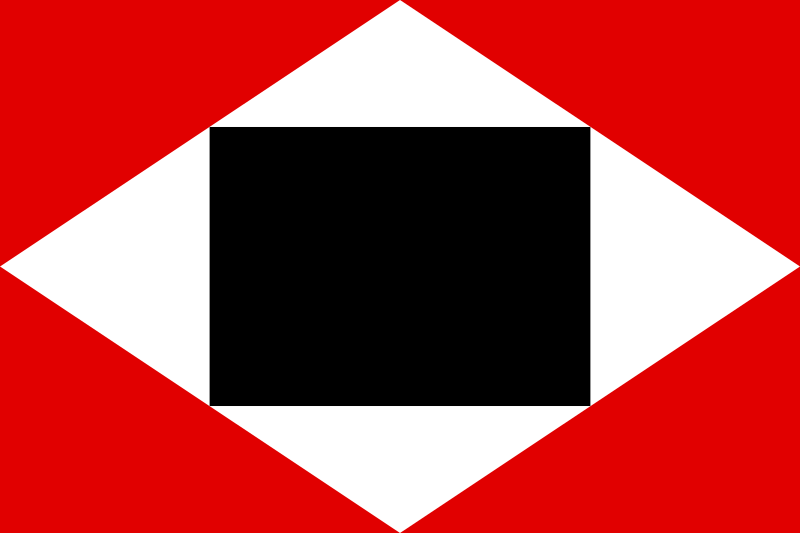 Pretty good flag (note that I do not support the Decree of War to the Death). It's interestingly similar to flag of the Napoleonic republic and kingdom of Italy.
1817 (used by federalists in 1859)
 I'd like this flag if the star weren't blue. The blue stars combined with the blue stripe make the flag unbalanced.
1817-1819
 Same as above.
1830-1836
 Has a coat of arms with text. Bad.
1836-1859/1863
 Remove the complex coat of arms and this flag could be confused with Ecuador's and Colombia's.
1859-1863 (by federalists)
 In my opinion 20 stars is too many.
1863-1905
 I actually prefer the way the stars are arranged in this flag than the way they are in the current.
1905-1930
 Same as above.
1930-1954 (civil flag 1954-2006)
 Pretty similar to the current civil flag.
1954-2006 (state flag)
 The addition of the coat of arms to the state flag was a bad change imo.
Part 3
The civil ensign is pretty good. The state flag, with its complex and small coat of arms, is bad.
State flag
Civil flag
Adopted: 15 July 1930 (coat of arms added to the state flag on 17 February 1954. Eight star added on 12 March 2006).
Part 1
Rule 1: A child could draw the civil flag , but not the state flag, with its complex coat of arms.
Rule 2: What is now Venezuela was first inhabited by people around 15,000 years ago. Christopher Columbus became the first European to discover Venezuela in 1498. Venezuela was visited by Alonso de Ojeda in 1499. He saw houses built by the Wayuu people over water, supported on stilts. This reminded Ojeda of Venice, so he named the area "Little Venice", or Venezuela.
After Venezuela was discovered, colonization was mostly based on the islands of Cubagua and Margarita, which had pearls around them, which ran out in the 16th century.
The oldest city in Venezuela is Cumaná, founded in 1515. From 1528 to 1546. The German Welser family, in debt to the king of Spain, tried to colonize Venezuela, but they failed when their license was revoked.
Venezuela didn't have much gold (it was found only at Yaracuy), so it wasn't colonized heavily. The economy was first based around livestock, before shifting to cocoa production in the 18th century. Slaves brought in from Africa worked at plantations.
Venezuela became a province of the Viceroyalty of New Granada in 1717, before separating to form the Captaincy General of Venezuela in 1777. During the late 18th century there a few attempts to end Spanish rule in Venezuela, inspired by the American and French Revolution, like a 1795 slave insurrection led by José Leonardo Chirino (executed in 1796) and a conspiracy led by José María España and Manuel Gual, which failed in 1797 when Spain discovered it. Gual and España had designed a flag for Venezuela, which was white with a sun (symbolizing Venezuela), with a blue horizontal stripe with four white stars (symbolizing Venezuela's four provinces at the time, Cumaná, Guayana, Maracaibo, and Caracas) on the lower hoist side, and four vertical stripes which were yellow, red, white, and blue on the fly side. The stripes symbolized Venezuelas' races: native people, black people, white people, and mixed-race people. This flag is today used by the state of Vargas.
Venezuela's flag is based on a yellow, blue, and red horizontal tricolor designed by Francisco de Miranda (a supporter of the end of Spanish rule in Latin America), who in 1806 invaded Venezuela, intending to make it independent. Before landing in South America's mainland, Miranda flew the flag of Jacmel, Haiti on 12 March. The flag was fitst flown on Venezuelan soil on 3 August. Lack of popular support, along with the small size of Miranda's army, led to the invasion failing and Miranda withdrawing to Aruba. Miranda gave two stories about the origin of the flag. oNe says it priginated from a conversation he had with Johann Wolfgang von Goethe in 1785:
However, in his military diary Miranda says the flag was based on the yellow, blue, and red standard of the Burger's Guard of Hamburg, which he saw in 1801.Francisco de Miranda said:First he explained to me the way the iris transforms light into the three primary colors [ ] then he proved to me why yellow is the most warm, noble and closest to white light; why blue is that mix of excitement and serenity, a distance that evokes shadows; and why red is the exaltation of yellow and blue, the synthesis, the vanishing of light into shadow.
It is not that the world is made of yellows, blues and reds; it is that in this manner, as if in an infinite combination of these three colors, we human beings see it. [ ] A country starts out from a name and a flag, and it then becomes them, just as a man fulfils his destiny
After France invaded Spain in 1808 it established a puppet kingdom, in which Joseph Bonaparte, Napoleon's brother, became king of Spain. The new king was unpopular in both Spain and its colonies, leading to the formation of juntas in both Spain, and Spanish America. The Supreme Junta to Preserve the Rights of Ferdinand VII was founded in Caracas on 19 April 1810, not recognizing the authority of Spain's juntas, while also not declaring independence. Some cities and towns in Venezuela recognized the junta, while others didn't, thus beginning the Venezuelan War of Independence. Eventually, a faction of the junta supporting full independence gained power, leading to Venezuela to declare independence on 5 July 1811. Venezuela's first republic, the United Provinces of Venezuela, had a yellow, blue, and red horizontal tricolor, with the yellow stripe twice having twice the size of the other two, and the flag had a coat of arms with a topless woman on the canton.
Many people (along with the provinces of Maracaibo and Guayana) didn't recognize Venezuela's independence. An earthquake combined with miltary defats led to the republic surrendering in 1812. Simón Bolívar, the main leader of Venezuelan independence, went west towards New Granada (today Colombia), from which he led a campaign against the Spanish in Venezuela in 1813. On 7 August 1813 the establishment of a second Venezuelan republic was declared. Venezuela's new flag was red, with a white rombus, and a black rectangle on the rhombus. The flag was known as "the Flag of War to the Death", after the Decree of War to the Death, in which Spaniards who didn't actively fight for Venezuelan independence ould be killed, while Latin Americans would be pardoned even if they had commited atrocities.
The Second Republic ended after Maturín fell in 1814. Also in 1814 the French were defeated in Spain, giving Spain the opportunity to send an expeditionary force to Venezuela and New Granada. In 1815 Bolívar escaped to Jamaica and then Haiti.
Bolívar returned to Venezuela in 1816. In 1817 he flew a yellow, blue and red flag. On the yellow stripe were seven blue stars, symbolizing the seven provinces of Venezuela which signed the Declaration of Independence: Caracas, Cumaná, Barcelona, Barinas, Margarita, Mérida, and Trujillo. Pro-independence troops managed to defeat the Spanish in Guayana, and the republicans then established a third republic. An eight star, symbolizing Guayana was then added to the flag.
By 1819 the war was a stalemate. The republicans controlled the south, while the Spanish controlled the north. Bolívar then decided to attack New Granada. He managed to defeat the Spanish and secure New Granada's independence. On 17 Decmeber New Granada and the independendent part of Venezuela joined to create the Republic of Colombia, today known as Gran Colombia (which Ecuador joined in 1822).
After liberating New Granada Bolívar went to Venezuela, managing to decisively beat the Spanish in the 1821 Battle of Carabobo. Afterwards, only Cumaná (capturedmlater that year) and Puerto Cabello (captured in 1823) remained in Spanish hands. Spain sent ships attempting to reconquer Venezuela in 1823, but the attempt ended in failure.
Gran Colombia's flag was yellow, blue, and red, with the country's coat of arms on it. Dispute between centralists, federalists, and separatists led to the republic collapsing in 1830. Venezuela declared independence on 13 January. Venezuela's first flag after the breakup of Gran Colombia was yellow, blue, and red, with Venezuela's coat of arms at the time on the flag. On 18 April 1836 the coat of arms which Venezuela's current is based on was adopted, and the coat of arms was moved from the centrer to the upper hoist side of the flag.
From 1859 to 1863 Venezuela faced a civil war between liberal federalists and conservative centralists. At first, the liberals used the first flag of the third republic (with seven stars), before adopting a 20-star flag (symbolizing Venezuela's twenty provinces at the time) in June 1859. The war ended with a liberal victory and the signing of the Treaty of Coche on 23 April 1863. On 28 July of that year, the flag was changed again: the blue stars were removed and seven white stars (one centered and the others arranged in a circle) were added to the center of the flag. The stars symbolized the seven provinces which signed the Declaration of Independence. In 1905 the flag were changed so that no star would be centered and all the stars would be in a circle. In 1930 the star got their current arrengment. In 1954 the coat of arms was added to the upper hoist side. In 12 March 2006 Venezuela's current coat of arms was adopted, and an eight star, symbolizing Guayana, was added to the flag.
In Venezuela's flag, the yellow symbolizes Venezuela's natural wealth, the blue symbolizes the Atlantic Ocean, and the red symbolizes the blood shed by those who fought for Venezuela's independence.
Rule 3: Not counting the colors in the coat of arms, yellow, red, white and blue. This flag has good colors.
Rule 4: One of many flags with simple stars. This flag also has a complex coat of arms with text.
Rule 5: This flag is similar to Colombia's and Ecuador, the other countries which were part of Gran Colombia, but it has stars which make the flag related but distinctive.
Part 2
1813-1814
1817 (used by federalists in 1859)
1817-1819
1830-1836
1836-1859/1863
1859-1863 (by federalists)
1863-1905
1905-1930
1930-1954 (civil flag 1954-2006)
1954-2006 (state flag)
Part 3
The civil ensign is pretty good. The state flag, with its complex and small coat of arms, is bad.
- Thread starter
- #310
Flag of Vietnam

Ratio: 2:3 (normal)
Adopted: 5 September 1945 (as flag of North Vietnam). Current star adopted on 30 November 1955, flag adopted for all of Vietnam on 2 July 1976
Part 1
Rule 1: A child could draw this flag from memory.
Rule 2: In the year 112 BC Nanyue, a kingdom which had existed since 204 BC, and had spent most of its history as a Chinese tributary, was conquered by China after a war. For the following thousand years, other than some brief interruptions, Vietnam would remain under Chinese rule. Chinese rule eneded in 938 after the Battle of Bạch Đằng River, after which Vietnam would no longer be ruled by China, excluding a brief period from 1407 to 1427.
Upon independence, Vietnam's territory only consisted on what is now its northernmost part. Vietnam then gradually expanded southwards, conquering the Champa and part of Cambodia, having roughly its current borders after 1760.
The French began colonizing Vietnam in 1862, when Cochinchina in Vietnam's south became a French colony. In the 1880s two French protectorates were established in what is now Vietnam: Tonkin in the north, and Annam (where the ruling dynasty of Vietnam continued to reign) in the center. In 1890 Annam adopted a yellow flag with three red stripes in the middle, the three stripes being a Taoist trigrams symbolizing the south (Vietnam is south of China, and its name literally mean "Viet south"). The emaning of the stripes later changed so that they would symbolizes northern, central, and southern Vietnam.
In 1940 Japan invaded Vietnam and began occupying, while letting Vichy French administration remain. In 1941 the Việt Minh, a communist organization opposed to both Japanese and French rule in Vietnam, was founded. It adopted a flag which was similar to Vietnam's current, but whose star had a different design.
In March 1945 the Japanese the French in a coup d'état , and established a puppet Empire of Vietnam, whose flag was similar to that adopted in 1890, but with a broken middle stripe. Under Japanese rule Vietnam had a famine. Japanese rule over Vietnam ended on 15 August, and immediatly afterwards the Việt Minh took over nothern Vietnam. On 25 August 1945 Bảo Đại, Vietnam's emperor abdicated, being succeded by the Việt Minh, who declared the independence of the Democratic Republic of Vietnam, which used the Viet Minh's flag, on 2 September 1945. In October 1945 the French returned a reestablished the protectorates and the colony in the parts of Vietnam they could control. On 6 March 1946 France and Vietnam signed the Ho-Sainteny Agreement, in which Vietnam would become a free state within the French Union. However, on 1 June 1946 the Colony of Cochinchina was replaced with the Autonomous Republic of Cochinchina, a French puppet (whose flag was like the 1890 flag of Vietnam, but with blue stripes) declared by the colony's High Commisioner, Georges Thierry d'Argenlieu, without French consent. This is one of the causes that led to the beginning of the First Indochina War between France and the Việt Minh.
In 1948 the protectorates over Tonkin and Annam ended, and the Provisional Central Government of Vietnam was established in the parts of Vietnam not controlled by the Việt Minh. The French planned to make Bảo Đại head of state of Vietnam, but the former emperor would only rule an unified Vietnam, leading to Cochinchina uniting with the rest of Vietnam on 14 June 1949, and the State of Vietnam, with Bảo Đại as its head of state, was founded on 2 July 1949. Its flag was based on the 1890 Vietnamese flag.
After the Communists won the Chinese Civil War they began backing the Việt Minh, leading to them beginning to win the war. In 1954 the Việt Minh decisively defeated the French in the Battle of Dien Bien Phu in 1954, leading to the signings of the Geneva Accords, in which Vietnam was split into the northern Democratic Republic of Vietnam, ruled by the Việt Minh, and the southern State of Vietnam, with Bảo Đại as its head of state and Ngô Đình Diệm as Prime Minister. It was agreed that Vietnam would be united after elections in 1956. In 1955 Diệm ousted Đại and, after a rigged referendum, established the Republic of Vietnam. Diệm then stated that the 1956 would not be held in South Vietnam That same year, North Vietnam changed the star of its flag, and the Việt Cộng , a guerrilla supported by North Vietnam (some historians say the north supported the Việt Cộng from the beginning, others say they started in 1960) began attacking South Vietnam. This began the Vietnam War, in which North Vietnam and the Việt Cộng, supported by China, Cuba, North Korea, and the Eastern Bloc, fought against South Vietnam, supported by the United States, Australia, New Zealand, Thailand, and South Korea. US involvement escalated in 1964 after two incidents in the Gulf of Tonkin (the second which today is known to have been faked). As the war turned into a stalemate, North Vietnam and the United States signed the Paris Peace Accords on 27 January 1973, and US troops left Vietnam. In December 1974 North Vietnam started invading South Vietnam, with Saigon, the south's capital (now known as Ho Chi Minh City), falling on 30 April 1975. This led to the Provisional Revolutionary Government of the Republic of South Vietnam, established in 1969, gaining power in South Vietnam. On 2 July 1976 North and South Vietnam united to form the Socialist Republic of Vietnam, which uses North Vietnam's flag.
In Vietnam's flag, the red symbolizes social revolution, and the five point of the star symbolizes Vietnam's five classes: intellectuals, farmers, workers, businessmen, and military personnel.
Rule 3: Red and yellow. I like the colors of this flag.
Rule 4: There a lot of flags with simple stars.
Rule 5: This flag is coincidentally similar to Somalia's, but it has entirely different colors. It's also similar to China's, but the two flags can easily be distinguished.
Rule 2
Democratic Republic of Vietnam (1945-1955)
 I prefer the curret star.
State of Vietnam (1949-1955), Republic of Vietnam (1955-1975)
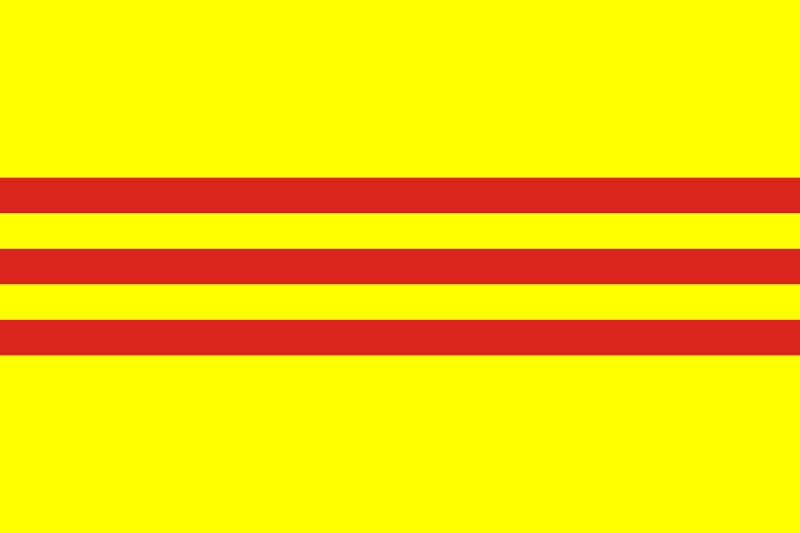 Pretty good flag. I like both this flag and the current.
Part 3
A simple and distinctive flag which looks good.
Ratio: 2:3 (normal)
Adopted: 5 September 1945 (as flag of North Vietnam). Current star adopted on 30 November 1955, flag adopted for all of Vietnam on 2 July 1976
Part 1
Rule 1: A child could draw this flag from memory.
Rule 2: In the year 112 BC Nanyue, a kingdom which had existed since 204 BC, and had spent most of its history as a Chinese tributary, was conquered by China after a war. For the following thousand years, other than some brief interruptions, Vietnam would remain under Chinese rule. Chinese rule eneded in 938 after the Battle of Bạch Đằng River, after which Vietnam would no longer be ruled by China, excluding a brief period from 1407 to 1427.
Upon independence, Vietnam's territory only consisted on what is now its northernmost part. Vietnam then gradually expanded southwards, conquering the Champa and part of Cambodia, having roughly its current borders after 1760.
The French began colonizing Vietnam in 1862, when Cochinchina in Vietnam's south became a French colony. In the 1880s two French protectorates were established in what is now Vietnam: Tonkin in the north, and Annam (where the ruling dynasty of Vietnam continued to reign) in the center. In 1890 Annam adopted a yellow flag with three red stripes in the middle, the three stripes being a Taoist trigrams symbolizing the south (Vietnam is south of China, and its name literally mean "Viet south"). The emaning of the stripes later changed so that they would symbolizes northern, central, and southern Vietnam.
In 1940 Japan invaded Vietnam and began occupying, while letting Vichy French administration remain. In 1941 the Việt Minh, a communist organization opposed to both Japanese and French rule in Vietnam, was founded. It adopted a flag which was similar to Vietnam's current, but whose star had a different design.
In March 1945 the Japanese the French in a coup d'état , and established a puppet Empire of Vietnam, whose flag was similar to that adopted in 1890, but with a broken middle stripe. Under Japanese rule Vietnam had a famine. Japanese rule over Vietnam ended on 15 August, and immediatly afterwards the Việt Minh took over nothern Vietnam. On 25 August 1945 Bảo Đại, Vietnam's emperor abdicated, being succeded by the Việt Minh, who declared the independence of the Democratic Republic of Vietnam, which used the Viet Minh's flag, on 2 September 1945. In October 1945 the French returned a reestablished the protectorates and the colony in the parts of Vietnam they could control. On 6 March 1946 France and Vietnam signed the Ho-Sainteny Agreement, in which Vietnam would become a free state within the French Union. However, on 1 June 1946 the Colony of Cochinchina was replaced with the Autonomous Republic of Cochinchina, a French puppet (whose flag was like the 1890 flag of Vietnam, but with blue stripes) declared by the colony's High Commisioner, Georges Thierry d'Argenlieu, without French consent. This is one of the causes that led to the beginning of the First Indochina War between France and the Việt Minh.
In 1948 the protectorates over Tonkin and Annam ended, and the Provisional Central Government of Vietnam was established in the parts of Vietnam not controlled by the Việt Minh. The French planned to make Bảo Đại head of state of Vietnam, but the former emperor would only rule an unified Vietnam, leading to Cochinchina uniting with the rest of Vietnam on 14 June 1949, and the State of Vietnam, with Bảo Đại as its head of state, was founded on 2 July 1949. Its flag was based on the 1890 Vietnamese flag.
After the Communists won the Chinese Civil War they began backing the Việt Minh, leading to them beginning to win the war. In 1954 the Việt Minh decisively defeated the French in the Battle of Dien Bien Phu in 1954, leading to the signings of the Geneva Accords, in which Vietnam was split into the northern Democratic Republic of Vietnam, ruled by the Việt Minh, and the southern State of Vietnam, with Bảo Đại as its head of state and Ngô Đình Diệm as Prime Minister. It was agreed that Vietnam would be united after elections in 1956. In 1955 Diệm ousted Đại and, after a rigged referendum, established the Republic of Vietnam. Diệm then stated that the 1956 would not be held in South Vietnam That same year, North Vietnam changed the star of its flag, and the Việt Cộng , a guerrilla supported by North Vietnam (some historians say the north supported the Việt Cộng from the beginning, others say they started in 1960) began attacking South Vietnam. This began the Vietnam War, in which North Vietnam and the Việt Cộng, supported by China, Cuba, North Korea, and the Eastern Bloc, fought against South Vietnam, supported by the United States, Australia, New Zealand, Thailand, and South Korea. US involvement escalated in 1964 after two incidents in the Gulf of Tonkin (the second which today is known to have been faked). As the war turned into a stalemate, North Vietnam and the United States signed the Paris Peace Accords on 27 January 1973, and US troops left Vietnam. In December 1974 North Vietnam started invading South Vietnam, with Saigon, the south's capital (now known as Ho Chi Minh City), falling on 30 April 1975. This led to the Provisional Revolutionary Government of the Republic of South Vietnam, established in 1969, gaining power in South Vietnam. On 2 July 1976 North and South Vietnam united to form the Socialist Republic of Vietnam, which uses North Vietnam's flag.
In Vietnam's flag, the red symbolizes social revolution, and the five point of the star symbolizes Vietnam's five classes: intellectuals, farmers, workers, businessmen, and military personnel.
Rule 3: Red and yellow. I like the colors of this flag.
Rule 4: There a lot of flags with simple stars.
Rule 5: This flag is coincidentally similar to Somalia's, but it has entirely different colors. It's also similar to China's, but the two flags can easily be distinguished.
Rule 2
Democratic Republic of Vietnam (1945-1955)
State of Vietnam (1949-1955), Republic of Vietnam (1955-1975)
Part 3
A simple and distinctive flag which looks good.
- Thread starter
- #311
Flag of Western Sahara (tthe Sahrawi Arab Democratic Republic) (recognized by 37 UN members)

Ratio: 1:2 (normal)
Adopted: 27 February 1976 (declaration of independence of the Sahrawi Arab Democratic Republic)
Part 1
Rule 1: A child could draw this flag from memory.
Rule 2: After the 1884 Berlin Conference split Africa into spheres of influence, Spain establised a colony known as Spanish Sahara. As a dictatorship ruled by Francisco Franco, Spain was slow to decolonize after WWII.
After Morocco gained full independence in 1956, and after Mauritania did the same in 1960, both claimed the Spanish colony. In 1973 the Polisario Front, which supported independence for Western Sahara, was founded. In 1975 the International Criminal Court issued a veredict in which it stated that despite Morocco's and Mauritania having ties to Western Sahara, the ties did not implie sovereignity, and that most people in Western Sahara supported full independence. This led to Morocco sending both troops and unarmed people to Western Sahara to protest Spanish rule in November. This led to Spain, Morocco, and Mauritania signing the Madrid Accords, in which it was agreed that Western Sahara would be decolonized and split between Morocco and Mauritania. Afterwards, the northern two-third of Western Sahara became controlled by Morocco, while it southern third was controlled by Mauritania. The last Spanish troopes witdrew from Western Sahara on 26 February 1976, and the next day the Polisario Front proclaimed the Sahrawi Arab Democratic Republic and adopted its current flag. This began a guerrrilla war between the Polisario Front (supported by Algeria) and Morocco and Mauritania. The war led to Mauritania withdrawing from Western Sahara in 1979, and Morocco moving in to the former Mauritanian teritories. In the 1980s Morocco built walls separating Moroccan-held territory from Polisario-held territory. In 1991 Morocco and the Polisario Front agreed to a ceasefire, and the holding of a referendum for Western Sahara's future. The ceasefire has held, but the referendum has never taken place.
In the Sahrawi Arab Democratic Republic's flag (which is based on Palestine's), the crecent and star symbolize Islam. This flag has Pan-Arab colors:
Rule 4: Stars are simple, and so are crescents.
Rule 5: It's a generic Pan-Arab. It's not distinctive imo.
Part 2
The Sahrawi Arab Democratic Republic has never changed its flag. And when it was a Spanish colony Western Sahara used Spain's flag.
Part 3
A generic Pan-Arab. I don't really like the flag, though I like the star and crescent.
Ratio: 1:2 (normal)
Adopted: 27 February 1976 (declaration of independence of the Sahrawi Arab Democratic Republic)
Part 1
Rule 1: A child could draw this flag from memory.
Rule 2: After the 1884 Berlin Conference split Africa into spheres of influence, Spain establised a colony known as Spanish Sahara. As a dictatorship ruled by Francisco Franco, Spain was slow to decolonize after WWII.
After Morocco gained full independence in 1956, and after Mauritania did the same in 1960, both claimed the Spanish colony. In 1973 the Polisario Front, which supported independence for Western Sahara, was founded. In 1975 the International Criminal Court issued a veredict in which it stated that despite Morocco's and Mauritania having ties to Western Sahara, the ties did not implie sovereignity, and that most people in Western Sahara supported full independence. This led to Morocco sending both troops and unarmed people to Western Sahara to protest Spanish rule in November. This led to Spain, Morocco, and Mauritania signing the Madrid Accords, in which it was agreed that Western Sahara would be decolonized and split between Morocco and Mauritania. Afterwards, the northern two-third of Western Sahara became controlled by Morocco, while it southern third was controlled by Mauritania. The last Spanish troopes witdrew from Western Sahara on 26 February 1976, and the next day the Polisario Front proclaimed the Sahrawi Arab Democratic Republic and adopted its current flag. This began a guerrrilla war between the Polisario Front (supported by Algeria) and Morocco and Mauritania. The war led to Mauritania withdrawing from Western Sahara in 1979, and Morocco moving in to the former Mauritanian teritories. In the 1980s Morocco built walls separating Moroccan-held territory from Polisario-held territory. In 1991 Morocco and the Polisario Front agreed to a ceasefire, and the holding of a referendum for Western Sahara's future. The ceasefire has held, but the referendum has never taken place.
In the Sahrawi Arab Democratic Republic's flag (which is based on Palestine's), the crecent and star symbolize Islam. This flag has Pan-Arab colors:
Rule 3: Red, black, white, and green. I don't really like the Pan-Arab colors, probably due to overuse.Me said:Basically, there are two set of Pan-Arab colors: the most used set uses red, black, green and white. These colors were first used in the 1916 Arab Revolt against the Ottoman Empire and each color represented an Arab dynasty: black represented the Abbasids, white the Ummayads, green the Fatimids and red the Hashemites.
The other set uses red, white and black and is derived from the Arab Liberation Flag, which was used in the 1952 Egyptian Revolution which overthrew the country's monarchy.
Rule 4: Stars are simple, and so are crescents.
Rule 5: It's a generic Pan-Arab. It's not distinctive imo.
Part 2
The Sahrawi Arab Democratic Republic has never changed its flag. And when it was a Spanish colony Western Sahara used Spain's flag.
Part 3
A generic Pan-Arab. I don't really like the flag, though I like the star and crescent.
- Thread starter
- #312
Flag of Yemen

Ratio: 2:3 (normal)
Adopted: 22 May 1990 (unification of Yemen)
Part 1
Rule 1: This flag is a simple tricololor.
Rule 2: Yemen was created out of the union of two countries: North Yemen and South Yemen.
First I'll write about North Yemen. In the year 1849 the Ottoman Empire and Zaydi religious leaders in the are signed a treaty, in which the imams of North Yemen became Ottoman suzerains. The Ottomans never fully managed to control North Yemen, however. In 1913 the Ottomans ceded some power to the Zaydis.
On 30 October 1918, just before WWI's end, North Yemen declared full indepedence as an imamamte. The imamate's first flag was plain red. In 1923 the Shahada was added to Northe Yemen's flag. In 1926 Amir al-Mumenin al-Mutawakkil 'Ala Allah Rab ul-Alamin Imam Yahya bin al-Mansur Bi'llah Muhammad Hamidaddin, Yemen's imam, became king of the Mutawakkilite Kingdom of Yemen, which was ruled by the dynasty of its first king. In 1927 North Yemen adopted a flag featuring a saber and five stars (symbolizing the five pillars of Islam and the five times a day Muslims must pray) on a red field (symbolizing the blood of those who fought for Yemen). In 1934 North Yemen and Saudi Arabia fought a warover the control of Asir, which ended with the Treaty of Taif, in which the borders of the two countries was defined.
Autocracy and lack of modernization led to two failed coup d'états in 1948 and 1955 (though the first king of Yemen was assassinated in the former). On 19 September 1962 the king of North Yemen died and was succeeded by Al-Mansur Bi'llah Muhammad Al-Badr bin Al-Nasir-li-dinu'llah Ahmad. Just one week later, he was overthrwon in a coup d'état led by Nasserists, and the Yemen Arab Republic was declared. The coup led to a civil war, in which monarchists and Saudi Arabia, supported by Jordan and the United Kingdom, fough against republicans and Egypt (whuch withdrew in 1967), supported b the Soviet Union. The war ended in 1970 with a republican victory. The Yemen Arab Republic used a version of the flag of the Arab Liberation, with a white star in the middle.
Now I'll write about South Yemen. In 1838 there were many states in what is now Yemen, one being the Sultanate of Ladej, which held the city of Aden. In 1838 Adej's sultan ceded the city to the British, which wanted the city for its use as a refueling point for ships heding towards India. The British East India Company then sent troops to capture Yemen in 1839. Aden was governed as part of British India until 1937, when it became a Britis crown colony.
In the next decades the UK signed protection treaties with various states in South Yemen. In 1874 the protectorates were combined to form the Aden Protectorate.
In 1963 the Protectorate of Aden was split into two federations of protectorates: the Federation of South Arabia, which the former Colony of Aden joined in 1963 (and which had flag made up of three black, green, and blue horizontal stripes, with yellow fimbriations between the two stripes, and a white crescent and star in the middle), and the Protectorate of South Arabia.
Starting in 1963 there was an insurgency against the British in South Yemen led by two groups: the National Liberation Front and the Egyptian-backed Front for the Liberation of Occupied South Yemen. The National Liberation Front managed to make the British withdraw on 30 November 1967, and the The People's Democratic Republic of Yemen, a Marxist-Leninist one-party state ruled by the National Liberation Front, which became the Yemeni Socialist Party. South Yemen's flag was also based on the Arab Liberation Flag, and it had a blue chevron with a red star on it on the hoist.
In 1990 North and South Yemen agreed to unification, which took place on 22 May. The newly-unified Republic of Yemen adopted the Arab Liberation Flag.
In Yemen's flag, the red symbolizes unity and the blood shed by martyrs, the white symbolizes a bright future, and the black symbolizes the dark past.
Rule 3: Red, white, and black. While I tend to dislike the colors in Pan-Arab flags, I actually like this flag's colors.
Rule 4: This flag has no text or emblems.
Rule 5: This flag can easily be confused with other Pan-Arab flag. This flag is also coincidentally similar to the flag of the German Empire.
Part 2
North Yemen (1918-1923)
 Red stars were historically very popular in the Arabian Peninsula.
North Yemen (1923-1927)
 This flag has complex text. Bad.
Mutawakkilite Kingdom of Yemen (1927-1962)
 I ike this flag. It's cool imo.
Yemen Arab Republic (1962-1990)
 A generic and undistinctive Pan-Arab. Bad.
Federation of South Arabia (1962-1967)
 Good flag. My only complaint is that it'sa bit too cluttered.
People's Democratic Republic of Yemen (1967-1990)
 It's more distinctive than most Pan-Arabs. Don't like its design, though.
Part 3
Its' bland and undistinctive. Bad flag.
Ratio: 2:3 (normal)
Adopted: 22 May 1990 (unification of Yemen)
Part 1
Rule 1: This flag is a simple tricololor.
Rule 2: Yemen was created out of the union of two countries: North Yemen and South Yemen.
First I'll write about North Yemen. In the year 1849 the Ottoman Empire and Zaydi religious leaders in the are signed a treaty, in which the imams of North Yemen became Ottoman suzerains. The Ottomans never fully managed to control North Yemen, however. In 1913 the Ottomans ceded some power to the Zaydis.
On 30 October 1918, just before WWI's end, North Yemen declared full indepedence as an imamamte. The imamate's first flag was plain red. In 1923 the Shahada was added to Northe Yemen's flag. In 1926 Amir al-Mumenin al-Mutawakkil 'Ala Allah Rab ul-Alamin Imam Yahya bin al-Mansur Bi'llah Muhammad Hamidaddin, Yemen's imam, became king of the Mutawakkilite Kingdom of Yemen, which was ruled by the dynasty of its first king. In 1927 North Yemen adopted a flag featuring a saber and five stars (symbolizing the five pillars of Islam and the five times a day Muslims must pray) on a red field (symbolizing the blood of those who fought for Yemen). In 1934 North Yemen and Saudi Arabia fought a warover the control of Asir, which ended with the Treaty of Taif, in which the borders of the two countries was defined.
Autocracy and lack of modernization led to two failed coup d'états in 1948 and 1955 (though the first king of Yemen was assassinated in the former). On 19 September 1962 the king of North Yemen died and was succeeded by Al-Mansur Bi'llah Muhammad Al-Badr bin Al-Nasir-li-dinu'llah Ahmad. Just one week later, he was overthrwon in a coup d'état led by Nasserists, and the Yemen Arab Republic was declared. The coup led to a civil war, in which monarchists and Saudi Arabia, supported by Jordan and the United Kingdom, fough against republicans and Egypt (whuch withdrew in 1967), supported b the Soviet Union. The war ended in 1970 with a republican victory. The Yemen Arab Republic used a version of the flag of the Arab Liberation, with a white star in the middle.
Now I'll write about South Yemen. In 1838 there were many states in what is now Yemen, one being the Sultanate of Ladej, which held the city of Aden. In 1838 Adej's sultan ceded the city to the British, which wanted the city for its use as a refueling point for ships heding towards India. The British East India Company then sent troops to capture Yemen in 1839. Aden was governed as part of British India until 1937, when it became a Britis crown colony.
In the next decades the UK signed protection treaties with various states in South Yemen. In 1874 the protectorates were combined to form the Aden Protectorate.
In 1963 the Protectorate of Aden was split into two federations of protectorates: the Federation of South Arabia, which the former Colony of Aden joined in 1963 (and which had flag made up of three black, green, and blue horizontal stripes, with yellow fimbriations between the two stripes, and a white crescent and star in the middle), and the Protectorate of South Arabia.
Starting in 1963 there was an insurgency against the British in South Yemen led by two groups: the National Liberation Front and the Egyptian-backed Front for the Liberation of Occupied South Yemen. The National Liberation Front managed to make the British withdraw on 30 November 1967, and the The People's Democratic Republic of Yemen, a Marxist-Leninist one-party state ruled by the National Liberation Front, which became the Yemeni Socialist Party. South Yemen's flag was also based on the Arab Liberation Flag, and it had a blue chevron with a red star on it on the hoist.
In 1990 North and South Yemen agreed to unification, which took place on 22 May. The newly-unified Republic of Yemen adopted the Arab Liberation Flag.
In Yemen's flag, the red symbolizes unity and the blood shed by martyrs, the white symbolizes a bright future, and the black symbolizes the dark past.
Rule 3: Red, white, and black. While I tend to dislike the colors in Pan-Arab flags, I actually like this flag's colors.
Rule 4: This flag has no text or emblems.
Rule 5: This flag can easily be confused with other Pan-Arab flag. This flag is also coincidentally similar to the flag of the German Empire.
Part 2
North Yemen (1918-1923)
North Yemen (1923-1927)
Mutawakkilite Kingdom of Yemen (1927-1962)
Yemen Arab Republic (1962-1990)
Federation of South Arabia (1962-1967)
People's Democratic Republic of Yemen (1967-1990)
Part 3
Its' bland and undistinctive. Bad flag.
- Thread starter
- #313
Flag of Zambia
Ratio: 2:3 (normal)
Adopted: 24 Octobr 1964 (current version adopted in 1996)
Part 1
Rule 1: A child could draw most of the flag from memory, but I don't think they could draw the eagle.
Rule 2: The first people to inhabit what is now Zambia were the Khoisan people. Bantu people first came around the 3rd or 4th century. Portuguese and Arab traders came to what is now Zambia in the 18th century.
In the year 1888 the British South Africa Company, led by Cecil Rhodes, signed a treaty with the paramount chief of the Lozi people, and established the protectorates of Barotseland and North-Western Rhodesia (today Zambia's west), which were joined together in 1899 to create Barotziland-North-Western Rhodesia. Another protectorate, Northeastern Rhodesia, was established in 1900. All of the protctorates were administered by the British East Africa Company.
In 1911 Barotziland-North-Western Rhodesia and Northeastern Rhodesia were combined to form Northern Rhodesia. Company rule over Northern Rhodesia ended in 1924.
In 1953 Northern Rhodesia, Southern Rhodesia (now Zimbabwe), and Nyasaland (now Malawi) joined to create the Federation of Rhodesia and Nyasaland, which was ruled by a white minority, making the federation unpopular with its African majority. This led to the federation being dissoved on the last day of 1963. On 24 October 1964 Northern Rhodesia gained full independence as the Republic of Zambia, and adopted a flag similar to its current. In 1996 the shade of green in Zambia's flag was lightened.
In Zambia's flag, the green symbolizes the country's vegetation, the red symbolizes Zambia's struggle for freedom, the black symbolizes Zambia's people, and the orange symbolizes Zambia's natural resources and mineral wealth (Zambia's main export is coppeer). The African fisher eagle symbolizes the ability of Zambians to rise above the nation's problems.
Rule 3: Green, red, black, and orange. I don't love this color combination, but I don't hate it either.
Rule 4: This flag has an eagle, which in my opinion is complex.
Rule 5: This flag is pretty distinctive.
Part 2
Northern Rhodesia (1924-1964)
 British colonial flag.
Zambia (1964-1996)
 Almost identical to the current.
Part 3
Probably one of the most unique national flags. I don't think it's bad, but I don't love it either.
Ratio: 2:3 (normal)
Adopted: 24 Octobr 1964 (current version adopted in 1996)
Part 1
Rule 1: A child could draw most of the flag from memory, but I don't think they could draw the eagle.
Rule 2: The first people to inhabit what is now Zambia were the Khoisan people. Bantu people first came around the 3rd or 4th century. Portuguese and Arab traders came to what is now Zambia in the 18th century.
In the year 1888 the British South Africa Company, led by Cecil Rhodes, signed a treaty with the paramount chief of the Lozi people, and established the protectorates of Barotseland and North-Western Rhodesia (today Zambia's west), which were joined together in 1899 to create Barotziland-North-Western Rhodesia. Another protectorate, Northeastern Rhodesia, was established in 1900. All of the protctorates were administered by the British East Africa Company.
In 1911 Barotziland-North-Western Rhodesia and Northeastern Rhodesia were combined to form Northern Rhodesia. Company rule over Northern Rhodesia ended in 1924.
In 1953 Northern Rhodesia, Southern Rhodesia (now Zimbabwe), and Nyasaland (now Malawi) joined to create the Federation of Rhodesia and Nyasaland, which was ruled by a white minority, making the federation unpopular with its African majority. This led to the federation being dissoved on the last day of 1963. On 24 October 1964 Northern Rhodesia gained full independence as the Republic of Zambia, and adopted a flag similar to its current. In 1996 the shade of green in Zambia's flag was lightened.
In Zambia's flag, the green symbolizes the country's vegetation, the red symbolizes Zambia's struggle for freedom, the black symbolizes Zambia's people, and the orange symbolizes Zambia's natural resources and mineral wealth (Zambia's main export is coppeer). The African fisher eagle symbolizes the ability of Zambians to rise above the nation's problems.
Rule 3: Green, red, black, and orange. I don't love this color combination, but I don't hate it either.
Rule 4: This flag has an eagle, which in my opinion is complex.
Rule 5: This flag is pretty distinctive.
Part 2
Northern Rhodesia (1924-1964)
Zambia (1964-1996)
Part 3
Probably one of the most unique national flags. I don't think it's bad, but I don't love it either.
- Thread starter
- #315
Flag of ZimbabweJim Perry said:Only one more left...

Ratio: 1:2 (normal)
Adopted: 18 April 1980
Part 1
Rule 1: I think a child could draw most of the flag from memory, but I don't think they could draw the bird.
Rule 2: What is now Zimbabwe was first inhabited by Khoisan people. Bantu people arrived around 2,000 years ago. Starting in the 11th century various kingdoms were established in the area, such as Mapungubwe, Zimbabwe, Matupa, and Matabeland. From the 11 to the 14th centuries a city known as Great Zimbabwe was built. Various sculputures of birds, known as Zimbabwe birds, have been found in the city's ruins.
The first Europeans to discover what is now Zimbabwe were the Portuguese in the 16th century. In 1888 King Lobengula of Matabeleland signed a treaty with three British agents associated with the politician Cecil Rhodes, in which the agents got exclusive mining rights in what is now Zimbabwe. This led to the Pioneer Column annexing Zimbabwe in 1890, and the establishment, leading to the establishment of Southern Rhodesia, which was administered by the British South Africa Company.
In 1920 elections for Southern Rhodesia's Legislative Council were won by the Responsible Government Association (RGA), which supported Southern Rhodesia becoming a self-governing British colony. The RGA's goal was accomplished on 1 October 1923.
In 1953 Southern Rhodesia, Northern Rhodesia (now Zambia), and Nyasaland (now Malawi) were combined to create the Federation of Rhodesia and Nyasaland, which broke up the last day of 1963 due to the unpopularity of its white minority. On 24 October 1964 Northern Rhodesia gained full independence as Zambia, and Southern Rhodesia became simply Rhodesia. Rhodesia, under a white-minority government, unilaterally declared independence as a Commonwealth realm on 11 Novermber 1965. Exactly three years later Rhodesia adopted a green, white, and white vertical triband, with Rhodesia's coat of arms in the center. Rhodesia became a republic in 1970.
Rhodesia, due to its white-minority rule, was internationally unrecognized. It became a republic in 1970. Throughout its entire history Rhodesia faced a war against two African nationalist groups: the Zimbabwe African National Liberation Army and the Zimbabwe People's Revolutionary Army. The war was a stalemate by 1978, when the Internal Settlement was signed by Rhodesia and moderate black nationalists. Afterwards, universal adult suffrage was established, and general elections in 1979 led to a black majority in the Rhodesia House of Assembly. On 1 June 1979 Rhodesia was renamed Zimbabwe Rhodesia, and adopted a new flag. The new flag of Zimbabwe was a red, white, and green horizontal tricolor. On the hoist side was a black vertical stripe, with a yellow Zimbabwe bird on the upper side of the black stripe. The black stripe and the tricolor were separated by a white fimbriation.
The Internal Settlement did not appease the more radical black nationalists, as the civil service, judiciary, police and armed forces continued to be white-majority, and the war continued until the Lancaster House Agreements were signed in London on 21 December 1979. Rhodesia then briefly became returned to being a British colony. General elections were held in February 1980, and Rhodesia became the fully independent Republic of Zimbabwe on 18 April 1980. Zimbabwe adopted its current flag that same date.Wikipedia said:The design incorporated the pan-African colours of yellow, black, green and red; with the black stripe symbolising majority rule in the country and the red representing the struggle to achieve this. The yellow and green respectively represent the nation's mineral wealth and its agricultural and natural resources. The thin vertical white stripe represented the white minority while the central horizontal white stripe represented peace.
In Zimbabwe's flag, the green symbolizes agriculture and the country's rural areas, yellow symbolizes the country's minerals, red symbolizes the blood shed in Zimbabwe's wars, and the black symbolizes the country's black majority. The white triangle symbolizes peace, the red star symbolizes the nation's aspirations, and the Zimbabwe Bird symbolizes "the strong bond that ancestral humans had with animals, nature and spiritual guides".
Rule 3: White, black, green, yellow, and red. This is one of the few flags which I think have too many colors.
Rule 4: For the last time: Stars are simple. (but Zimbabwe birds aren't).
Rule 5: This flag is distinctive.
Part 2
Southern Rhodesia (1923-1964)

Rhodesia (1964-1968, 1979-1980)

Rhodesia (1968-1979)

Zimbabwe-Rhodesia (1979)

Part 3
I'd probably love this flag if the chevron is removed, but as it is now I think it's too cluttered.
.
So, it's official. I have written about every country flag (well, I haven't written about some unrecognized countries or some historical flags). First of all, I'd like to thank:
Wikipedia, for being my main source for most information and images.
Flagspot, for being my secondary source when Wikipedia didn't have the information.
Stefan Härtel and Victor Lomantsov, for letting me know the symbolism of Bulgaria's flag.
Pi, for helping me realize that my French was unnacurate and unfunny.
Anyone who came to this topic.
Porplemontage, for making a great wiki with a great forum.
.
On Friday I'll take a break. Afterwards, I'll post the best and worst national flags for every alphabet letter (I'm sorry for not doing the best and worst national flags in general, there are just too many flags). Afterwards, I'll probably update my old writeups.

Princess Céline
It's teatime!
Good luck with the project!
- Thread starter
- #318
Here we go. "Best" and "Worst" flags are my opinion, not objective fact.
A
Favorite flag
 Proof that just because a flag breaks a few rules doesn't mean its bad. The eagle is complex, and it's black on a red background, breaking the rule of tincture. But despite this, the flag looks pretty cool.
Honorable mentions: Angola, Antigua and Barbuda, Argentina, Azerbaijan.
Worst flag
 The very first flag I wrote about. I caused a small fuss when I said I didn't like religious flags, but even if we take religion out of the equation, this flag is complex and looks pretty bad.
Dishonorable mentions: Andorra, Australia.
B
Best flag
 I mentioned this flag in the first post of my flag topic, saying it looked good and had great symbolism. And indeed, this flag does look good. But the thing that put it over the rest is that I love this symbolism of the broken trident.
Honorable mentions: Bahamas, Bhutan (solely fue to the dragon), Bosnia and Herzegovina, Botswana.
Worst flag
 I think the only people who love this flag are from Belize, love shirtless guys, and/or love complexity. I'm none of those, so....
Dishonorable mentions: Belarus, Brune, Bhutan.
.
C and D will be posted later today.
A
Favorite flag
Honorable mentions: Angola, Antigua and Barbuda, Argentina, Azerbaijan.
Worst flag
Dishonorable mentions: Andorra, Australia.
B
Best flag
Honorable mentions: Bahamas, Bhutan (solely fue to the dragon), Bosnia and Herzegovina, Botswana.
Worst flag
Dishonorable mentions: Belarus, Brune, Bhutan.
.
C and D will be posted later today.
- Thread starter
- #319
C
Best flag
 Great flag. I love the diagonal stripes, which distinguish the flag from other Pan-Africans. I also considered putting Canada's flag here, but the maple leaf is a little complex (this doesn't make Canada's flag bad, it's just a minor nitpick).
Honorable mentions: Chile, China (People's Republic of), Congo (Demoocratic Republic of), Cuba, Czech Republic.
Worst flag
 Originality.
Dishonorable mentions: Cambodia, Comoros, Cyprus (if only due to the complexity of the map).
D
Best flag
 I love Nordic flags. Also, I don't like Djibouti's colors and the other two flags are complex.
Worst flag
A flag which could have been great... if it didn't have a complex coat of arms. Dominica's flag is probably worse, but it has a purple parrot, and I like both parrots and the color purple.
.
I have to do some homework. I'll do E and F after I finish it.
Best flag
Honorable mentions: Chile, China (People's Republic of), Congo (Demoocratic Republic of), Cuba, Czech Republic.
Worst flag
Dishonorable mentions: Cambodia, Comoros, Cyprus (if only due to the complexity of the map).
D
Best flag
Worst flag
A flag which could have been great... if it didn't have a complex coat of arms. Dominica's flag is probably worse, but it has a purple parrot, and I like both parrots and the color purple.
.
I have to do some homework. I'll do E and F after I finish it.
- Thread starter
- #320
Finished my homework.
E
Best flag
 I made a thread about this flag, and I obviously like it. I tend to like like flags with black and blue.
Honorable mention: East Timor (also known as Timor Leste)
Worst flag
 It has a complex coat of arms and it's not distinctive.
Dishonorable mention: Ecuador, Equatorial Guinea
F
Best flag
 I like both this flag and France's. I just like Nordic flags more than tricolors.
Worst flag
 It's more distinctive than most flags with the Union Jack in the canton due to its lighter blue, but it's definitely worse than the other two flags.
.
I'll do the flags from G to L tomorrow.
Edit: Sorry I didn't initially put Fiji.'s flag When I made this post my internet was very slow (due to an update) and I was angry, so I wasn't thinking clearly. But now it's fixed.
Edit 2: So I also a typo made El Salvador's flag not show.
E
Best flag
Honorable mention: East Timor (also known as Timor Leste)
Worst flag
Dishonorable mention: Ecuador, Equatorial Guinea
F
Best flag
Worst flag
.
I'll do the flags from G to L tomorrow.
Edit: Sorry I didn't initially put Fiji.'s flag When I made this post my internet was very slow (due to an update) and I was angry, so I wasn't thinking clearly. But now it's fixed.
Edit 2: So I also a typo made El Salvador's flag not show.

whoa badposter actually got done with this shit
nice job
nice job
- Thread starter
- #322
G
Best flag
 There are many good G flags. I put in this flag for the simple reason that I like both its colors and its unusual ratio, which almost makes the flag square.
Honorable mentions: Georgia, Germany, Ghana, Greece, Guinea-Bissau, Guyana.
Worst flag
 It's vertical, which makes it more distinctive than some Central American flags, but it's also pretty complex and it has text.
Dishonorable mention: Guinea.
H
Best flag
 This how you a Central American flag right. It's noticeably similar to other Central American flags, but manages to be distinctive. Also, it doesn't have a complex coat of arms.
Worst flag
 It's as complex as Belize's flag, but it's even worse, as this flag doesn't have Belize's appeal to some (probably not all) who like shirtless guys.
I'll do three letters per post today.
I
Best flag
 Whatever your stance on the Israel/Palestine conflict, I don't care. But you have to recognize that this flag is good.
Honorable mentions: Iceland, India.
Worst flag
 A generic Pan-Arab with text. Iran's flag has more text (and I don't like it), but at least it looks good.
Dishonrable mentions: Indonesia, Ivory Coast (also known as Côte d'Ivoire). Two very original flags.
Best flag
Honorable mentions: Georgia, Germany, Ghana, Greece, Guinea-Bissau, Guyana.
Worst flag
Dishonorable mention: Guinea.
H
Best flag
Worst flag
I'll do three letters per post today.
I
Best flag
Honorable mentions: Iceland, India.
Worst flag
Dishonrable mentions: Indonesia, Ivory Coast (also known as Côte d'Ivoire). Two very original flags.
- Thread starter
- #323
J
Best flag
 Both this country and Japan have amazing flags. I could easily have put in Japan here, but I simply like how this flag looks like more. But Japan's flag is still very good.
Worst flag
 Though I hestitated which flag would be the best, I knew this generic Pan-Arab would be the worst.
K
Best flag
 K flags are interesting. They all have flaws (imo). However, the only issue I have with this flag is that I don't like how the spears look like, but that's just a minor nitpick.
Honorable mentions: Kiribati, Kyrgyzstan.
Worst flag
 Maps are complex. Don't put maps on flags (by that I mean actual, there's nothing wrong with the way Bosnia and Herzegovina and Tuvalu do it).
Dishonorable mention: Kuwait.
L
Best flag
 Out of all the L flags I like I put in this flag simple because I like its tree.
Honorable mentions: Laos, Latvia (if only because I love carmine), Liberia, Libya, Lithuania.
Worst flag
 Originality.
.
I'll continue next weekend.
Best flag
Worst flag
K
Best flag
Honorable mentions: Kiribati, Kyrgyzstan.
Worst flag
Dishonorable mention: Kuwait.
L
Best flag
Honorable mentions: Laos, Latvia (if only because I love carmine), Liberia, Libya, Lithuania.
Worst flag
.
I'll continue next weekend.
- Thread starter
- #324
It's the weekend.
M
Best flag
 The country's name is controversial, but whatever its name is, I think the country has a simple and distinctive flag which looks good.
Honorable mentions: Malawi, Maldives, Marshall Islands, Mauritania, Mauritius.
Worst flag
 If you want to have a Pan-African flag, please don't have it be a plain tricolor.
Dishonorable mentions: Mexico, Moldova, Monaco, Mozambique.
N

Honorable mentions: Nauru, Nigeria, North Korea, Norway.
Worst flag
 Undistinctive, is complex, has text. Terrible flag.
Dishonorable mention: New Zealand.
.
Oman is the only O country.
.
P
Best flag.
 Ho to do a red, white, and blue flag right. It's not a tricolor and it has a unique design, which isn't complex.
Honorable mentions: Pakistan, Palau, Peru (civil flag), Philippines.
Worst flag
 How to do a red, white, and blue flag wrong. It's a generic tricolor with a complex coat of arms with text.
Dishonorable mentions: Palestine, Peru (state flag), Portugal.
M
Best flag
Honorable mentions: Malawi, Maldives, Marshall Islands, Mauritania, Mauritius.
Worst flag
Dishonorable mentions: Mexico, Moldova, Monaco, Mozambique.
N
(Sorry, Nepal, I still love your flag).NathanBros said:Really a beautiful result for a three color mix.
Honorable mentions: Nauru, Nigeria, North Korea, Norway.
Worst flag
Dishonorable mention: New Zealand.
.
Oman is the only O country.
.
P
Best flag.
Honorable mentions: Pakistan, Palau, Peru (civil flag), Philippines.
Worst flag
Dishonorable mentions: Palestine, Peru (state flag), Portugal.
- Thread starter
- #325
Qatar is the only Q country.
R
Best flag
 Two generic tricolor vs a simple flag which looks great.
Worst flag
 Both Romania and Russia have a simple tricolor as their flag. I picked the former because I think Russia's flags look better and is more distinctive (this is probably only because of Russia's power).
S
Best flag
 Proof that a flag can have many colors and still look amazing.
Honorable mentions: Saint Kitts and Nevis, Saint Lucia, Saint Vincent and the Grenadines, São Tomé and Príncipe Seychelles, Sierra Leone, Solomon Islands, Somalia, Suriname, Sweden, Switzerland (there are a lot of S countries).
Worst flag
 A flag which could have been great of it didn't have a very complex coat of arms with text.
Dishonorable mentions: San Marino, Saudi Arabia, Serbia Slovakia, Slovenia, Sudan, Serbia.
T
Best flag
 I love this flag's color, and I also love the fact its ratio is the golden ratio.
Honorable mentions: Tanzania, Tonga, Trinidad and Tobago, Turkey.
Worst flag

.
Tomorrow this finishes.
R
Best flag
Worst flag
S
Best flag
Honorable mentions: Saint Kitts and Nevis, Saint Lucia, Saint Vincent and the Grenadines, São Tomé and Príncipe Seychelles, Sierra Leone, Solomon Islands, Somalia, Suriname, Sweden, Switzerland (there are a lot of S countries).
Worst flag
Dishonorable mentions: San Marino, Saudi Arabia, Serbia Slovakia, Slovenia, Sudan, Serbia.
T
Best flag
Honorable mentions: Tanzania, Tonga, Trinidad and Tobago, Turkey.
Worst flag
Dishonorable mentions: Tajikistan, Tunisia (if only because of that flag's lack of distinctiveness).Wikipedia said:The most detailed national flag in the world
.
Tomorrow this finishes.