
Navigation
Install the app
How to install the app on iOS
Follow along with the video below to see how to install our site as a web app on your home screen.
Note: This feature may not be available in some browsers.
More options
Style variation
You are using an out of date browser. It may not display this or other websites correctly.
You should upgrade or use an alternative browser.
You should upgrade or use an alternative browser.
Badposter rates every country flag
- Thread starter badposter
- Start date


Pinkie
ΣΤΔ ΘΔ
- Pronouns
- it/she/zey
Andymii said:USA is just around the corner :P
:clap:
- Thread starter
- #303
Flag of the United States of America

Ratio: 10:19 (normal)
Adopted: 14 June 1777 (current version adopted on 4 July 1960)
Part 1
Rule 1: A child could draw this flag from memory, even if they may not draw the exact number of stars or stripes.
Rule 2: The first Native Americans came to what is now the United States through the Bering land bridge. The first place now in the United States to be discovered by Europeans was Puerto Rico, discovered by Christopher Columbus in 1493. John Cabot may have been the first European to visit what is now an US state, as he may discovered Maine in 1497. However, the first European to indisputedly set foot in what is now a state of the US was Juan Ponce de León, who discovered Florida in 1513. In the following (roughly) 300 years, colonies in what is now the US would be established by Spain, France, England/Great Britain, the Netherlands, Sweden, and Russia (the US Virgin Islands were also Danish until 1917).
From 1732 (the establishment of Georgia), the British had thirteen colonies along what is now the eastern coast of the United States. British territory grew after the Seven Year's War, after which Great Britain controlled all of what is now the United States east of the Mississippi River. The war had indebted Great Britain, leading to the establishment of taxes in the colonies, which had no represation in the British parliament. This led to the beginning of the American Revolution, and the Boston Tea Party, in which taxed tea held by the East India Company was thrown into Boston Harbor by the colonists, leading to the British Parliament passing four acts known as "the Intolerable Acts", which were unpopular in the colonies, which led to British rule becoming more unpopular and the American Revolution turining into a war in 1775. Though the goals of the rebels were the end of taxation without representation, they eventually became full independence for the United States. On a date you all know in 1776 the United States declared independence.
The first flag of the United States was mostly like the current, but the canton was different: it had the flag of Great Britian instead of stars on a blue field. This first flag was based either on the Flag of the British East India Company or the British Red Ensign.
On 14 June 1777 the Second Continental Congress passed the Flag Act, which stated that "the flag of the thirteen United States be thirteen stripes, alternate red and white; that the union be thirteen stars, white in a blue field, representing a new constellation". The new flag of the United States was designed by Francis Hopkinson from New Jersey (whose exact design is unknown, as no sketchs survive), and was first flown in battle during the Siege of Fort Stanwix:
With French, Spanish, and Dutch support the United States managed to win the war, which ended in 1783 with the signing of the Treaty of Paris, which was generous to the United States, giving it all of its current territory east of the Mississippi, except Florida, returned to Spain after being British for twenty years.
The first two states to be added to the union which weren't one of the thirteen colonies were Vermont, in colonial times disputed between New York and New Hampshire, briefly independent until joining the US in 1791, and Kentucky, part of Virginia until 1792. This led to two stars and two stripes being added to the US' flag in 1795. By the beginning of 1818, the US had 20 states, but the flag hadn't changed since 1795. On 4 April 1818 the US Congress established that every time the US gained a new state, a new star would be added to the flag the on the 4th of July after the admission of the state. Two stripes were removed from the flag, and the numbers of stripes was permanently fixed as 13 for the original 13 colonies. The stars actually had no official arrangement until 1912 (after New Mexico and Arizona were added).
In the years following its independence, the US would grow in size, its latest addition of territory of territory that would become a state being the 1898 annexation of Hawaii. The United States last changed on 4 July 1960, after Hawaii gained statehood on August 21, 1959. The US' current flag was designed by Robert G. Heft (who was seventeen years old when he made the flag) in 1958.
Rule 3: Blue, white, and red. Good colors.
Rule 4: This flag has a lot of simple stars.
Rule 5: There are a lot of countries with flags similar to the US's, all of which are younger, and most of which were influenced by it. The United States is currently the most powerful (and probably most well-known) country in the world, so its flag is bound to be distinctive.
Part 2
Technically, this is the 28th flag of the United States' flag. However, most changes were the addition of one star, and weren't really major.
1776-1777
 I prefer this flag to most others with the Union Jack in the canton. However, this flag can easily be confused with the Eas India Company's, and I personally like the symbolism of the Union Jack not being in the flag of the United States.
I originally planned to write about the original 13-star flag, but that flag had no defined design.
Rule 3
It's mostly good and distinctive, but I think it has too many stars, which makes the flag the flag cluttered. But otherwise it's good.
Ratio: 10:19 (normal)
Adopted: 14 June 1777 (current version adopted on 4 July 1960)
Part 1
Rule 1: A child could draw this flag from memory, even if they may not draw the exact number of stars or stripes.
Rule 2: The first Native Americans came to what is now the United States through the Bering land bridge. The first place now in the United States to be discovered by Europeans was Puerto Rico, discovered by Christopher Columbus in 1493. John Cabot may have been the first European to visit what is now an US state, as he may discovered Maine in 1497. However, the first European to indisputedly set foot in what is now a state of the US was Juan Ponce de León, who discovered Florida in 1513. In the following (roughly) 300 years, colonies in what is now the US would be established by Spain, France, England/Great Britain, the Netherlands, Sweden, and Russia (the US Virgin Islands were also Danish until 1917).
From 1732 (the establishment of Georgia), the British had thirteen colonies along what is now the eastern coast of the United States. British territory grew after the Seven Year's War, after which Great Britain controlled all of what is now the United States east of the Mississippi River. The war had indebted Great Britain, leading to the establishment of taxes in the colonies, which had no represation in the British parliament. This led to the beginning of the American Revolution, and the Boston Tea Party, in which taxed tea held by the East India Company was thrown into Boston Harbor by the colonists, leading to the British Parliament passing four acts known as "the Intolerable Acts", which were unpopular in the colonies, which led to British rule becoming more unpopular and the American Revolution turining into a war in 1775. Though the goals of the rebels were the end of taxation without representation, they eventually became full independence for the United States. On a date you all know in 1776 the United States declared independence.
The first flag of the United States was mostly like the current, but the canton was different: it had the flag of Great Britian instead of stars on a blue field. This first flag was based either on the Flag of the British East India Company or the British Red Ensign.
On 14 June 1777 the Second Continental Congress passed the Flag Act, which stated that "the flag of the thirteen United States be thirteen stripes, alternate red and white; that the union be thirteen stars, white in a blue field, representing a new constellation". The new flag of the United States was designed by Francis Hopkinson from New Jersey (whose exact design is unknown, as no sketchs survive), and was first flown in battle during the Siege of Fort Stanwix:
The Flag Act didn't define the exact design of the flag, and stars were arranged in many different ways. The second flag of the United States is commonly thought to have the stars arranged in a circle (known as the Betsy Ross flag. Betsy Ross did not actually design the United States' flag: this is a myth that orignated in the second half of the 19th century). The first known instance of an American flag with stars arranged in a circle appeared in a 1792 painting, and today it is believed to have been used in anniversary celebrations.Wikipedia said:Soldiers cut up their shirts to make the white stripes; scarlet material to form the red was secured from red flannel petticoats of officers' wives, while material for the blue union was secured from Capt. Abraham Swartwout's blue cloth coat.
With French, Spanish, and Dutch support the United States managed to win the war, which ended in 1783 with the signing of the Treaty of Paris, which was generous to the United States, giving it all of its current territory east of the Mississippi, except Florida, returned to Spain after being British for twenty years.
The first two states to be added to the union which weren't one of the thirteen colonies were Vermont, in colonial times disputed between New York and New Hampshire, briefly independent until joining the US in 1791, and Kentucky, part of Virginia until 1792. This led to two stars and two stripes being added to the US' flag in 1795. By the beginning of 1818, the US had 20 states, but the flag hadn't changed since 1795. On 4 April 1818 the US Congress established that every time the US gained a new state, a new star would be added to the flag the on the 4th of July after the admission of the state. Two stripes were removed from the flag, and the numbers of stripes was permanently fixed as 13 for the original 13 colonies. The stars actually had no official arrangement until 1912 (after New Mexico and Arizona were added).
In the years following its independence, the US would grow in size, its latest addition of territory of territory that would become a state being the 1898 annexation of Hawaii. The United States last changed on 4 July 1960, after Hawaii gained statehood on August 21, 1959. The US' current flag was designed by Robert G. Heft (who was seventeen years old when he made the flag) in 1958.
Rule 3: Blue, white, and red. Good colors.
Rule 4: This flag has a lot of simple stars.
Rule 5: There are a lot of countries with flags similar to the US's, all of which are younger, and most of which were influenced by it. The United States is currently the most powerful (and probably most well-known) country in the world, so its flag is bound to be distinctive.
Part 2
Technically, this is the 28th flag of the United States' flag. However, most changes were the addition of one star, and weren't really major.
1776-1777
I originally planned to write about the original 13-star flag, but that flag had no defined design.
Rule 3
It's mostly good and distinctive, but I think it has too many stars, which makes the flag the flag cluttered. But otherwise it's good.
Pinkie
ΣΤΔ ΘΔ
- Pronouns
- it/she/zey
But otherwise it's good.
Brb, telling that to Washington D.C.
- Thread starter
- #305
Flag of Uruguay
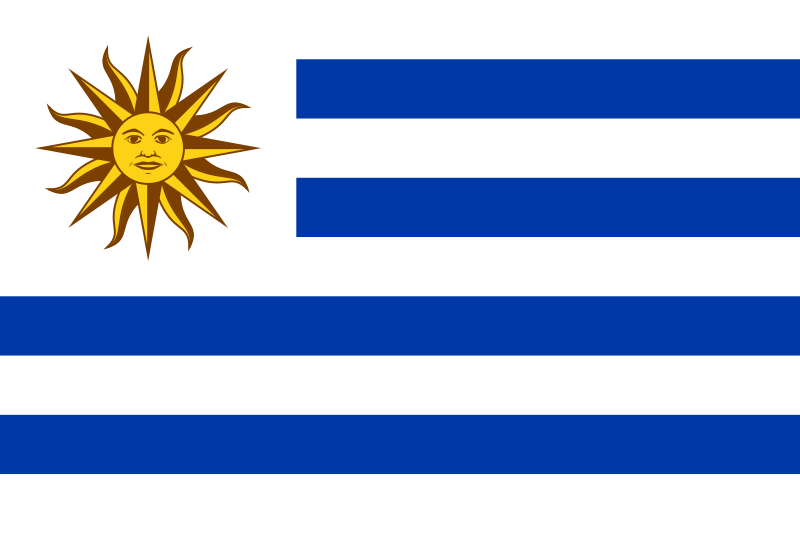
Ratio: 2:3 (normal)
Adopted: 16 December 1828 (current version adopted on 11 July 1830)
Part 1
Rule 1: A child couldn't draw the sun perfectly, and the may not draw the exact number of stripes, but otherwise the flag is simple.
Rule 2: Uruguay was first inhabited around 10,000 years ago. Around 4,000 years ago the Guaraní drove the Charrúa people south. Those people made up most of the people in what is now Uruguay when the Portuguese discovered the country in 1513. The Spanish first came in 1516, and afterwards Uruguay was disputed between the colonial powers, though in fact Uruguay was seen as unimportant due its lack of gold or silver, so there wasn't much colonization early on.
In 1603 the Spanish introduced cattle (which would eventually become Uruguay's main export) to Uruguay. The oldest settlement in Urugay was Villa Soriano, founded by Spanish Jesuits in 1624. The Portuguese established Colônia do Sacramento in 1680, and the Spanish establised Montevideo in 1726. The borders between Brazil and Uruguay were defined in the 1750 Treaty of Madrid.
In 1776 the Viceroyalty of Río de la Plata, which included Uruguay, Argentina, Bolivia, and Paraguay, was founded. Río de la Plata rose up in rebellion against The Council of Regency of Spain and the Indies in 1810. Buenos Aires attempted to defeat the Spanish in Uruguay in the First Banda Oriental Campaign (1811). The revolutionaries won the Battle of Las Piedras and began seiging Montevideo, but the Spanish then began to invade Uruguay with Portugal's help, and the revolutionaries retreated. Later in 1811, the Portuguese withdrew due to British pressure. The Spanish were finally defeated after the Second Banda Oriental campaign (1812-1814). Uruguay then joined the League of Free People, or the Federal League, a federation of provinces in what is now Uruguay, Brazil, and Argentina, founded in 1815. The League had a blue, white, and blue horizontal triband (based on Argentina's flag) with a diagonal red stripe running from the upper hoist side to the lower fly one, symbolizing the blood shed in the war for independence and federalism (today, this flag is known as the flag of Artigas for its designer, José Gervasio Artigas, who led Uruguay' fight against the Spanish). Portugal saw the new republic as a threat, and invaded Uruguay in 1816, leading to a four-year war that ended in Portuguese victory after the 1820 Battle of Tacuarembó. Brazil declared independence on 7 December 1822, and upon independence Brazil's territory included Uruguay, known as Cisplatina.
In 1825 a group known as the Thirty-Three Orientals (so called due to the fact that Uruguay is east of the Río de la Plata) , which supported Uruguay's independence, was founded in Argentina. The Orientals landed on Uruguay on 19 April of that year, and flew a blue, white, and red horizontal tricolor (with the colors based on the flag of the Federal League). The Oriental then established a provisional government on 14 June, and Uruguay declared full independence on 25 August, adopting the flag flown by the Orientals. This led to Brazil declaring war on 10 December. Thus began the Cisplatine, fought between Brazil and Argentina, the latter of which supported Uruguay's independence (and incorporation into Argentina). The war turned to be a stalemate, and by 1828 the war was unpopular in Brazil. The war ended after the 1828 Treaty of Montevideo was signed, and Uruguay gained independence. Uruguay has been independent since.
On 16 December 1828 Uruguay adopted a flag similar to the current, but with 19 stripe (10 white, 9 blue), with the blue stripes symbolizing Uruguay's nine departments at the time: Montevideo, Maldonado, Canelones, San José, Colonia, Soriano, Paysandú, Durazno and Cerro Largo. On 11 July 1830 the stripes were reduced to nine, the symbolism being kept (coincidentally, Urugauay currently has 19 departments). Uruguay's flag is based on both the United States' and Argentina's.
Rule 3: White, yellow, and blue. Good colors.
Rule 4: This flag has a complex sun.
Rule 5: This flag is based off two flags, and manages to be different from both. A good example of distinctive but related.
Part 2
1825-1828
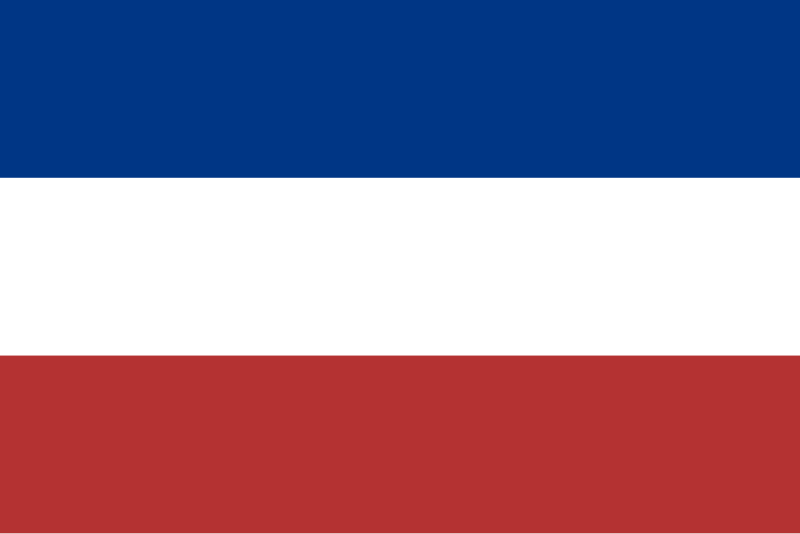 A generic and boring tricolor. Thankfully, it was changed.
1828-1830
 I prefer the current version. 19 stripes is a ot.
Part 3
I like this flag, though the sun is complex.
Ratio: 2:3 (normal)
Adopted: 16 December 1828 (current version adopted on 11 July 1830)
Part 1
Rule 1: A child couldn't draw the sun perfectly, and the may not draw the exact number of stripes, but otherwise the flag is simple.
Rule 2: Uruguay was first inhabited around 10,000 years ago. Around 4,000 years ago the Guaraní drove the Charrúa people south. Those people made up most of the people in what is now Uruguay when the Portuguese discovered the country in 1513. The Spanish first came in 1516, and afterwards Uruguay was disputed between the colonial powers, though in fact Uruguay was seen as unimportant due its lack of gold or silver, so there wasn't much colonization early on.
In 1603 the Spanish introduced cattle (which would eventually become Uruguay's main export) to Uruguay. The oldest settlement in Urugay was Villa Soriano, founded by Spanish Jesuits in 1624. The Portuguese established Colônia do Sacramento in 1680, and the Spanish establised Montevideo in 1726. The borders between Brazil and Uruguay were defined in the 1750 Treaty of Madrid.
In 1776 the Viceroyalty of Río de la Plata, which included Uruguay, Argentina, Bolivia, and Paraguay, was founded. Río de la Plata rose up in rebellion against The Council of Regency of Spain and the Indies in 1810. Buenos Aires attempted to defeat the Spanish in Uruguay in the First Banda Oriental Campaign (1811). The revolutionaries won the Battle of Las Piedras and began seiging Montevideo, but the Spanish then began to invade Uruguay with Portugal's help, and the revolutionaries retreated. Later in 1811, the Portuguese withdrew due to British pressure. The Spanish were finally defeated after the Second Banda Oriental campaign (1812-1814). Uruguay then joined the League of Free People, or the Federal League, a federation of provinces in what is now Uruguay, Brazil, and Argentina, founded in 1815. The League had a blue, white, and blue horizontal triband (based on Argentina's flag) with a diagonal red stripe running from the upper hoist side to the lower fly one, symbolizing the blood shed in the war for independence and federalism (today, this flag is known as the flag of Artigas for its designer, José Gervasio Artigas, who led Uruguay' fight against the Spanish). Portugal saw the new republic as a threat, and invaded Uruguay in 1816, leading to a four-year war that ended in Portuguese victory after the 1820 Battle of Tacuarembó. Brazil declared independence on 7 December 1822, and upon independence Brazil's territory included Uruguay, known as Cisplatina.
In 1825 a group known as the Thirty-Three Orientals (so called due to the fact that Uruguay is east of the Río de la Plata) , which supported Uruguay's independence, was founded in Argentina. The Orientals landed on Uruguay on 19 April of that year, and flew a blue, white, and red horizontal tricolor (with the colors based on the flag of the Federal League). The Oriental then established a provisional government on 14 June, and Uruguay declared full independence on 25 August, adopting the flag flown by the Orientals. This led to Brazil declaring war on 10 December. Thus began the Cisplatine, fought between Brazil and Argentina, the latter of which supported Uruguay's independence (and incorporation into Argentina). The war turned to be a stalemate, and by 1828 the war was unpopular in Brazil. The war ended after the 1828 Treaty of Montevideo was signed, and Uruguay gained independence. Uruguay has been independent since.
On 16 December 1828 Uruguay adopted a flag similar to the current, but with 19 stripe (10 white, 9 blue), with the blue stripes symbolizing Uruguay's nine departments at the time: Montevideo, Maldonado, Canelones, San José, Colonia, Soriano, Paysandú, Durazno and Cerro Largo. On 11 July 1830 the stripes were reduced to nine, the symbolism being kept (coincidentally, Urugauay currently has 19 departments). Uruguay's flag is based on both the United States' and Argentina's.
Rule 3: White, yellow, and blue. Good colors.
Rule 4: This flag has a complex sun.
Rule 5: This flag is based off two flags, and manages to be different from both. A good example of distinctive but related.
Part 2
1825-1828
1828-1830
Part 3
I like this flag, though the sun is complex.
- Thread starter
- #306
Flag of Uzbekistan

Ratio: 1:2 (normal)
Adopted: 18 November 1991
Part 1
Rule 1: A child could draw this flag from memory, though they may not draw the exact number of stars.
Rule 2: In the mid-19th century there where three states in what is now Uzbekistan: the Emirate of Bukhara, the Khanate of Kokand, and the Khanate of Khiva. By 1876, Kokand had been annexed by the Russian Empire and the other two ciuntries had become Russian protectorates.
Starting in 1916, there was resistance against Russian/Soviet rule in Central Asia, which was mostly defeated in the 1920s, but only fully defeated in 1934. In 1920 Khiva and Bukhara were formally annexed by the Russian SFSR and replaced with the Bukharan People's Soviet Republic and the Khoresm SSR, respectively. These joined parts of the Turkestan Autonomus Soviet Socialist Republic (part of the Russian SFSR) to form the Uzbek SSR in 1924.
In 1952 the Uzbek SSR adopted a mostly red flag, with a gold hammer and sickle and a red star in the upper hoist side, and an horiztonal blue stripe, with two white fimbriations separating the blue and red. The red symbolized the "revolutionary struggle of the working masses", the hammer symbolizing industrial workers, the sickle symbolizing peasants, the star symboizng the Communist Party, the blue symbolizing Amu Darya, and the white symbolizing cotton.
After the failed August Coup, Uzbekistan declared full independence on 1 September 1991. It adopted its current flag on 18 November 1991.
In Uzbekistan's flag, the blue symbolizes water and the sky, white symbolizes peace, green symbolizes nature and fertility, and the red fimbriations symbolizes the "life force" of people.The crescent symbolizes Uzbekistan's independence and Islam (practiced by 88% of Uzbekistan's population). The 12 stars symbolize the twelve months of the Islamic calendar.
Rule 3: Blue, white, red, and green. This flag has good colors.
Rule 4: This flag has a crescent and telve stars, both of which are simple.
Rule 5: This flag is similar to Sierra Leone's and Lesotho's, but I think the crescent and stars make it distinctive.
Part 2
Usbek SSR (1925-1926)
 The only interesting thing about his flag is the text written in Arabic script.
Uzbek SSR (1926-1931)
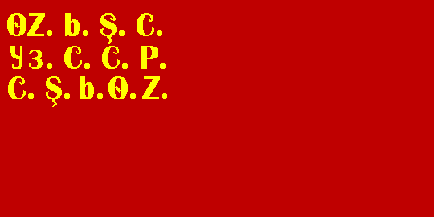 Three scripts. Pretty odd.
Uzbek SSR (1931-1935)
 Eartly SSR flags were bad.
Uzbek SSR (1935-1937)
 A bad flag.
Uzbek SSR (1937-1941)
 Uzbekistan is alphabetically the last former Soviet republic.
Uzbek SSR (1941-1952)
 Which means I won't deal with this type of flag ever again.
Uzbek SSR (1952-1991), Uzbekistan (1991)
 Blue stripes were common in flags of SSRs.
Rule 3
Good flag, but I think it has too many stars.
Ratio: 1:2 (normal)
Adopted: 18 November 1991
Part 1
Rule 1: A child could draw this flag from memory, though they may not draw the exact number of stars.
Rule 2: In the mid-19th century there where three states in what is now Uzbekistan: the Emirate of Bukhara, the Khanate of Kokand, and the Khanate of Khiva. By 1876, Kokand had been annexed by the Russian Empire and the other two ciuntries had become Russian protectorates.
Starting in 1916, there was resistance against Russian/Soviet rule in Central Asia, which was mostly defeated in the 1920s, but only fully defeated in 1934. In 1920 Khiva and Bukhara were formally annexed by the Russian SFSR and replaced with the Bukharan People's Soviet Republic and the Khoresm SSR, respectively. These joined parts of the Turkestan Autonomus Soviet Socialist Republic (part of the Russian SFSR) to form the Uzbek SSR in 1924.
In 1952 the Uzbek SSR adopted a mostly red flag, with a gold hammer and sickle and a red star in the upper hoist side, and an horiztonal blue stripe, with two white fimbriations separating the blue and red. The red symbolized the "revolutionary struggle of the working masses", the hammer symbolizing industrial workers, the sickle symbolizing peasants, the star symboizng the Communist Party, the blue symbolizing Amu Darya, and the white symbolizing cotton.
After the failed August Coup, Uzbekistan declared full independence on 1 September 1991. It adopted its current flag on 18 November 1991.
In Uzbekistan's flag, the blue symbolizes water and the sky, white symbolizes peace, green symbolizes nature and fertility, and the red fimbriations symbolizes the "life force" of people.The crescent symbolizes Uzbekistan's independence and Islam (practiced by 88% of Uzbekistan's population). The 12 stars symbolize the twelve months of the Islamic calendar.
Rule 3: Blue, white, red, and green. This flag has good colors.
Rule 4: This flag has a crescent and telve stars, both of which are simple.
Rule 5: This flag is similar to Sierra Leone's and Lesotho's, but I think the crescent and stars make it distinctive.
Part 2
Usbek SSR (1925-1926)
Uzbek SSR (1926-1931)
Uzbek SSR (1931-1935)
Uzbek SSR (1935-1937)
Uzbek SSR (1937-1941)
Uzbek SSR (1941-1952)
Uzbek SSR (1952-1991), Uzbekistan (1991)
Rule 3
Good flag, but I think it has too many stars.
- Thread starter
- #307
Flag of Vanuatu

Ratio: 19:36 (pretty unusual ratio)
Adopted: 18 February 1980
Part 1
Rule 1: A child couldn't draw the leaves, but they could draw the rest of the flag from memory.
Rule 2: The islands were first inhabited around 3,300 years ago. Europeans discovered Vanuatu in 1606, when Pedro Fernandes de Queirós, a Portuguese explorer sailing for the Spanish, arrived in Espiritu Santo. Fernandes had thought he discovered Terra Australis.
Europeans wouldn't come to Vanuatu again until 1768, when Louis Antoine de Bougainville. In 1774 the island were visited by Captain Cook, who named the island "New Hebrides", after the Hebrides in Scotland.
Missionaries began coming to the islands in the 19th century, and due to this Vanuatu is today 83% Christian. The islands' cotton, coffee, cocoa, bannanas, and coconuts atrracted settlers from the United Kingdom and France, which declared Vanuatu a neutral territory in 1878.
In 1887 the British-French Joint Naval Commission was estabished to protect settlers in Vanuatu, having no jurisdiction over Vanuatu's natives. However, in 1906 the New Hebrides Condominium, administered by both France and the United Kingdom. Oddly enough, it had four legal systems (one could chose between the French and British one. Natives had their own Native Court. There was also a Joint Court, with a president appointed by the King of Spain, which was abolished in 1939, eight years after the end of the Spanish monarchy).
Ratio: 19:36 (pretty unusual ratio)
Adopted: 18 February 1980
Part 1
Rule 1: A child couldn't draw the leaves, but they could draw the rest of the flag from memory.
Rule 2: The islands were first inhabited around 3,300 years ago. Europeans discovered Vanuatu in 1606, when Pedro Fernandes de Queirós, a Portuguese explorer sailing for the Spanish, arrived in Espiritu Santo. Fernandes had thought he discovered Terra Australis.
Europeans wouldn't come to Vanuatu again until 1768, when Louis Antoine de Bougainville. In 1774 the island were visited by Captain Cook, who named the island "New Hebrides", after the Hebrides in Scotland.
Missionaries began coming to the islands in the 19th century, and due to this Vanuatu is today 83% Christian. The islands' cotton, coffee, cocoa, bannanas, and coconuts atrracted settlers from the United Kingdom and France, which declared Vanuatu a neutral territory in 1878.
In 1887 the British-French Joint Naval Commission was estabished to protect settlers in Vanuatu, having no jurisdiction over Vanuatu's natives. However, in 1906 the New Hebrides Condominium, administered by both France and the United Kingdom. Oddly enough, it had four legal systems (one could chose between the French and British one. Natives had their own Native Court. There was also a Joint Court, with a president appointed by the King of Spain, which was abolished in 1939, eight years after the end of the Spanish monarchy).
The French and British governments were called residencies, each headed by a resident appointed by the metropolitan government. The residency structure greatly emphasiz