Badposter rates every country flag

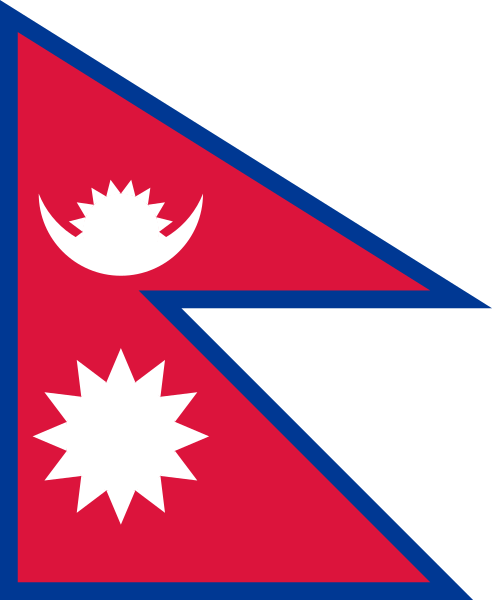
Flag of Nepal
492px-Flag_of_Nepal.svg.png

Ratio: You may think this doesn't apply, but it kinda does. Not counting the blue border, the bounding rectangle has a 4:3 ratio. Counting the border, it has a

e9d9625c7a12e9f0c827aef39f3be151e8c1a42f
ratio.
Nepal's flag is the only flag to be taller than it is wide.
Adopted: 18th or 19th century (current version adopted on 16 December 1962).
Part 1
Rule 1: A child may not be able to draw the exact number of points in the sun or moon, but recognizabilty is more important than perfection.
Rule 2: Before the mid-18th century Nepal was multiple small principalities. This changed when Prithvi Narayan Shah, prince of Gorkha, unified Nepal and became king of Nepal. Afterwards, his dynasty began to rule Nepal. The newly unified kingdim would expand into what is now India (and tried to conquer Tibet, but was defeated by China).
From 1814 to 1816 the Anglo-Nepalese War was fought between the British East India Company and Nepal. The Company expected that it would be an easy victory, which led to Nepal beating in the beginning of the war. However, the war ended in a Company victory after they commited more resources to the war. The war would end with the signing of the Treaty of Sugauli, which made Nepal lose one third of its territory.
In 1846 the Rana dynasty became the hereditary prime ministers of Nepal. Afterwards, they would the real power in Nepal, and the kings became figureheads. The Ranas were very pro-British, and helped to put down the 1857 Indian Rebellion, which led to Nepal gaining parts of the Terai region, and its current borders, in 1860. Nepal also fought with the Allies during both world wars.
In 1951 the Nepali Congress led a revolution which ended the rule of the Rana dynasty, gave power back to the king, and made the Prime Minister an elected position. However, in 1960 King Mahendra suspended the constitution, dissolved parliament, and imprisoned the Prime Minister. The Panchayat system, which had no parties, democratic elections for representatives, and a powerful monarch would be established . (Parties would return to Nepal after the People's Movement I, which would also reduce the powers of the king and give Nepal a new constitution.)
Nepal's flag was adopted somewhere in the 18th or 19th century. Previously, the moon and sun had faces, but the 1962 constitution (which also established the Panchayat system) removed them.
The red symbolizes victory in war and is the color of the rhododendron, Nepal's national flower, the blue symbolizes peace (Nepal had a civil war between the government and Maoists from 1996 to 2006, which led to Nepal becoming a republic in 2008), the moon symbolizes calmness and the cool weather of the Himalayas, the sun symbolizes fierce resolve and the heat of the lower part of the country, and the shape of the flag comes from the Himalayas. The sun and moon symbolizes the hope that Nepal will live as long as those celestial objects.
Rule 3: Blue, red, and white. This flag has an unusual shape but very used colors.
Rule 4: The sun and moon are simple.
Rule 5: If all the elements of the flag were removed, the flag would still be distinctive due to its shape.
Part 2
pre-1962
594px-Pre-1962_Flag_of_Nepal_%28with_spacing%29.svg.png
I prefer the faceless version.
Part 3
A nice and distinctive flag. I like it, and I think almost everyone does.
.
By the way, this is how to make the flag of Nepal, according to Nepal's 1990 constitution:
Wikipedia said:
(A) Method of Making the Shape inside the Border

(1) On the lower portion of a crimson cloth draw a line AB of the required length from left to right.
(2) From A draw a line AC perpendicular to AB making AC equal to AB plus one third AB. From AC mark off D making line AD equal to line AB. Join BD.
(3) From BD mark off E making BE equal to AB.
(4) Touching E draw a line FG, starting from the point F on line AC, parallel to AB to the right hand-side. Mark off FG equal to AB.
(5) Join CG.

(B) Method of Making the Moon

(6) From AB mark off H making AH equal to one-fourth of line AB and starting from H draw a line HI parallel to line AC touching line CG at point I.
(7) Bisect CF at J and draw a line JK parallel to AB touching CG at point K.
(8 ) Let L be the point where lines JK and HI cut one another.
(9) Join JG.
(10) Let M be the point where line JG and HI cut one another.
(11) With centre M and with a distance shortest from M to BD mark off N on the lower portion of line HI.
(12) Touching M and starting from O, a point on AC, draw a line from left to right parallel to AB.
(13) With centre L and radius LN draw a semi-circle on the lower portion and let P and Q be the points where it touches the line OM respectively.
(14) With centre M and radius MQ draw a semi-circle on the lower portion touching P and Q.
(15) With centre N and radius NM draw an arc touching PNQ [sic] at R and S. Join RS. Let T be the point where RS and HI cut one another.
(16) With Centre T and radius TS draw a semi-circle on the upper portion of PNQ touching it at two points.
(17) With centre T and radius TM draw an arc on the upper portion of PNQ touching at two points.
(18) Eight equal and similar triangles of the moon are to be made in the space lying inside the semi-circle of No. (16) and outside the arc of No. (17) of this Schedule.

(C) Method of making the Sun

(19) Bisect line AF at U and draw a line UV parallel to line AB touching line BE at V.
(20) With centre W, the point where HI and UV cut one another and radius MN draw a circle.
(21) With centre W and radius LN draw a circle
(22) Twelve equal and similar triangles of the sun are to be made in the space enclosed by the circles of No. (20) and of No. (21) with the two apexes of two triangles touching line HI.

(D) Method of Making the Border

(23) The width of the border will be equal to the width TN. This will be of deep blue colour and will be provided on all the sides of the flag. However, on the five angles of the flag the external angles will be equal to the internal angles.
(24) The above mentioned border will be provided if the flag is to be used with a rope. On the other hand, if it is to be hoisted on a pole, the hole on the border on the side AC can be extended according to requirements.

Explanation: The lines HI, RS, FE, ED, JG, OQ, JK and UV are imaginary. Similarly, the external and internal circles of the sun and the other arcs except the crescent moon are also imaginary. These are not shown on the flag.
 
Flag of the Netherlands
640px-Flag_of_the_Netherlands.svg.png

Ratio: 2:3 (normal)
Adopted: In use since the 16th century. Officially adopted on 19 February 1937.
Part 1
Rule 1: It's a simple tricolor.
Rule 2: The first flag used in what is now the Netherlands is the Cross of Burgundy, used by the lords of Burgundy, which ruled Eastern France in the late 14th century and most of the 15th century. In 1477, Duchess Mary of Burgundy (who had lost parts of the Duchy to France that same year) married Maximilian I, Holy Roman Emperor, (of the House of Habsburg) . When Mary died in 1482, Philip IV, her son, became Duke of Burgundy, which would become ruled by the Habsburgs. Philip would marry Joanna, daughter of the queen of Castile and the king of Aragon. In 1504 the Queen of Castile died, which made Joanna queen of Castile. Philip would be crowned king of Castile, but he would die the same year. Philip would be succeded as duke of Burgundy by Charles II, his son with Joanna. When the king of Aragon died in 1516, Charles II became king of Castile and Aragon (Spain) in 1516 as Charles I, despite the fact that Joanna (who was considered mad) was still alive and remained, officially, the queen of Castile (and after her father died, Aragon). Thus, after 1516 Spain and the Netherlands had the same ruler (Maximilian I would die in 1519 and be succeded as Holy Roman Emperor by Charles, who became Holy Roman Emperor as Charles V, so after 1519 Spain, the Netherlands, and the Holy Roman Empire had the same ruler)
In 1555 Joanna died, and in 1556 Charles did the same. They were succeded in Spain and the Netherlands by Philip II, under whose reign the Netherlands became officially incorporated into Spain. Philip's heavy taxation of the Netherlands, and persecution of Protestants living in it, led to the Dutch Revolt and the Eighty Year's War. The first part of the revolt was led by William I, Prince of Orange (Orange was a principality in southern France), whose coat of arms featured the colors orange, white, and blue. The Watergeuzen (Sea Beggars), pro-independence privateers, flew an orange, white, and blue horizontal tricolor, known as "the Prince's flag", as those colors came from the Prince of Orange's coat of arms. An atlas made in 1613 shows a red, white, and blue flag being flown by the Watergeuzen in a naval battle against Spain.
By 1581, when the Republic of the Seven United Netherlands was founded, the Netherlands was practically independent, though Dutch independence wouldn't be recognized by Spain until 1648. The Netherlands, though officially a republic, would be ruled by a stadtholder, who would very often be the Prince of Orange.
The new Dutch Republic would be quite wealthy and powerful, having a colonial empire. The current flags of Ney York City and Albany, New York, along with the 1928-1994 flag of South Africa come from the Prince's Flag.
After 1630, the orange in the flag was gradually replaced by red. This may be because orange is a faint color, hard to distinguish at sea, or because the orange was made by red and yellow dyes, and the latter faded out first. In any case, the Prince's Flag continued being used, but less frequently.
In 1648 the Peace of Münster, which ended the Dutch Revolt and the Eighty Year's War, was signed by the Dutch Republic and Spain. Spain recognized the independence of the Northern Netherlands, while the Southern Netherlands (what are now Belgium, Luxembourg, and Limburg, along with parts of what is now France and Germany) remained Spanish (after the Treaty of Rastatt was signed in 1714 the Southern Netherlands became Austrian.
In 1795, during the French Revolutionary Wars, the Batavian Republic, a French puppet state made up of the Northern and Southern Netherlands, was founded. Its flag was a red, white and blue horizontal tricolor with an emblem featuring a Netherlands maiden, holding a shield and a lance, with a lion at her feet, on the upper hoist side. The emblems on the upper hoist side were removed in 1806, when the Kingdom of the Netherlands, whose king was Louis Bonaparte, Napoleon's younger brother, was founded. Napoleon intended his brother to be a puppet. However:
Wikipedia said:
In addition to refusing to introduce conscription, he declared himself Dutch rather than French and demanded that his ministers renounce their French citizenships as well. He made a sincere effort to learn the Dutch language, and required his court and ministers to only speak Dutch. He went as far as to adopt the Dutch spelling of his name, Lodewijk.
This led to Louis being forced to abdicate, and the Kingdom of Holland being annexed by France. The French were defeated in 1813, and the Sovereign Principality of the United Netherlands was founded. After the defeat of the Netherlands, the Prince's Flag was flown along with the other Dutch flag, to show the attachment of the Dutch to the House of Orange.
After the Congress of Vienna in 1815 the Kingdom of the Netherlands, which included the Northern and Southern Netherlands, was founded. The Kingdom would lose the Southern Netherlands after the Belgian Revolution in 1830, though the Netherlands wouldn't recognize Belgian independence until the 1839 Treaty of London was signed. That treaty gave the eastern part of Limburg to the Netherlands (and the eastern part to Belgium). The current Belgian-Dutch border was established in the 1843 Treaty of Maastricht.
In 1931 the National Socialist Movement in the Netherlands, a fascist party, was founded. The Prince's Flag was used by members of the party. This may have been why the red, white, and blue flag was established as the only national flag of the Netherlands in a Royal Decree by Queen Wilhelmina in 1937. During the Nazi occupation of the Netherlands (1940-1945) the National Socialist Movement was made the only legal party in the Netherlands, which has made the Prince's Flag controversial. However, Dutch flags are flown with an orange pennant on King's Day.
Rule 3: Red, white, and blue. This flag may have inspired the Russian flag, which inspired the Pan-Slavic flags, which is one of the reasons this color combination is so common. I do think that this flag has good colors.
Rule 4: The flag of the Netherlands is a simple tricolor with no text or emblems.
Rule 5: There are many flags similar to that of the Netherlands. However, the Dutch flag is older than all of them, so it's not the Netherlands' fault.
Part 2
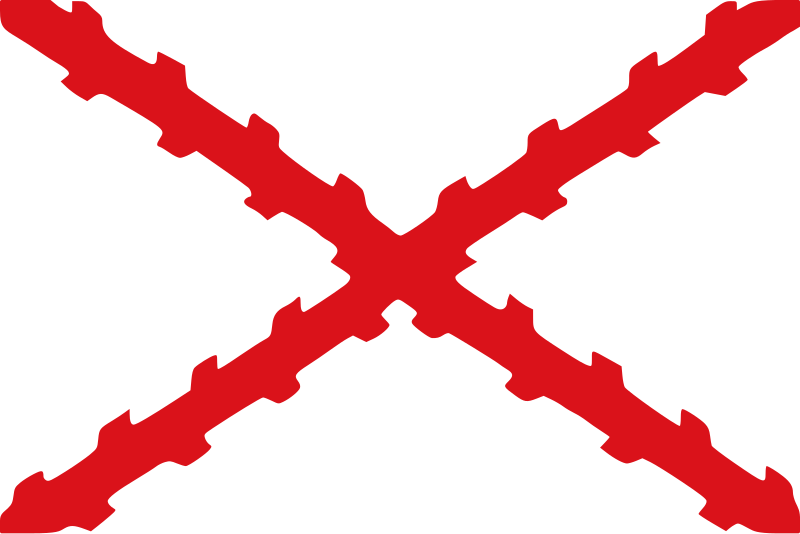
Cross of Burgundy
800px-Flag_of_the_Low_Countries.svg.png
This flag is nowadays more associated with the Spanish Empire, which used it even after losing the Netherlands.
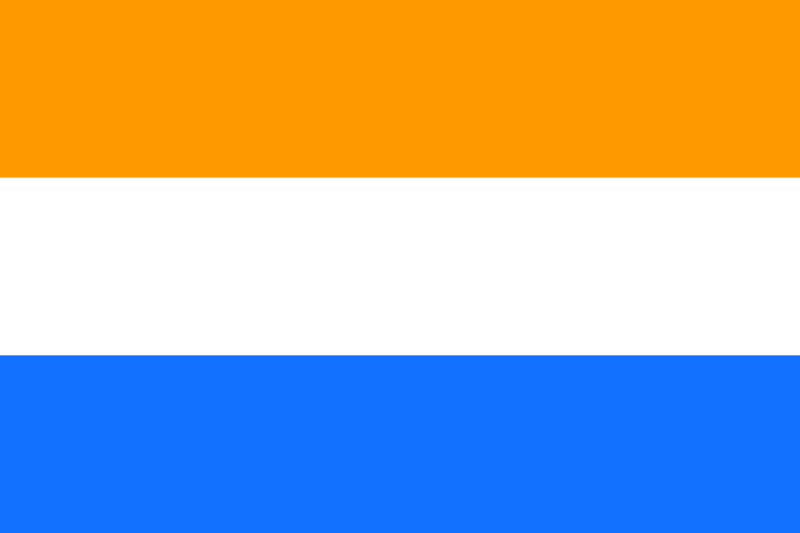
Prince's Flag
800px-Prinsenvlag.svg.png
This flag is distinctive, though it's also controversial. Design-wise, I think it's a good flag.
Batavian Republic (1795-1806)
Flag_of_the_Batavian_Republic.svg
The emblem is pretty complex, and that's bad.
Part 3
I would consider this flag a boring tricolor if it weren't older than every other red, white, and blue tricolor. I think this flag's okay.
 
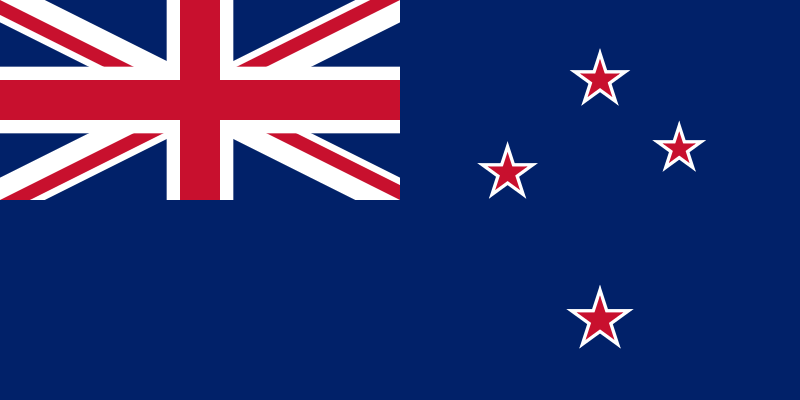
Flag of New Zealand
800px-Flag_of_New_Zealand.svg.png

Ratio: 1:2 (normal)
Adopted: In use since 1869. Officially adopted on 24 March 1902
Part 1
Rule 1: A child may not be able to draw St. Patrick's Cross in the Union Jack perfectly from memory, especially if the flag is small.
Rule 2: New Zealand was one of the last places to be inhabited by humans. The first people to come there were eastern Polynesians, ancestors of the Māori, who came in the late 13th century.
The first European to come to New Zealand was Abel Tasman, a Dutchman who came in 1642. It was an hostile encounter, and four members of Tasman's crew were killed. Europeans wouldn't visit New Zealand again until 1769, when James Cook, a British explorer, mapped almost all of New Zealand's coast. Afterwards, New Zealand would be visited by multiple European ships, and things in Europe, such as muskets, would be introduced to the islands, which led to the Musket Wars.
In 1834 the ship Sir George Murray, built in the Hokianga, was seized by Customs in Sydney due to having no flag (New Zealand had no flag at the time), which violated British navigation laws. The ship had two high-ranking Māori chiefs in it, leading to indignation by the Māori. This led to the United Tribes of New Zealand, a meeting of chiefs from northern New Zealand convened by James Bubsy (who was British), which adopted a flag featuring a St. George's Cross. On the canton, it had another St. George's Cross, which was on a blue field. The cross divided the canton into four parts, and on each part was a whote star. Originally, the cross on the canton was had a black border, but the black was changed to a white fimbration. The flag was chosen out of three proposed designs, all designed by Henry Williams.
In 1835 the the Declaration of Independence of New Zealand was signed by the United Tribes, being ratified the following year. In 1840 the Treaty of Waitangi was signed. It made New Zealand by governed by a British govenor, and gave the British government the sole right to purchase land in exchange for giving the Māori the rights of British subjects and recognizition of Māori ownership of their lands. After the treaty was signed, New Zealand's flag would become the Union Jack, though the United Tribes would keep being used unofficially, especially on land.
After the Colonial Navy Defence Act 1865 was passed in the UK, British colonial ships were ordered to fly the Blue Enisgn with the colony's badge (which is why British colonial flags are so similar). New Zealand, however, didn't even have a badge, so in 1867 New Zealand used a flag featuring the Blue Ensign with the letters "NZ" in red (with a white border) on the lower fly side.
In 1869 Albert Hastings Markham, a Royal Navy lieutenant, proposed a flag, which was the Blue Ensign defaced by the four brightest stars in the Southern Cross (a symbol of the Southern Hemisphere, used in the flag of other nations and regions in it) in red with a white border, to George Bowen, Governor of New Zealand, who approved the flag. While the flag originally was only to be used at sea, it increasingly became used as the national flag, which led to the Ensign and Code Signals Bill, in which New Zealand's current flag was adopted, being passed by the government of New Zealand, before being approved by King Edward VII on 24 March 1902.
On 26 September 1907 New Zealand was declared a dominion, becoming mostly independent, though the UK still controlled defense, constitutional amendments, and foreign policy. After the Statute of Westminister Adoption Act 1947 was passed, New Zealand adopted the Statute of Westiminister (1931), which established legislative independence. After New Zealand Constitution Amendment (Request and Consent) Act 1947 was passed, New Zealand gained the right to amend the New Zealand Constitution Act 1852. Technically, the British Parliament could still legislate on New Zealand's affairs, with the consent of the latter, until the Constitution Act 1986 was passed.
In 2015-2016 there were two referendums on New Zealand's flag. There were 10,292 desugn suggested, but only five made it to the first round, in which the alternative to the current flag was chosen. The second round of the referendum was between the current flag and the alternative, and the current won with 56.73% of the vote.
Rule 3: Blue, white, and red. This is the third time in a row I write about a flag with this color combination, it's really used a lot, though that doesnt mean it's bad.
Rule 4: Stars are simple. I've written that a lot. There are many flags with stars.
Rule 5: This image is about Australia's flag, but it also applies to New Zealand's
Part 2
United Tribes of New Zealand (1834-1840)
800px-Flag_of_the_United_Tribes_of_New_Zealand.svg.png
This flag is distinctive, though I find it kinda boring.
1867-1869
800px-Flag_of_New_Zealand_Government_Ships_1867.svg.png
Text. And besides, the "NZ" is placed somewhat awkwardly.
Part 3
It's undistinctive and I don't like its symbolism. This flag is better, or at least more distinctive.
 
Flag of Nicaragua
800px-Flag_of_Nicaragua.svg.png

Ratio: 3:5 (the third most common flag ratio)
Adopted: 4 September 1908. (officially adopted on 27 August 1971)
Part 1
Rule 1: A child could not draw the flag in the coat of arms from memory.
Rule 2: This is alphapbtically the last flag with Central American colors, so for the very last time, the Central American copypasta:
Me writing Costa Rica's flag said:
The Federal Republic's flag was influenced by Argentina's flag and had two blue stripes (representing the Pacific and Atlantic Oceans), and a white stripe between them (representing the land between them). The blue and white of this flag, and of every country that was a member of the Federal Republic's flag, comes from this
Nicaragua was the very first country to leave the Federal Republic, dong it in 1841. After that, the history of its flag becomes somewhat unclear. It is not known what flag Nicaragua used from 1841 to 1852, and two flags atributted to Nicaragua from 1852 to 1854, and from 1889 to 1893, may not have been used by Nicaragua (the latter may, in fact, have been Costa Rica).
From 1854 to 1858, and also from 1873 to 1889, Nicaragua used a flag which was a yellow, white, and nacre horizontal tricolor, with unkown meaning. From 1858 to 1873, Nicaragua used a blue and white triband, which again became Nicaragua's flag in 1893, when the liberal José Santos Zelaya came into power. In 1896 Nicaragua, Honduras, and El Salvador, united to form the Greater Republic of Central America (Guatemala and Costa Rica considered joining it, but never did). On 27 August 1898 the Greater Republic changed its name to "United States of Central America". The United States wouldn't last long: On 13 November 1898 Tomás Regalado took power in El Salvador after a coup d'état, and afterwards left the United States. The federation failed to stop this, and on 1 December Nicaragua left the United States (and went back to having a blue, white, and blue triband). El Salvador left the United States on 10 December 1898, ending the federation.
On 4 September 1908 the current flag was adopted, but the shade of blue and ratio were only specificied in a law adopted on 25 August 1971. The law also stated that the blue symbolizes justice and loyalty, and that the white symbolizes purity and integrity.
The meaning of the coat of arms:
Wikipedia said:
The triangle signifies equality, the rainbow signifies peace, the gorro frigio (Phrygian cap) symbolizes liberty and the five volcanoes express the union and brotherhood of all five Central American countries.[1] Lastly the gold words surrounding the emblem: Republica De Nicaragua - America Central (English: Republic of Nicaragua - Central America).
Rule 3: Not counting the colors in the coat of arms, blue and white, which are good colors (counting the colors in the coat of arms, this is the only flag to have violet).
Rule 4: This flag has text and a complex coat of arms. Bad.
Rule 5: This flag can be confused with El Savador's, which is very similar. This flag isn't distintive.
Part 2
1852-1854 (maybe)
800px-Flag_of_Nicaragua_%281852%29.svg.png
This flag may not have been actually in use, but I like the mountain. It's a good, simple emblem.
1854-1858, 1873-1889
800px-Flag_of_Nicaragua_%281839-1858%29.svg.png
I like this flag's colors, and also like that the flag is distinctive. This flag is better than the current.
1858-1873, 1893-1896, 1898-1908
800px-Flag_of_Nicaragua_%281858-1889_and_1893-1896%29.svg.png
It's a pretty generic flag, which I think can be confused with other flags with Central American colors.
1889-1893 (maybe)
800px-Flag_of_Nicaragua_%281889-1893%29.svg.png
Ralf Stelter said:
The flag of five stripes was shown first in Le Gras' album in 1858!! It was reproduced in several encyclopaedias around 1890! So the flag was used much earlier. But when it was shown in the 1858 album des pavillons it must have been in use even earlier! I assume that this flag was mistakenly shown for Nicaragua, but was a flag of Costa Rica, when this state intervened in the Walker affair in 1855.
Part 3
Out of the five national flags with Central American colors, Honduras' and Costa Rica's are good (the five stars and the red stripe, respectively, make the flags distinctive), Guatemala's is mixed (it's vertical, which makes it distinctive, but it also has a complex coat of arms, which is bad), and El Salvador's and Nicaragua's are bad (both have complex coat of arms and text, and can easily be confused with the other).