Badposter rates every country flag

Sorry for not posting anything yesterday. I was busy doing homework and *bleep*posting. To make up for it I'll rate two flags today.
Flag of Antigua and Barbuda
800px-Flag_of_Antigua_and_Barbuda.svg.png

Ratio: 2:3 (normal)
Adopted: 27 February 1967
Part 1
Rule 1: A child could draw this from memory, but obviously they couldn't draw the Sun perfecly. However, I think recognizability is more important than perfection, so it follows rule one.
Rule 2: This flag has great symbolism. It represents a beach sunrise (somehow, with a black sky), but every color (well, except white, which just represents sand) represents something else on its own. Black represents African ancestry (a surprisingly common use of black), the blue represents hope (which is somewhat odd, since most of the time hope is represented as green. But this flag not using green is a good decision, since green doesn't fit with the beach sunrise symbolism), the rising sun represents the dawning of a new era of Antiguan history, and the red represents the energy of the Antiguan people (Antigua and Barbuda did not get its independence bloodily, though its natives and slaves probably bled) The reason the red is shaped like a V is because the V represents victory.
Rule 3: The flag has five colors. Personally, I'd take out the red, since I don't really think it's necessary and hurts the beach sunrise symbolism.
Rule 4: The Sun is a good emblem. The V is pretty clever. It's text and not text at the same time. Good use of text.
Rule 5: It's pretty distinctive. Take out the red and it's still distinctive. Take out the red and the Sun (I do not advocate doing this) and it could only be confused with Estonia. Pretty good.
Part 2
Antigua and Barbuda has had this flag even before its independence in 1981; it's had it since 1967, when it became a state in Free Association with the UK.
Part 3
I think it has too many colors, but other than that I think it's a great flag with great symbolism.
.
Next time, more fun in the Sun.
 
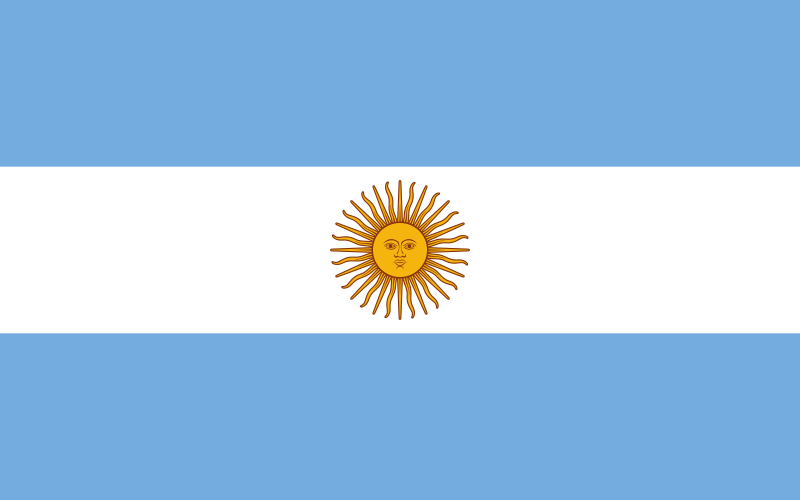
Flag of Argentina
800px-Flag_of_Argentina.svg.png

Ratio: 9:14 (a pretty unusual ratio)
Adopted: 27 February 1812 (sun added in 1818, current ratio adopted in 1978)
Part 1
Rule 1: Recognizability is more important than perfection.
Rule 2: To know the symbolism of this flag, one first needs to understand the historical context of early 19th century Latin America. Don't worry, this is the simplified version (if you want the the complicated version go read Wikipedia or an history book). Basically, when Napoleon invaded Spain in 1810, there was disagreement of who would rule Argentina while the king was deposed. One side recognized the government of the viceroy Baltasar Hidalgo de Cisneros, appointed by the Spanish Junta of Seville, and another side recognized a Junta whose members were Argentinian (which would later be named the First Triumvirate), but both sides recognized the Spanish King at first. On February 18, 1812 a blue and white cockade (whose symbolism is actually unknown) was established as a national symbol by the First Junta to distinguish it from the red and yellow used by the other side. Based on the cockade, Manuel Belgrano (one of the main leaders of Argentinian independence) made a flag nine days after the cockade's adoption and sent a letter to the First Triumvirate proposing them the use of the flag. The Triumvirate, however, rejected the flag, because they felt the flag was too independentist. Belgrano, however, got the message rather late, and by the time he got it the flag was flown after his military victories and was even blessed by a priest. When Belgrano finally got the message he stopped using the flag.
In October 1812 the Second Triumvirate was established. While being more liberal than its predeseccor, it was against independence. Still, they approved the use of Belgrano's flag as a war flag, though not as a national flag.
On July 9, 1816 Argentina declared independence and Belgrano's flag was adopted. In 1818 the Sun of May was added to the flag (if you want to know what it symbolizes, read its article, because I'm tired of writing this part of the rating.
TL;DR: Sometimes, history is more important than symbolism.
Rule 3: The colors used are yellow, white and light blue. I like light blue, and I think it's used too little in flags, so I love this flag.
Rule 4: Simple emblems are good. The Sun of May is simple. Which means...
Rule 5: Yeah, it's distinctive. The flag of Uruguay is based on this flag, and is also distinctive. This is good.
Part 2
1819–1820
800px-Flag_of_Argentina_%281818%29.svg.png
During this time, Argentina darkened the blue on its flag after negotiations with France on installing a monarchy in Argentina. These talks failed, and Argentina lightened its blue.
1850
919px-Flag_of_the_Argentine_Confederation.svg.png
Those things are Phrygian caps, they represent liberty and they don't look good on the Argentinian flag.
Part 3
Overall, a good flag. Recognizable, and has good colors and history.
 
Fun fact that I forgot to mention in my previous post; Pakistan does not recognize the existence of Armenia. Seriously.
Flag of Armenia
800px-Flag_of_Armenia.svg.png

Ratio: 1:2 (normal)
Adopted: 28 May 1918 (with a 2:3 ratio). Readopted on 24 August 1990 (with current ratio).
Part 1
Rule 1: Of course it follows rule 1. All tricolors with no emblem and no text do.
Rule 2: You know, after my long Argentina analysis I just want to copypaste from Wikipedia
The red emblematizes the Armenian Highland, the Armenian people's continued struggle for survival, maintenance of the Christian faith, Armenia's independence and freedom. The blue emblematizes the will of the people of Armenia to live beneath peaceful skies. The orange emblematizes the creative talent and hard-working nature of the people of Armenia.[3]
(This quote comes from the Constitution of Armenia)
Rule 3: The colors in the flag are red, blue and orange. The orange is actually the color of an apricot, and is pretty similar to yellow. The colors in this flag are good (They're not unique, but this is what Rule 5 is for)
Rule 4: This flag has neither emblems nor text. Even though I find tricolors boring, at least they don't have complex emblems.
Rule 5: This flag can be confused with the flags of the countries of the former Gran Colombia: Colombia, Venezuela and Ecuador, countries it does not share much history with. And the Armenian flag isn't older; the first Armenian state to use this flag, the Armenian Republic, was formed in 1918, when those three countries had already existed for a long time.
Part 2
I can't verify if the first two standards were actually real, but *bleep* it they're cool, so I'll post them anyway.
Standard of the Artaxid dynasty (189 BC- 12 AD)
The images I can find on the web are either tiny or have stock photo written on it, so I'll link it. As you can see, it's pretty cool an distinctive, even if the birds somewhat break Rule 1.
Standard of the Arsacid Dynasty (52 AD - 428 AD)
Arshakuni.svg
See above standard.
Flag of the Kingdom of Cilicia under the Fremch Lusignan Dynasty (1341 - 1375)
Flag_of_Lusignans.jpg
*throws up*
Proposed flag of Armenia, designed by Ghevont Alishan, an Armenian priest living in Paris (1885)
1200px-1885ArmenianFlag.svg.png
Instead of upside down Colombia, it's upside down Bulgaria! The red and green represent the Sundays of Easter and the green is completely arbitrary.
Second flag proposed by Ghevont Alishan (exact year unkown)
Red-green-blue_flag.svg
Looks like a French flag with mold on it, but it actually represents the rainbow seen by Noah on Mount Ararat (which is actually in Turkey, but don't tell Armenian nationalists that.). It can't really be confused for any other flag, so in my opinion it's good.
Part 3
Well, it's a tricolor. Tricolors aren't very exciting, but they aren't ugly either. One of the flaws of the flags is its rule 5 violation.
Appendix
Flag_of_Nagorno-Karabakh.svg
This is the flag of Nagorno-Karabakh, an Armenian-mayority breakaway region in what is internationally considered Azerbaijani territory. As you can see, the flag looks like Armenia's, except for the white pattern, which symbolizes its separation from Armenia. In my opinion, it's better than the flag it was based on.
.
Next time, the flag of a country which is probably the most important in its continent

 
Magikrazy said:
No, by bad he means Michael Jackson bad.
I actually don't really care about Michael Jackson
.
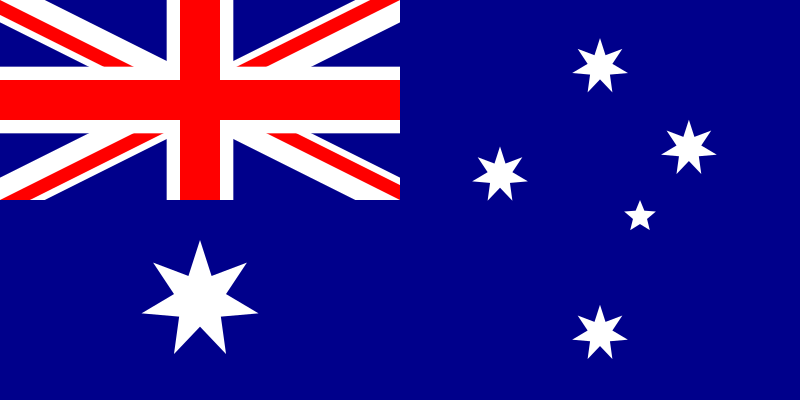
Flag of Australia
800px-Flag_of_Australia.svg.png

Ratio: 1:2 (normal)
Adopted: 11 February 1903 (current Commonwealth Star adopted in 1908)
Part 1
Rule 1: A child could draw this flag from memory, though I think the cross of St. Patrick on the Union Jack (the diagonal cross) is a little hard to memorize. I also often forget if the flag has five or six stars, but I think that's just a personal problem.
Rule 2: The stars on the right represent the constellation of the Southern Cross, which is often used for navigation in the Southern Hemisphere (this is why it used in the flag of many countries in the Southern Hemisphere, like Brazil, New Zealand or Papua New Guinea) and the big seven-pointed star (the Commonwealth Star) on the represents the six states of Australia plus its territories. The blue represents nothing, as far as I know. The Union Jack represents the fact that Australia was part of the British Empire. I think that this is bad symbolism, because it represents that the country was once the colony of another country, and doesn't represent the country itself.
Rule 3; Red, White and Blue. This is alphabetically the first flag to use this color combination. Even if I think this color combination is used too much, it's not really a bad color combination.
Rule 4: The Union Jack, the Southern Cross and the Commonwealth Star are all simple emblems, though I think ALL of them at once is a bit too much.
Rule 5: The following image features all the flags Australia's flag is similar to.
Ausflag_identity.gif
As you can see, Australia's flag isn't very distinctive.
Part 2
Even though the Blue Ensign is the state ensign and the most popular flag of Australia, there also exists a Red Ensign, which is the Civil Ensign of Australia and from 1901 to 1954 the only Australian flag allowed to be used by civilians.
Civil_Ensign_of_Australia.svg
Even if I still don't like the symbolism, at least it's distintive; the only Red Ensign that are currently in use are the flags of Ontario, Manitoba and Bermuda, none of which have stars.
Part 3
I don't like this flag. It's not very distinctive and I don't like its symbolism (but really, that's just a matter of opinion)
.
Next time, a country with *bleep*ing (it rhymes with booking)