
Badposter rates every country flag

Flag of Guatemala
Flag_of_Guatemala.svg

Civil ensign
File:Civil_Ensign_of_Guatemala.svg
Ratio: 5:8 (an unusual ratio)
Adopted: 17 August 1871
Part 1
Rule 1: The coat of arms is too complicated to draw from memory. A child could draw the civil ensign though.
Rule 2: This is a Central American flag, so it's time for the Central American copypasta.
My Costa Rica writeup said:
The Federal Republic's flag was influenced by Argentina's flag and had two blue stripes (representing the Pacific and Atlantic Oceans), and a white stripe between them (representing the land between them). The blue and white of this flag, and of every country that was a member of the Federal Republic's flag, comes from this
And for the coat of arms:
Wikipedia said:
In the center of the flag is the Guatemalan coat of arms. It includes the resplendent quetzal, the national bird of Guatemala that symbolizes liberty; a parchment scroll bearing the date of Central America's independence from Spain, 15 September 1821; crossed rifles, indicating Guatemala's willingness to defend itself by force if need be; a bay laurel crown, the symbol for victory; and crossed swords, representing honor
This flag's deisgn was like the other Central American countries's: a blue white and blue horizonta ltriband with a coat of arms in the center. In 1851, when Guatemala was ruled by a conservative pro-Spain government, red and yellow were added to the flag because those were Spain's colors. In 1871 the liberals took over and removed the red and yellow on the flag, changed the coat of arms and made the flag vertical to distinguish this flag from those of other Central American countries.
Rule 3: Ignoring the coat of arms, blue and white. Good colors.
Oh, and I guess it's time to talk about an important relating to rule, which, while I knew existed,didn't know the details of until last week embarrasingly enough: the rule of tinture. This was originally a heraldric rule, but it applie to vexillology too. Basically it states metals (that is, or and argent, gold and silver, represented by yellow and white) shall not be put on metals and colors shall not be put on colors (there are exceptions to this rule, but this is just the basic concept)
Once again ignoring the coat of arms, this flag has one color and one metal, thus not breaking the rule of tincture (note that a flag isn't neccesarily bad just because it breaks the rule of tincture)
I apologize for not knowing about the rule until... the 14th, I think.
Rule 4: The state ensign has (small) text and a complex coat of arms. The civil ensign, however, doesn't.
Rule 5: There are other flags with a vertical blue white blue tricolor, but they're obscure. I think this flag (even without its coat of arms) is rather distinctive, given it has the Central American colors but is vertical in constrast to the vertical flags in the region's other countries.
Part 2
1838-1843
800px-Flag_of_Guatemala_%281838-1843%29.svg.png
This flag has a complex coat of arms and text, and unlike the current it's not distinctive, due to the fact it's horizontal.
1843-1851
Flag_of_Guatemala_%281843-1851%29.svg
Same as above.
1851-1858 (civil ensign, the state ensign had a complex coat of arms)
800px-Flag_of_Guatemala_%281851-1858%29.svg.png
This flag looks nice (in my opinion) despite breaking the rule of tincture (red touches bue and yellow touches white).
1858-1871 (civil ensign, same deal as above)
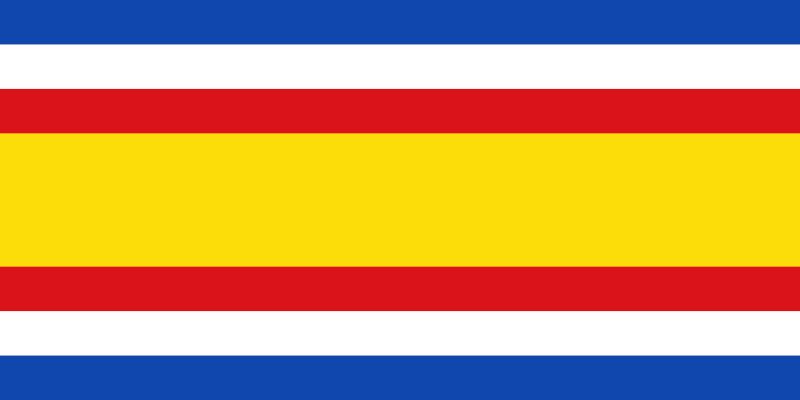
800px-Flag_of_Guatemala_%281858%E2%80%931871%29.svg.png
This flag, on the other hand, looks ugly despite breaking the rule of tincture.
Part 3
The civil ensign is good. It's simple and relatively distinctive. The state ensign is also distinctive, but it also has text and a complex coat of arms (though it does have a quetzal. I like quetzals)
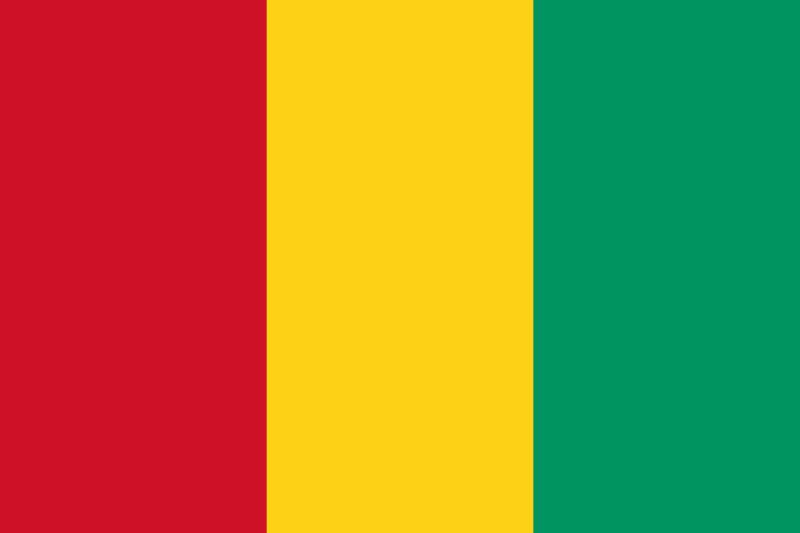
 
Flag of Guinea
800px-Flag_of_Guinea.svg.png

Ratio: 2:3 (normal, not interesting)
Adopted: 10 November 1958 (more than a month after Guinea's independence, which happened in 2 October of that year
Part 1
Rule 1: It's a simple tricolor.
Rule 2: The red represents the blood of those who died from wars and slavery (4.1% of the slaves who came to the Americas through the Transatlantic Slave Trade came from Guinea, Guinea-Bissau or Sierra Leone. The yellow represents the Sun and the country's riches and the green represents the country's vegetation (pretty generic symbolism)
This flag has Pan-African colors and also the same colors as those of the Rassemblement Démocratique Africain, a political party which was in favor of the independence of French colonies in Africa.
Rule 3: Red, yellow and green. Good colors, but I think they're overused.
Rule 4: It's a simple tricolor with no emblem.
Rule 5: This flag is pretty similar to Mali's, the only difference being that this flag has the colors reversed. This flag is not distinctive.
Part 2
Wikipedia's page for this flag has no historical flags. I checked the French Wikipedia (since French is the most spoken European langage in Guinea, due to the fact that Guinea was once French colony) and found nothing there either. But I did find a historical flag of an empire which was in what is now Guinean territory in flagspot:
Wassolou Empire (1878-1898)
768px-Flag_of_the_Wassoulou_Empire.svg.png
It's not good looking (it has a 1:1, which is pretty ugly on this flag imo), but at least it's disinctive.
Part 3
It's not distinctive, and besides it's one of the least interesting Pan-Africans. Bad flag.
 
Flag of Guinea-Bissau
800px-Flag_of_Guinea-Bissau.svg.png

Ratio: 1:2 (normal)
Adopted: 24 September 1973 (declaration of Guinea-Bissau's independence. The country's independence would be recognized on 10 September 1974)
Part 1
Rule 1: This is a simple flag. A child could draw it from memory.
Rule 2: The red represents the blood shed during Guinea-Bissau's independence (Guinea-Bissau became independent after a bloody war, like most Portuguese colonies in Africa), the green represents Guinea-Bissau's forests and the gold represents Guinea-Bissau's mineral wealth and the black star represents African unity. I think this is pretty generic symbolism, except for the black star.
This flag has Pan-African colors and is based on Ghana's flag (both having Pan-African colors and a black star). This flag has the same colors of those of the African Party for the Independence of Guinea and Cape Verde, which led the independence of both Guinea-Bissau (then known as Potuguese Guinea) and Cape Verde, and which ruled Guinea-Bissau dictatorially after independence and is the country's country's dominant party today, having 67 of the 102 seats in the National People's Assembly of Guinea-Bissau. (the party also ruled Cape Verde from 1975 to 1980 when, after the Bissau-Guinean coup of 1980 the Cape Verdean branch of the party separated from the party, becoming the African Party for the Independence of Cape Verde)
Rule 3: The Pan-African colors plus black. I think they look good on this flag.
Rule 4: There are lot of flags with stars. Well, they're simple.
Rule 5: This flag is based on Ghana's flag and uses the Pan-African colors, but the black makes it distinctive compared to a generic Pan-African by its black star, and by Ghana's flag for having one vertical stripe and two horizontal stripes, compared to Ghana's, which was three horizontal stripes.
Part 2
I couldn't find historical flags of Guinea-Bissau on the English and Portuguese Wikipedias nor on flagspot.
Part 3
A good Pan-African, altough I think it looks better with a 2:3 ratio
 
Flag of Guyana
800px-Flag_of_Guyana.svg.png

Ratio: 3:5 (after 2:3 and 1:2, the most common ratio for national flags)
Adopted: 26 May 1966 (Guyanan independence)
Part 1
Rule 1: I think this flag is simple enough for a child to draw recognizably (though not perfectly) from memory.
Rule 2: From this site (which I found in flagspot)
Guyana.org said:
The Golden Arrowhead, Guyana's National Flag has FIVE symbolic colors -- GREEN represents the agricultural and forested nature of Guyana, WHITE symbolizes the rivers and water potential of the country, a GOLDEN arrow represents Guyana's mineral wealth, BLACK portrays the endurance that will sustain the forward thrust of the Guyanese people and RED represents the zeal and dynamic nature of nation-building which lies before the young and independent Guyana.
The basic design of this flag (without the black or white) was created by an actual (American) vexillologist, Whitney Smith. The black and white were added after a suggestion by the College of Arms (which is British). I don't get this. The old version didn't break the rule of tincture, but this one does (the red borders the black and the yellow touches the white). But then again, without the black and white this flag would be a Pan-African, while Guyana's population is made up of Indians descended from the Indians brought to Guyana as labor when both countries were in the British Empire, descendants of African slaves, mixed-race Guyanans and natives.
Rule 3: Red, black, yellow, white and green. Even if this flag breaks the rule of tincture I don't think it has bad colors.
Rule 4: I think triangles are simple.
Rule 5: This flag has a distinctive design.
Part 2
British Guiana (1875-1906)
800px-Flag_of_British_Guiana_%281875-1906%29.png
If you've read this topic you've realized I don't like British colonial flags. The flag of British Guiana changed coat of arms in 1906, 1919 and 1955. I don't like any flag of British Guiana.
Part 3
I think it's a good flag, which makes sense since it was mostly designed by a professional vexillologist.
 
Flag of Haiti
800px-Flag_of_Haiti.svg.png

Civil ensign
Flag_of_Haiti_%28civil%29.svg
Ratio: 3:5 (the third most common flag ratoi)
Adopted: 1807 (as flag of the Republic of Haiti, which was only what is now the south of the country from 1806 to 1820, when Jean-Pierre Boyer reunified both halves), re-adopted 15 January 1859 (Emperor Faustin I overthrown), re-adopted again 25 February 1986 (Jean-Claude Duvalier overthrown).
Part 1
Rule 1: A child could not draw the state ensign from memory due to its rather complex coat of arms. The civil ensign is, however, a rather simple.
Rule 2: According to a Haitian popular legend, during the Haitian Revolution (1791-1804) the newly appointed Haitian revolutionary leader, Jean-Jacques Dessalines ripped the white out of a French flag in 1803 and asked his goddaughter Catherine Flon to sew back the red and blue, creating a vertical red and blue flag. Whether or not this actually happened, in 1 January 1804 Haiti became an independent republic with a vertical red and blue flag, with the red representing black Haitians and the blue representing gens de couleur (the ripping out of the white has implications, since Dessalines ordered the massacre of white people in Haiti)
On 2 September 1804 Jean-Jacques Dessalines, the Governor-General of Haiti declared himself emperor. In 1805 the blue on Haiti's flag was replaced with black. Dessalines's rule became more autocratic, and he became less popular with the public and with member of his administration. In 1806 Dessalines was assasinated and Haiti was split between the northern state of Haiti, ruled by Henri Cristophe, which had Haiti's old flag, and the Republic of Haiti, ruled by Alexandre Pétion, which had an horizontal red and blue flag with Haiti's coat of arms in a white square in the center.
In 1811 Henri Christophe, the president of the State of Haiti declared himself king and the State of Haiti became the Kingdom of Haiti, which had a red and black horizontal flag (note that in this flag the red is on the left , and in the flag of Dessalines' empire he red was on the right). In 1818 Alexandre Pétion died of yellow fever and was replace by Jean-Pierre Boyer, who in 1820 took over the Kingdom of Haiti after Henri Cristophe killed himself. Cristophe's son was assasinated by revolutionaries ten days after his father's suicide.
In 1849 Faustin Soulouque, president of Haiti declared himself Emperor Faustin I of Haiti and the coat of arms on Haiti's flag were replaced. In 1859 the emperor was overthrown and exiled, and the old flag was restored alongn with the republic.
Haiti's flag wouldn't change until 1964. That year, the president, Francois Duvalier (elected in 1957) declared himself President for Life of Haiti, and the black and red flag used by Dessalines (so red on right), though with a coat of arms mostly the same as Haiti's current, with the exception of the flags on it being black and red instead of black and blue.
In 1971 Francois Duvalier died and was replaced by his son Jean-Claude Duvalier, who kept the flag. In 1986 Jean-Claude Duvalier was overthrown and went into exile in France. After Duvalier's overthrow the old flag was restored. It has been Haiti's flag continously since.
Oh, and for the meaning of the coat of arms
Wikipedia said:
It shows six draped flags of the country, three on each side, which are located before a palm tree and cannons on a green lawn. On the lawn various items are found, such as a drum, bugles, long guns, and ship anchors. Above the palm tree, there is a Phrygian cap placed as a symbol of freedom. On the lawn between the drum and the ribbon there were supposed to be two pieces of chain with a broken link symbolizing the broken chain of slavery.[citation needed]

The ribbon bears the motto: L'Union Fait La Force (French, "Unity Makes Strength"). This should not be confused with the national motto of Haiti, which according to the Constitution of Haiti is "Liberty, Equality, Fraternity."
Rule 3: Once again not counting the coat of arms, red, white and blue. I like the red and blue, but the white square is pretty ugly. It looks like an image which was copypasted into the flag.
Rule 4: The state ensign has a pretty complex coat of arms and (pretty small) text . This is bad.
Rule 5: In the 1936 Olympics Haiti (which was using its civil ensign) and Liechtenstein used identical flags (Embarrasing confession: I learned this on the Big Bang Theory). Due to this, Liechtenstein added a crown to its flag. So now that Liechtenstein's flag has a crown, I think Haiti's flag without its coat of arms would be distinctive, though I'm not extremely sure on that.
Part 2
Haiti (1804), First Empire of Haiti (1805-1806), State of Haiti (1806-1811)
800px-Flag_of_Haiti_1806.svg.png
I think this is a good flag, even if a bit too similar to that of Paris. This flag, however is rectangular, while Paris' is square, so I think it's distinctive.
Though maybe in an alternate universe I'm complaining about Haiti's flag being to similar to Paris'. But at least Haiti doesn't have its current flag in that universe.
First Empire of Haiti (1805-1806)
800px-Flag_of_Haiti_1964_%28civil%29.svg.png
I like this flag's colors, though I don't like Dessalines. I think Haiti shouldn't go back to using red and black flags for reasons I'll explain below.
Kingdom of Haiti (1811-1820)
800px-Kingdom_of_Haiti_flag_%281811-1820%29.JPG
I dislike most flag with coat of arms, including this one.
Second Empire of Haiti (1849-1859)
800px-Flag_of_Haiti_%281849-1859%29.png
Same as above.
1964-1986
800px-Flag_of_Haiti_%281964-1986%29.svg.png
The Wikipedia article for Francois Duvalier said:
His rule, based on a purged military, a rural militia known as the Tonton Macoute, and the use of cult of personality, resulted in the murder of 30,000 to 60,000 Haitians and the exile of many more
The Wikipedia article for Jean-Claude Duvalier said:
After assuming power, he introduced cosmetic changes to his father's regime and delegated much authority to his advisors. Thousands of Haitians were killed or tortured, and hundreds of thousands fled the country during his presidency.[2] He maintained a notoriously lavish lifestyle (including a state-sponsored US$ 2 million wedding in 1980), and made millions from involvement in the drug trade and from selling body parts from dead Haitians while poverty among his people remained the most widespread of any country in the Western Hemisphere
Fuck the Duvaliers.
Part 3
It's ugly and has a complex coat of arms. A bad flag
 
Flag of Honduras
800px-Flag_of_Honduras.svg.png

Ratio: 1:2 (normal)
Adopted: According to English Wikipedia, 7 March 1866. According to Spanish Wikipedia. 16 February 1866. And according to flagspot, 9 January 1866. So basically, the first half of 1866.
Part 1
Rule 1: This is a pretty simple flag, which a child could draw from memory.
Rule 2: Central American flag? Copypasta.

The five stars represent the countries that were in the Federal Republic of Central America: El Salvador, Guatemala, Nicaragua, Costa Rica and Honduras (Los Altos isn't included, which makes sense since it was founded in 1838 (when the Federation was breaking up), only existed for two years, and doesn't exist today, its territory being in Guatemala and Mexico), in the hopes that the countries of Central America will one day be reunited.
Rule 3: Blue and white. As I have said in the past, I like that color comination.
Rule 4: Another flag with star, and another day I'll write the word “simple”
Rule 5: I think the stars make the flag distinctive compared to other Central American flag. Good example of relatd but distinctive.
Rule 2
So I couldn't find anything of English Wikipedia. So I looked for historical Honduran flags in flagspot. I couldn't find anything from before 1866.
But then I checked Spanish Wikipedia...
1839-1866
800px-Flag_of_Honduras_%281839-1866%29.svg.png
I think this flag is pretty generic and boring and I think it's more distinctive with the stars.
Rule 3
It's simple and manages to be related but distinctive. This is my favorite Central American flag.